
Long-Term Investing Explained: A Complete Beginner’s Guide
A $200 deposit looks too small to matter. Repeated every month for twenty years under a hypothetical 6% annual growth assumption, it becomes about $92,400, and roughly $44,400 of that is growth rather than deposits. That arithmetic is the whole case for long-term investing: ordinary contributions, left alone for a long time, can do most of the work. It isn’t a promise. Markets fall, sometimes hard, and the approach only works if you can stay invested through the falls. This guide covers how it works, what a first plan looks like, and where it can still go wrong.
What a Long Horizon Asks of You
- Long-term investing means putting money into assets such as stocks, bonds, or funds and holding them for years or decades, aiming for growth over time rather than quick gains.
- It leans on four things: time, regular contributions, diversification, and low costs. It doesn’t rely on predicting the next market move.
- Values will drop along the way, sometimes sharply, and there’s no guarantee of any outcome.
- Only money you won’t need for a long while belongs here.
Years, Not Weeks: How Holding Changes the Game
An investment is something you buy because you expect it to produce value over time, such as company profits, interest, or rent. A long-term investor accepts that prices bounce around in the short run and focuses on what the assets might earn over many years. If investing itself is still a fuzzy idea, start with what investing is and come back.
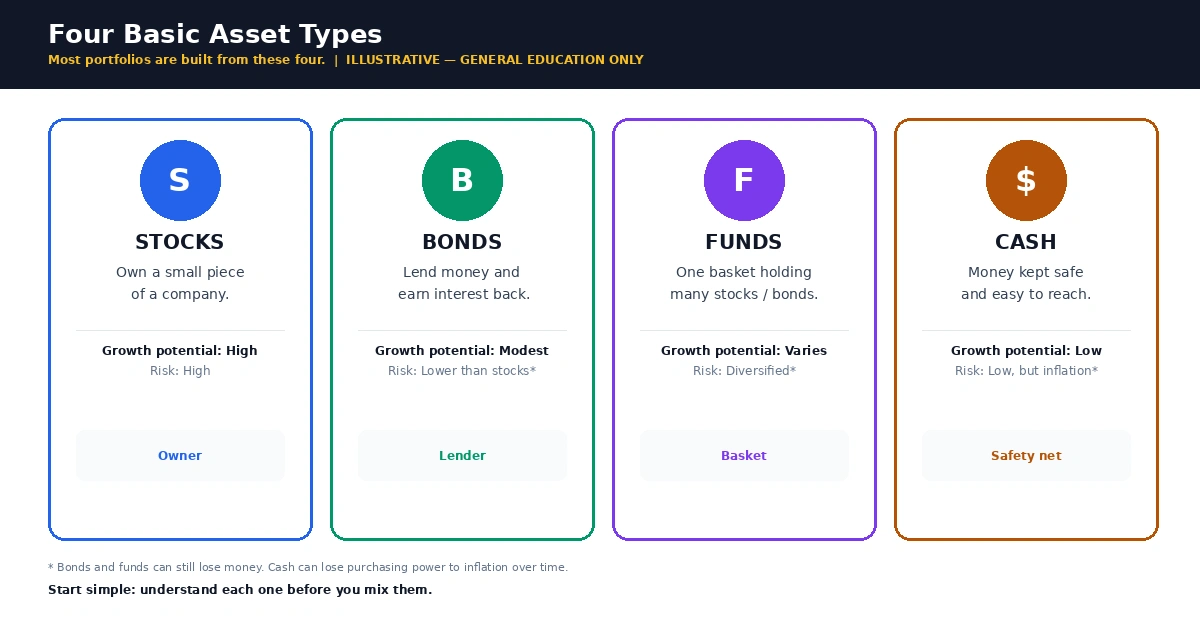
The main assets beginners meet are:
- Stocks: small ownership stakes in companies.
- Bonds: loans to governments or companies that pay interest.
- Funds: baskets of many holdings in one purchase. An index fund is a fund built to track a market index, so it owns a broad slice of the market instead of a handful of picks.
- Cash: stable in nominal terms, but its buying power erodes with inflation.
None of these is “safe” in an absolute sense. They carry different kinds of risk, which the risk section below covers.
Compounding Needs Time More Than It Needs Size
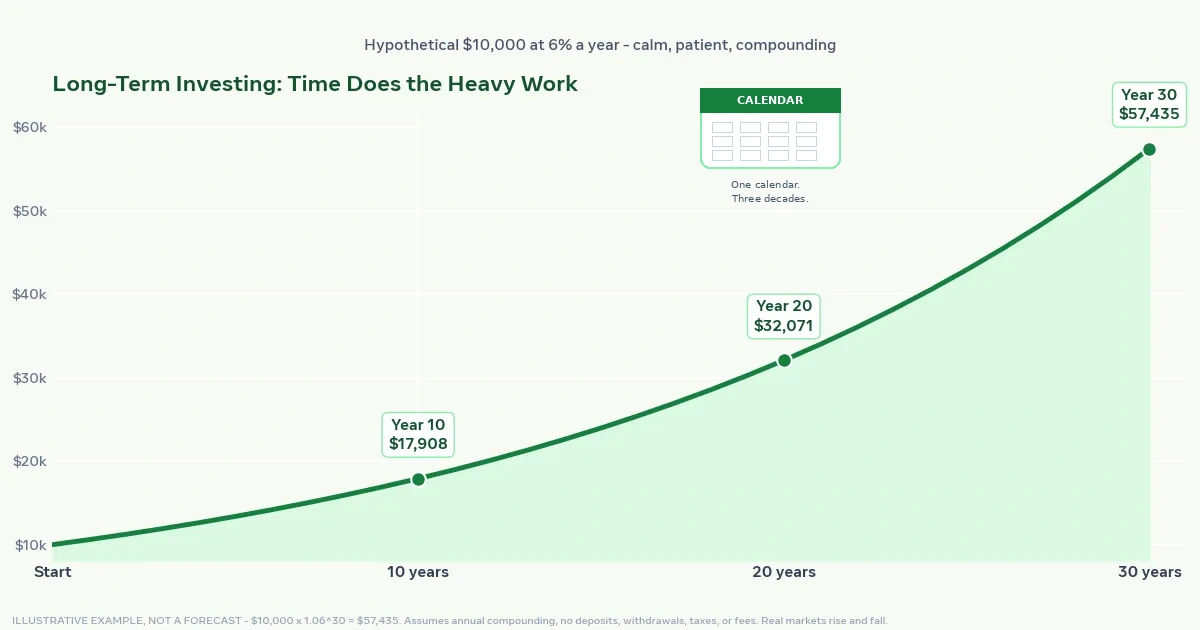
Compounding means your growth earns growth. Gains from year one sit in the account and generate their own gains in year two, so the curve bends upward the longer you leave it alone. A rough rule of thumb, the rule of 72, divides 72 by the annual growth rate to estimate the years needed to double: at 6%, about 12.
Here’s what $200 a month looks like under a hypothetical 6% annual growth rate, compounded monthly, with deposits at each month’s end and no fees, taxes, or inflation adjustment:
| Years invested | Total deposited | Hypothetical balance | Growth portion |
|---|---|---|---|
| 10 | $24,000 | $32,776 | $8,776 |
| 20 | $48,000 | $92,408 | $44,408 |
| 30 | $72,000 | $200,903 | $128,903 |
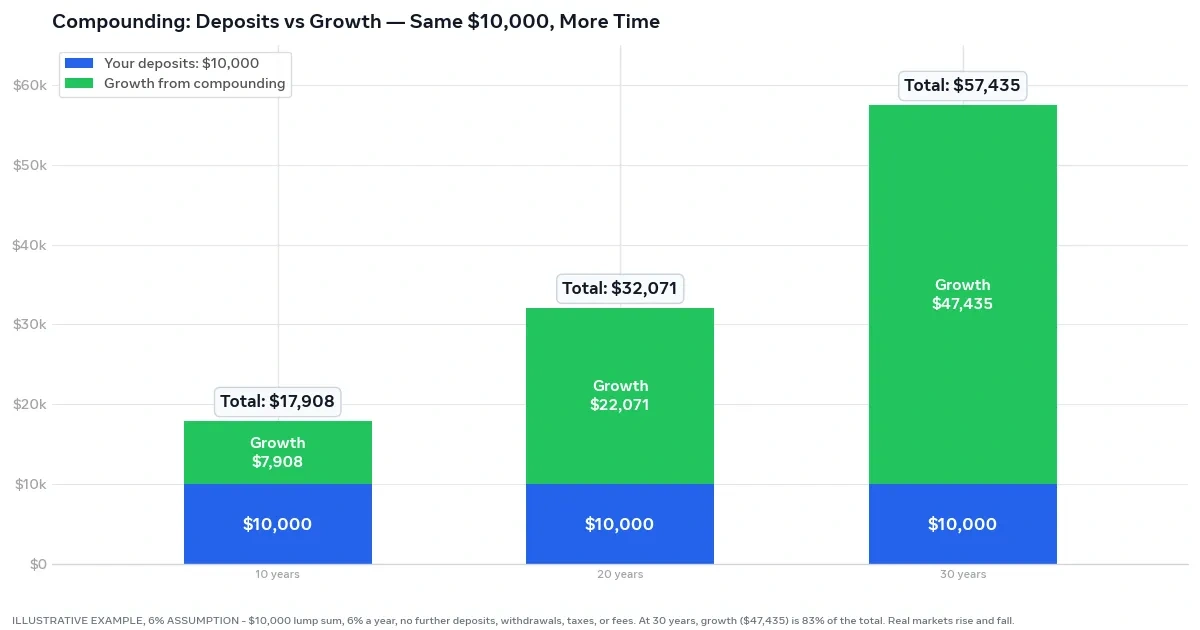
Notice the third row. The second decade adds far more growth than the first, and the third adds more than both combined. That’s the shape of compounding, and it’s why starting early matters more than starting big.
The 6% here is an assumption for illustration, not a forecast. Real returns vary year to year, can be negative for long stretches, and aren’t guaranteed. This is a hypothetical example for illustration only.
What a 1% Annual Fee Takes From Twenty Years
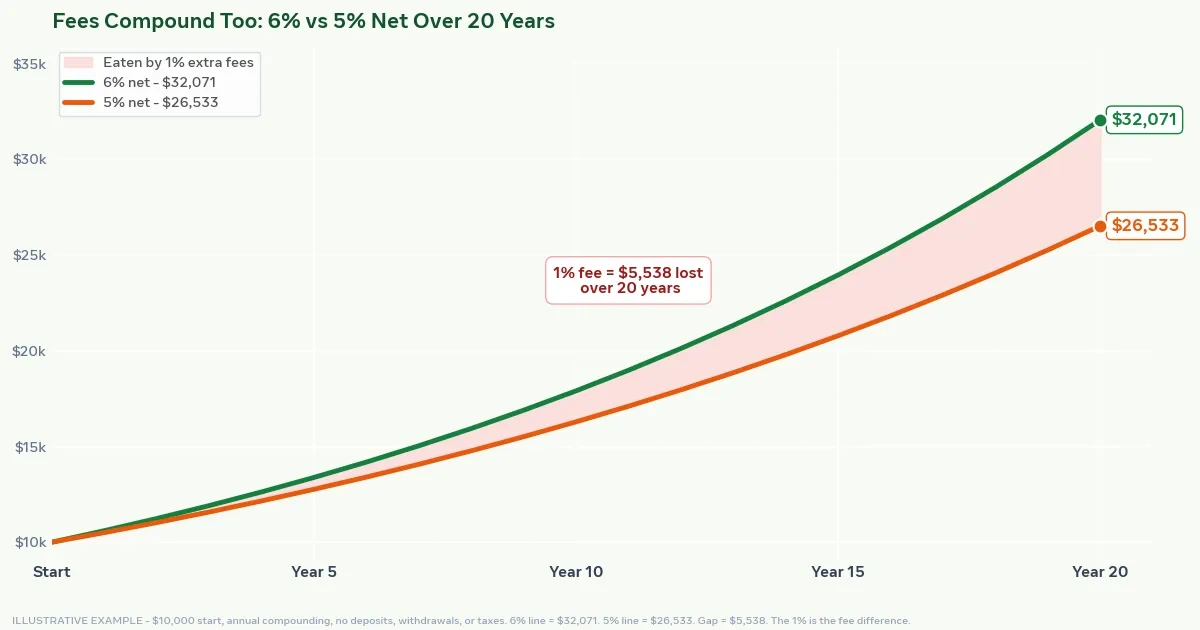
Costs compound too, in the wrong direction. Take the same $200 monthly plan, but suppose fund and platform fees total 1% a year, so the net growth rate is 5% instead of 6%. After twenty years the balance comes to about $82,200 instead of $92,400, a gap of roughly $10,200 on $48,000 of deposits.
Nothing about the investments changed. The fee alone trimmed more than a fifth of the growth. That’s why many long-term investors compare expense ratios (the annual fee a fund charges) and trading costs before choosing between similar options. Fees vary by provider, so check the current terms yourself. This is a hypothetical example for illustration only.
Owning Many Things So No One Thing Decides the Outcome
Diversification means spreading money across different assets so a single bad performer can’t sink the whole portfolio. If one company in a portfolio of 500 fails, the damage is a sliver. If your entire stake is in that one company, it’s the whole story.
Diversification works on several levels: across companies, across industries, across countries, and across asset types such as stocks and bonds. Many beginners use broad index funds to get this spread in a single purchase, though that’s one approach among several, and funds differ in what they hold and what they charge.
Diversification limits the effect of any single failure. It doesn’t stop a broad market decline, when most assets fall together.
Spreading Purchases Over Time With Monthly Contributions
Investing the same amount on a schedule, often called dollar-cost averaging, means you buy more units when prices are low and fewer when they’re high. A hypothetical example with $300 a month and a fund price moving from $10 to $8 to $12 and back to $10:
- Month 1 at $10: 30 units
- Month 2 at $8: 37.5 units
- Month 3 at $12: 25 units
- Month 4 at $10: 30 units
You’d have spent $1,200 for 122.5 units, an average cost of about $9.80 per unit, slightly under the $10 average price. The benefit is partly mechanical and partly behavioral: a schedule removes the temptation to guess the perfect day. It doesn’t guarantee a profit, and in a steadily rising market a lump sum invested earlier can end up ahead. This is a hypothetical example for illustration only.
Matching Each Goal to the Date You’ll Need the Money
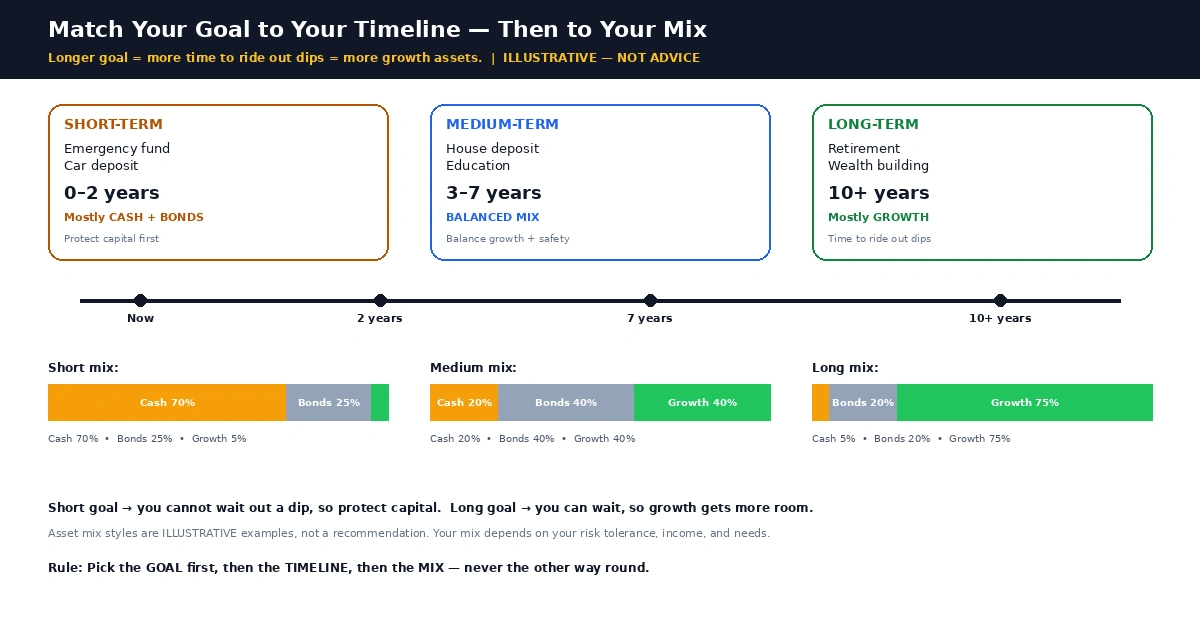
The same market can suit one goal and wreck another, so the timeline comes first. A goal 25 years away, such as retirement, can ride out several downturns. A goal three years away, such as a house deposit, can’t, because a 30% drop right before you need the money leaves little time to recover.
A common framework, offered as general education rather than personal advice:
- Needed within a few years: keep it in lower-volatility places such as cash or short-term holdings.
- Needed in five to ten years: a mix, shifting toward steadier assets as the date approaches.
- Needed in decades: more room for growth-oriented assets, with the understanding that values will swing.
An emergency fund, typically a few months of living costs in accessible cash, usually comes before any long-term investing. Without it, one surprise bill can force you to sell at a bad moment.
A First Plan in Six Decisions
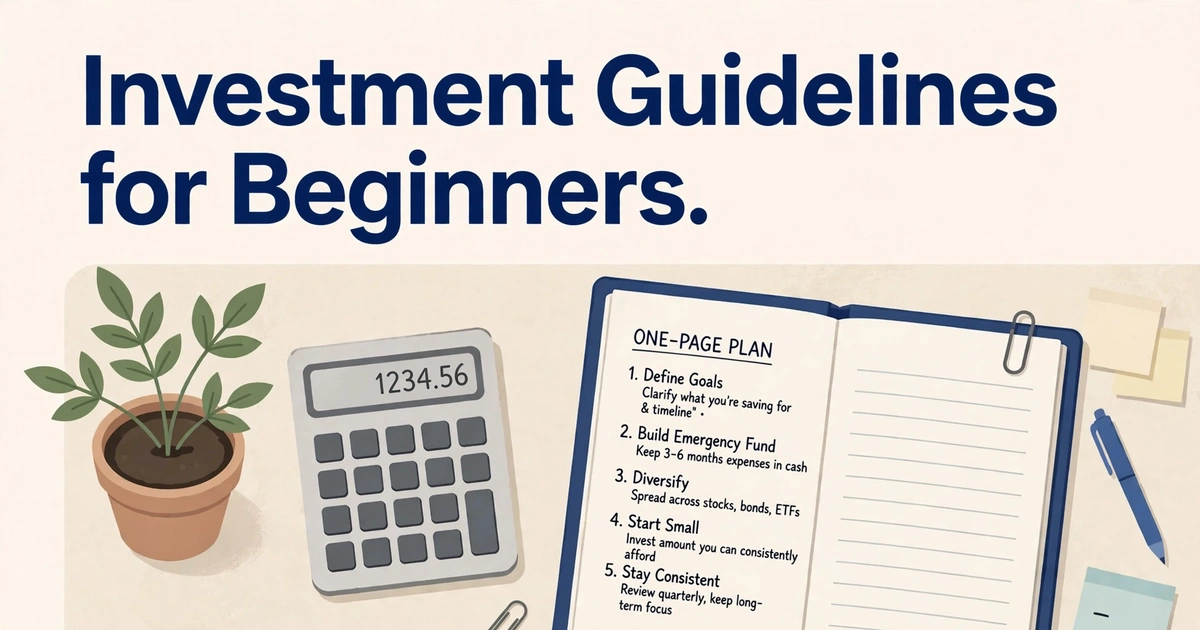
You don’t need a complicated plan to begin. Settle these six, and write them down:
- The goal and its date. Retirement, a deposit, or education, with a target year.
- The emergency buffer. Confirm it exists before you invest.
- The account type. Some countries offer tax-advantaged accounts for long-term investing. Rules, limits, and eligibility vary by country, so check your local regulator or tax authority.
- The asset mix. How much goes into growth-oriented assets versus steadier ones, based on your timeline and how much of a drop you can tolerate.
- The contribution schedule. An amount and date you can sustain through bad months.
- The review rhythm. A set date, perhaps once or twice a year, to check the plan and rebalance if needed.
For a broader checklist, the investment guidelines for beginners cover the starting questions in more depth.
Keeping Leveraged Trading Money Separate From Long-Term Money
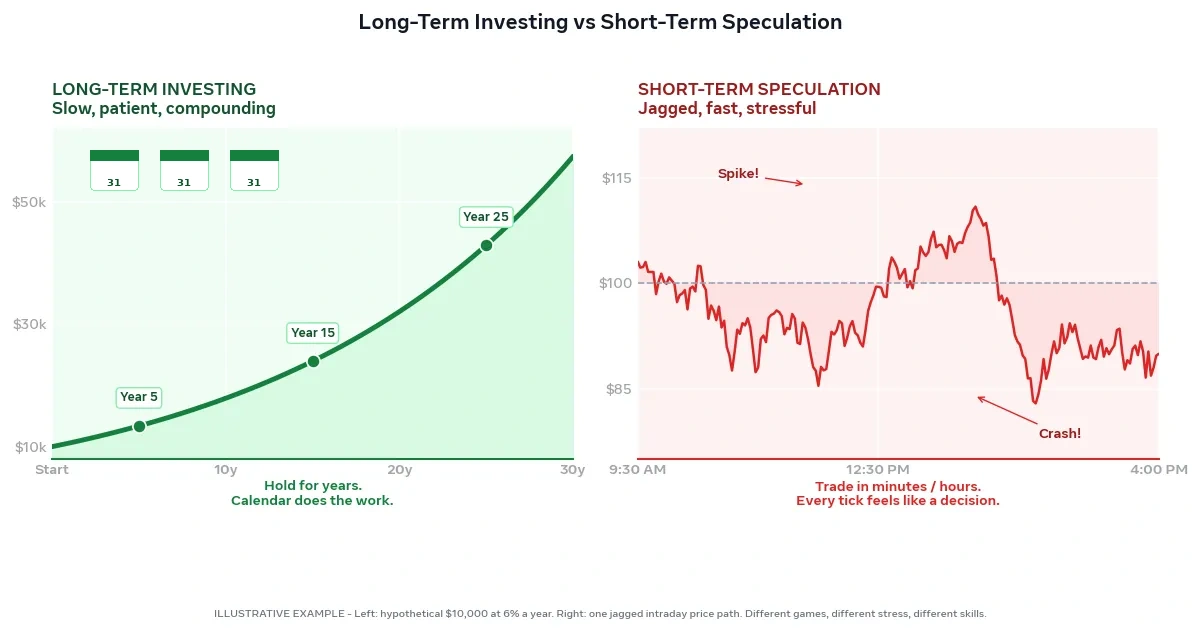
Many VeroFX readers trade forex or CFDs as well as, or instead of, investing, and the two are different activities. Long-term investing is usually unleveraged and spans years. Leveraged trading is short-term speculation: margin magnifies both gains and losses, and you can lose some or all of your deposit quickly. The difference between long-term investing and short-term speculation goes into this further.
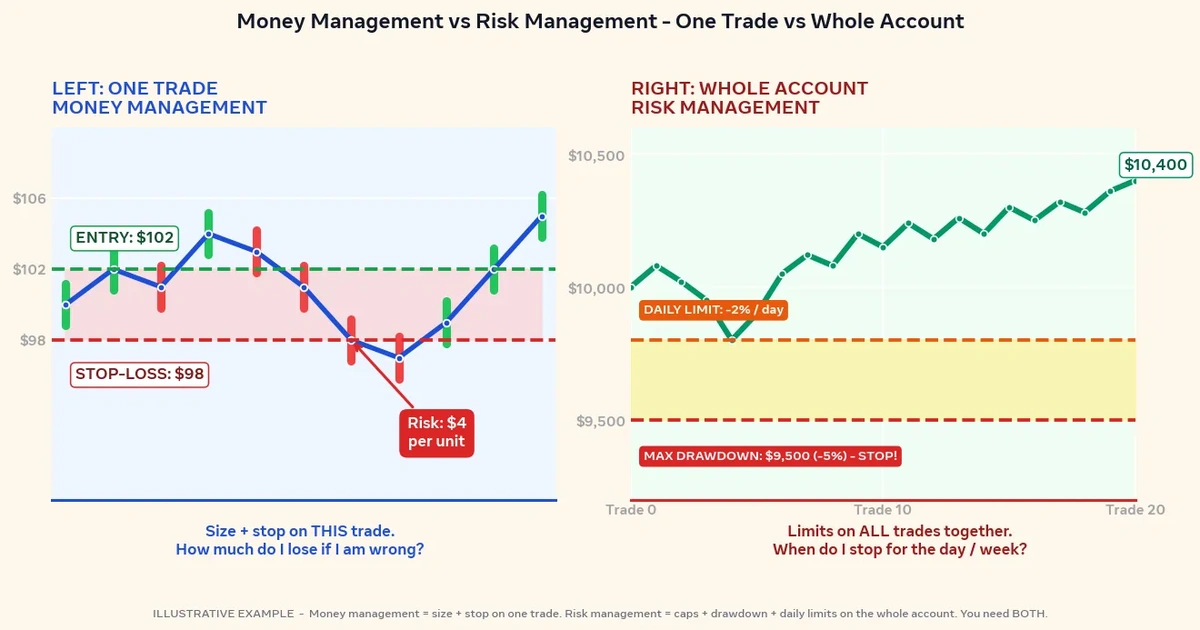
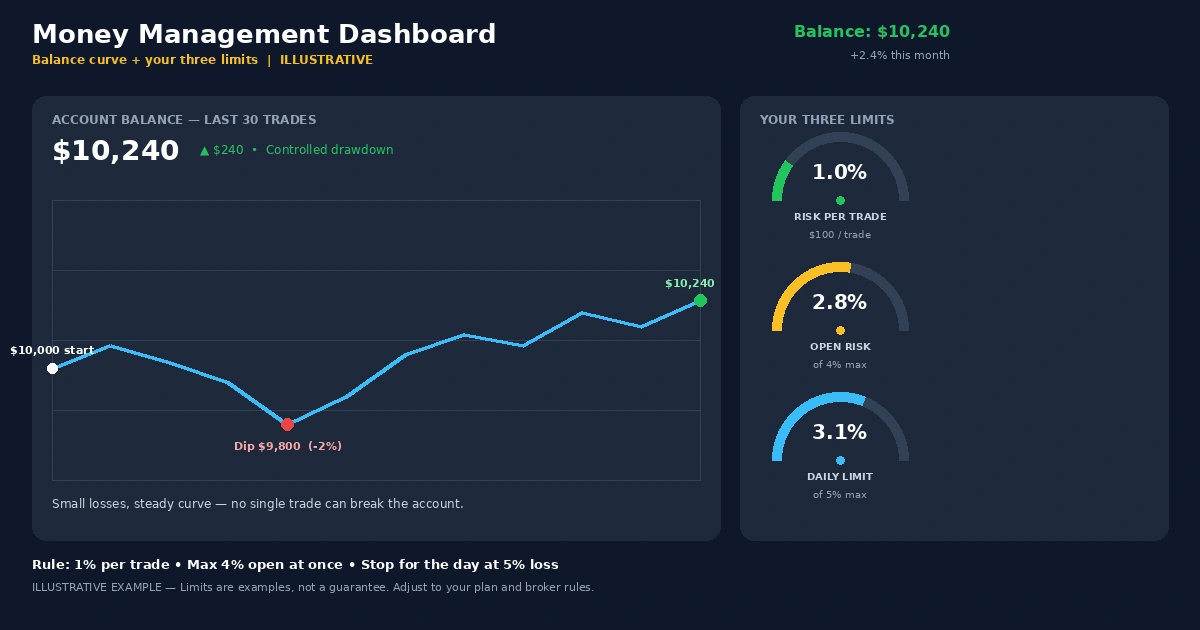
One practical rule: don’t fund trading from money earmarked for long-term goals, and don’t treat trading losses as something your investment account should absorb. Set the capital aside deliberately, as covered in money management in trading, so a bad month in one doesn’t derail the other.
Beginner Slips That Shorten a Long Horizon
- Selling during a drop. Moving to cash after a fall locks in the loss and often misses the recovery. Decide in advance how much volatility you can live with.
- Chasing last year’s top performer. A strong recent run says little about the next one.
- Concentrating in one stock or sector. It feels like conviction until it doesn’t.
- Ignoring costs. As the fee example showed, small percentages add up over decades.
- Investing money you’ll need soon. Short deadlines turn normal volatility into real losses.
- Stopping contributions after a decline. The monthly habit is what carries the plan through downturns.
- Never reviewing anything. “Long-term” doesn’t mean “untouched.” An annual check keeps your mix and costs in line with your goals.
Ways Patient Money Can Still Lose
Holding for years helps, but it doesn’t remove risk. Know the specifics:
- Large drawdowns. A drawdown is a drop from a portfolio’s peak. If a hypothetical portfolio falls 30%, it needs about a 42.9% gain to get back to its old value, and that can take years.
- Uncertain timing. No rule guarantees a market will recover within your timeline.
- Inflation. Cash can lose buying power even when the balance doesn’t fall.
- Concentration. Holding too few assets multiplies the damage when one fails, and some holdings can go to zero.
- Currency risk. Assets priced in another currency can gain or lose value from exchange-rate moves, separate from the asset itself.
- Withdrawal timing. Selling during a downturn to cover expenses locks in losses that waiting might have recovered.
- Behavior. Panic, overconfidence, and chasing trends are the most common reasons good plans fail.
- Rules change. Taxes, fees, and regulations vary by country and can change.
Past performance does not predict future results.
Beginner Doubts About Time, Timing, and Starting Small
How long is “long term” in investing?
There’s no official line, but most people mean at least five years, and often ten or more. The right length depends on your goal. Money needed in a few years shouldn’t ride on volatile assets, while goals decades away can tolerate larger swings along the way.
How much money do I need to start?
Less than most beginners assume. Many platforms allow small, regular deposits, and some let you buy fractions of a fund. What matters more than the amount is consistency and low costs. Fees and minimums vary by provider, so compare current terms before choosing one.
Is long-term investing risky?
Yes. Values fluctuate, and you can lose money, especially over shorter periods or with concentrated holdings. A long horizon and diversification can help reduce certain risks, but they don’t remove them. Match your asset mix to how long you can leave the money untouched.
Should I invest a lump sum or a little each month?
Both are used. A lump sum puts money to work sooner, which has historically helped in rising markets, but it exposes you to a bad entry date. Monthly contributions smooth timing and suit regular income. The better choice is the one you can follow without panic.
What if the market falls right after I start?
It’s uncomfortable but common. If you’re contributing monthly, you buy at lower prices during the fall, which can help over time, though recovery isn’t guaranteed. The real danger is selling in fear. Before investing, decide what size drop you could sit through without changing course.
Let the Calendar Do the Heavy Lifting
Long-term investing rewards the plain stuff: a goal with a date, steady contributions, broad diversification, low costs, and the patience to leave it alone. None of it is exciting, and none of it is guaranteed. This week, write down one goal, its target year, and a monthly amount you could keep paying through a bad year. Then work backward with a compound growth calculator to see how different assumed rates change the result, using cautious numbers rather than hopeful ones.
Disclaimer
This article is for educational purposes only and is not financial advice. Forex and CFD trading involves a high level of risk, and you can lose some or all of your capital. Leverage can magnify both gains and losses. Never trade with money you can’t afford to lose.
This is educational content, not personalized investment advice. Your financial situation, goals, and local regulations are different, so consider speaking with a licensed financial professional before making decisions.
Any percentages or figures shown are historical averages or hypothetical examples, not guarantees. Past performance does not predict future results.
Join now
Comments (0)
Be the first to comment.