
Why Long-Term Investing Often Beats Short-Term Speculation
Screenshots of a 12% week get shared everywhere. Nobody posts a statement showing fifteen quiet years of steady deposits. That imbalance shapes how people see long-term investing and short-term speculation, and it hides the arithmetic that often favors patience: lower costs, fewer decisions, and compounding that nobody interrupts. This isn’t a claim that speculation always loses or that investing always wins. Both can lose money, and both carry real risk. But for most people with most goals, time tends to be a stronger ally than timing. Here’s the reasoning, with hypothetical numbers, and the cases where the opposite approach still has a place.
Five Reasons the Slow Approach Usually Comes Out Ahead
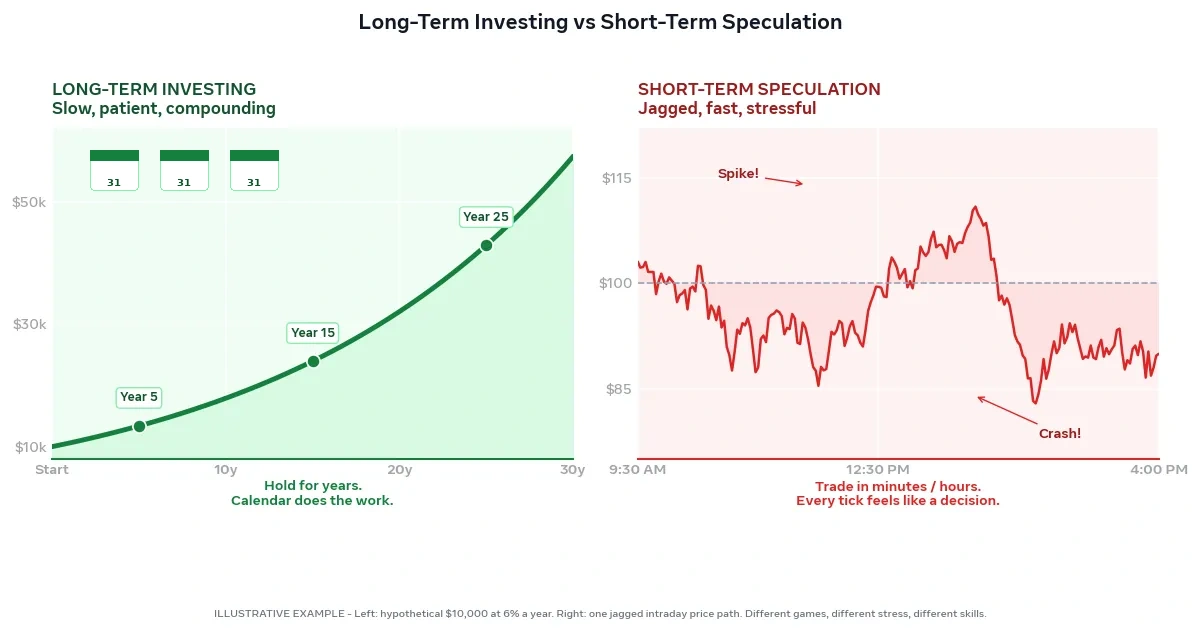
- Long-term investing earns from owning assets over years. Short-term speculation tries to profit from price swings lasting minutes to weeks.
- Frequent trading pays costs on every round trip. Buy-and-hold pays them rarely.
- Equal gains and losses don’t cancel out: a 30% gain followed by a 30% loss leaves you down 9%.
- One deep loss can undo years of steady growth, and leverage makes deep losses easier to reach.
- Short-term speculation can still fit as a small, separate, capped part of a plan, but a weak foundation for one.
Two Activities That Look Alike on a Brokerage Screen
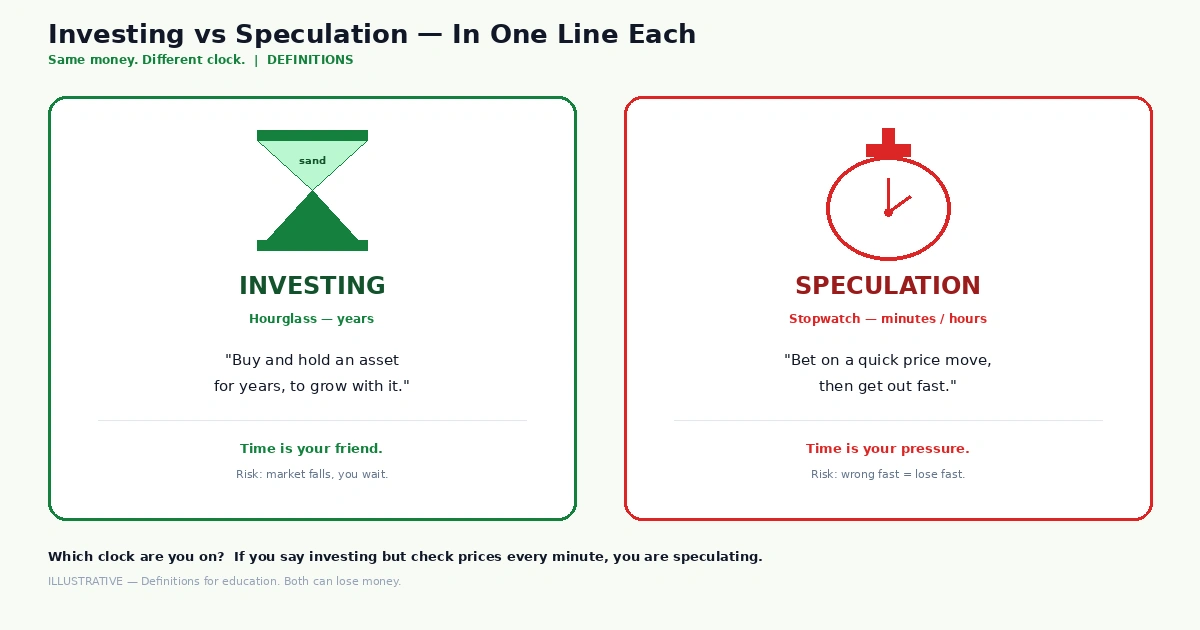
Investing means buying assets for the returns they may produce over a long span, such as company earnings, interest, or growth in value. Speculation means trading mainly on expected price movement over a short span, often with leverage, which lets you control a larger position than your deposit alone would allow.
The same asset can be either one. Buying a broad index fund and holding it for twenty years is investing. Buying the same fund in the morning and selling by afternoon is speculation. The label comes from your plan, not the product.
Leveraged forex and CFD trading is typically speculation, since positions are often held briefly and margin magnifies results in both directions. If the investing side is new to you, long-term investing explained covers the building blocks.
Holding Period, Leverage, Costs, and Workload Side by Side
| Aspect | Long-term investing | Short-term speculation |
|---|---|---|
| Goal | Growth toward a dated goal | Profit from price swings |
| Typical holding period | Years to decades | Minutes to weeks |
| Source of return | Earnings, interest, and growth of what you own | Price movement in either direction |
| Leverage | Usually none | Common in forex and CFDs |
| Trading costs | Few transactions, low cumulative cost | Costs accrue on every round trip |
| Time and attention | Scheduled reviews | Frequent monitoring and decisions |
| Main threats | Long downturns, inflation, poor discipline | Leverage, costs, gaps, emotional errors |
| Loss pattern | Often gradual, unless concentrated | Can be fast and, with leverage, can wipe out a deposit |
What 120 Round Trips Cost Before Price Moves at All
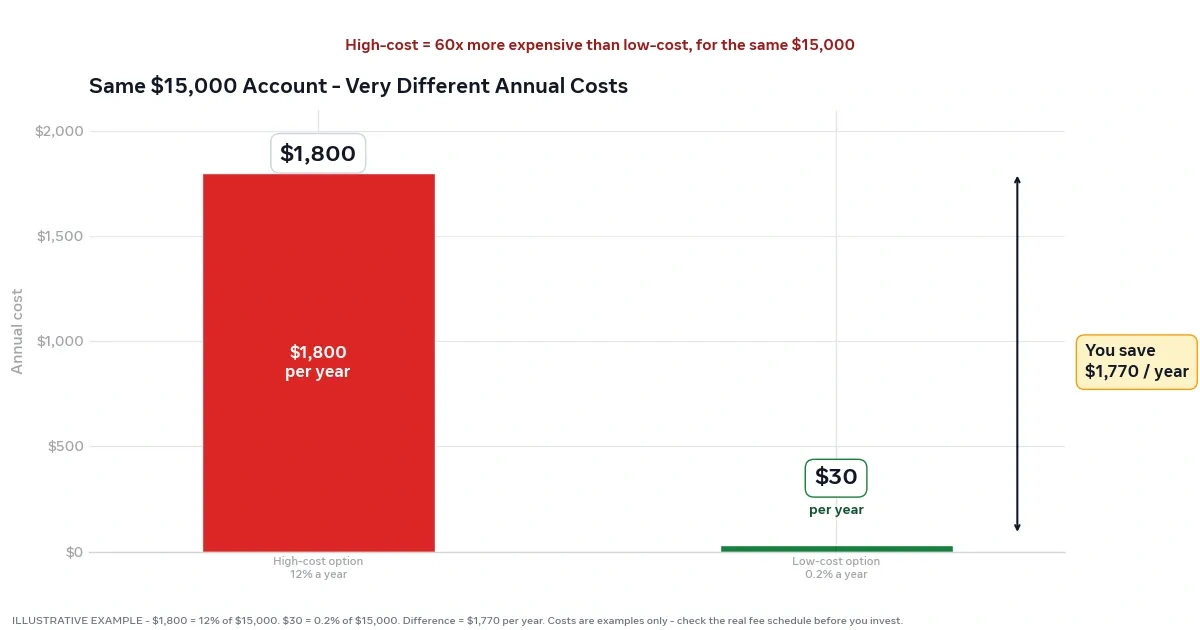
Every trade has a price tag in spread, commission, or both. A round trip is one entry plus one exit. Suppose a hypothetical trader runs a $15,000 account, puts the full account into each position, and pays about 0.1% per round trip. With 120 round trips in a year, that’s 12% of the account, or $1,800, gone before any price movement helps or hurts.
A hypothetical long-term investor in the same account might pay a 0.2% annual fund fee, about $30 a year. Same money, very different toll.
The numbers are simplified. They ignore compounding of costs and assume a fixed account size, and real costs vary by provider and market conditions. The pattern holds, though: the more you trade, the more of any edge goes to friction. This is a hypothetical example for illustration only.
Up 30%, Down 30%, and Still Behind
Speculation usually means bigger swings, and swings carry a hidden penalty. Take a hypothetical $10,000 balance:
- Year one: +30%, so the balance reaches $13,000.
- Year two: −30%, so the balance falls to $9,100.
The average return is zero, yet you’re down $900. Losses are applied to a larger base after a gain, so percentages don’t cancel.
Leverage sharpens this. At 10:1 leverage, a 10% move against your position equals your entire deposit. Brokers typically close positions through margin rules before that point, and the closure can lock in a loss you’d have avoided by waiting. Stop-loss orders can limit damage, but gaps and slippage can fill them at worse prices than planned. This is a hypothetical example for illustration only.
What One Deep Loss Does to Fifteen Years
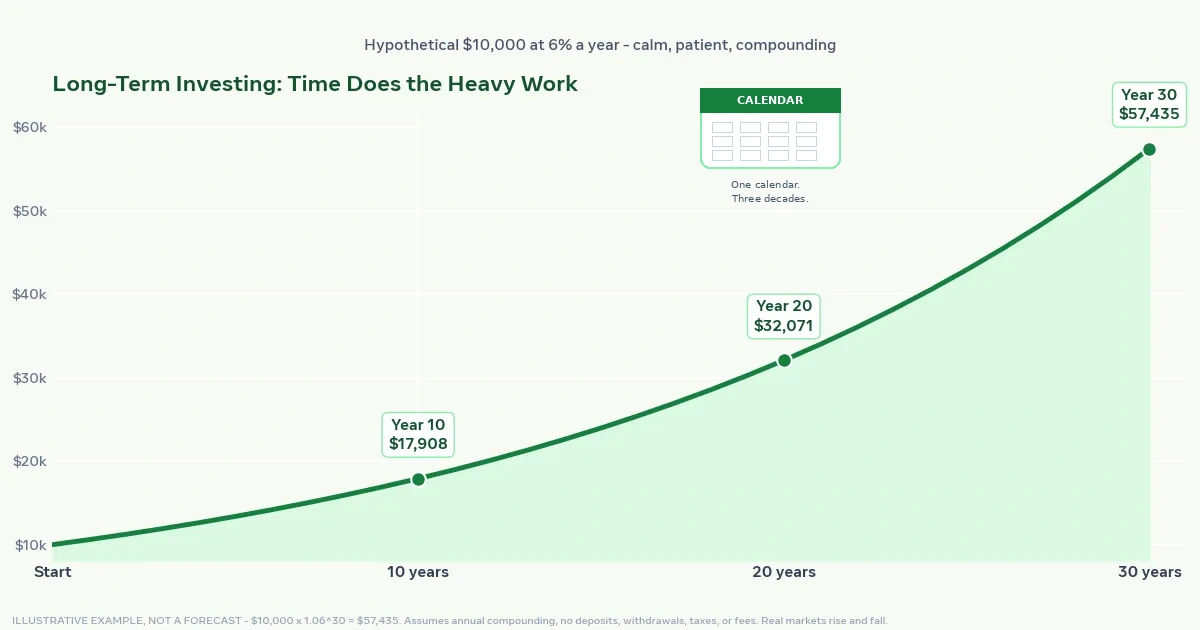
Consider two hypothetical paths starting at $10,000, with a 5% annual growth assumption.
- Path A: 5% a year for fifteen years: 10,000 × 1.05¹⁵ ≈ $20,789.
- Path B: 5% for seven years ($14,071), a 40% loss in year eight ($8,443), then 5% for the final seven years: about $11,880.
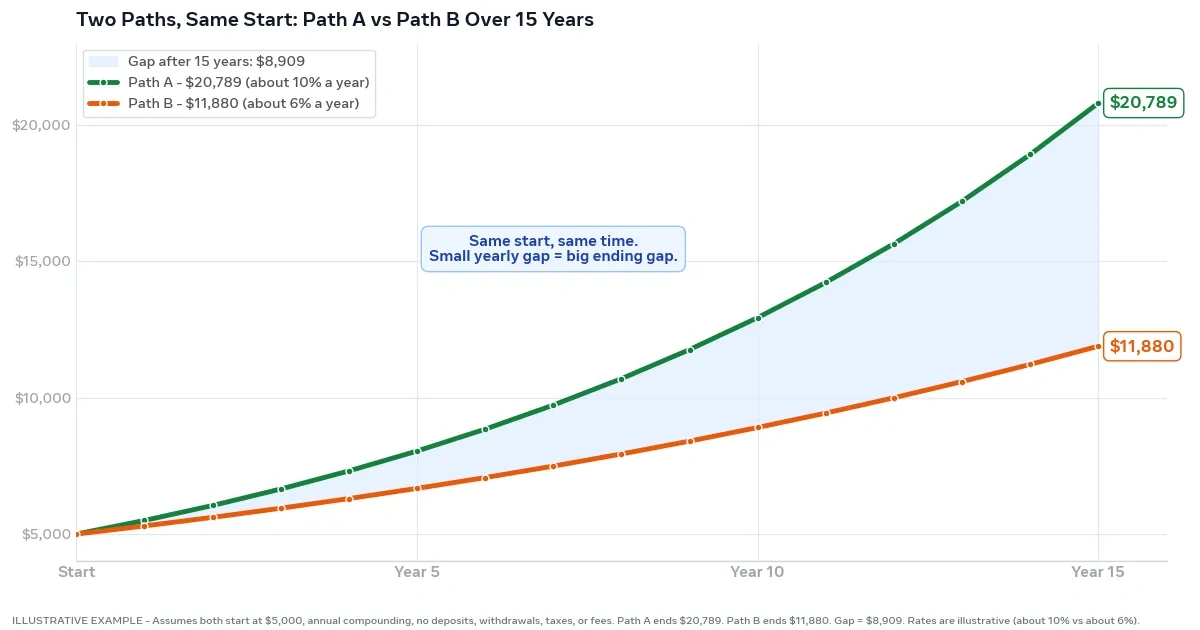
The only difference is one bad year, and it costs roughly $8,900 of the ending balance. Steady compounding depends on not being knocked backward, and large swings are what knock it backward. These figures are assumptions, not forecasts, and real returns vary and aren’t guaranteed. This is a hypothetical example for illustration only.
The Hidden Cost Is Your Attention and Your Nerves
Speculation asks for a decision every time you look at the screen: enter, exit, hold, move the stop. Each decision is a chance for an error, and stress makes errors more likely. Losing trades invite revenge trading, winners invite oversizing, and long sessions wear down discipline.
Long-term investing cuts the number of decisions drastically. A schedule of contributions and a yearly review leave far fewer moments where fear or excitement can take the wheel. That doesn’t make investors immune to panic, since selling in a downturn is the classic investor mistake, but the opportunities for it are fewer.
The psychological side deserves its own reading: why most traders fail looks at the patterns behind the damage.
When Short-Term Speculation Still Earns a Seat
Speculation isn’t foolish by definition. Some traders build tested rules, risk small amounts, track results in a journal, and treat it as a skill that takes years to develop. If you’re curious about the styles, scalping vs day trading vs swing trading compares how they differ in time and demands.
It fits best under these conditions:
- The money is separate from long-term goals and emergency savings.
- You can lose the entire amount without changing your life.
- You have written rules, a fixed risk per trade, and a loss limit.
- You’ve practiced on a demo account first.
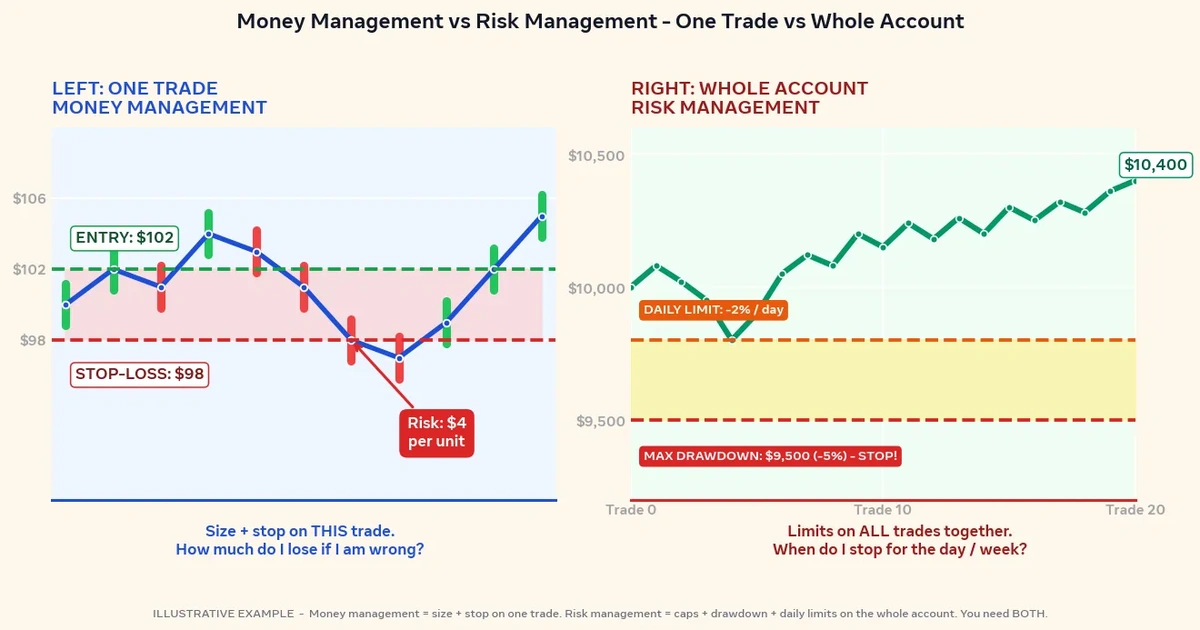
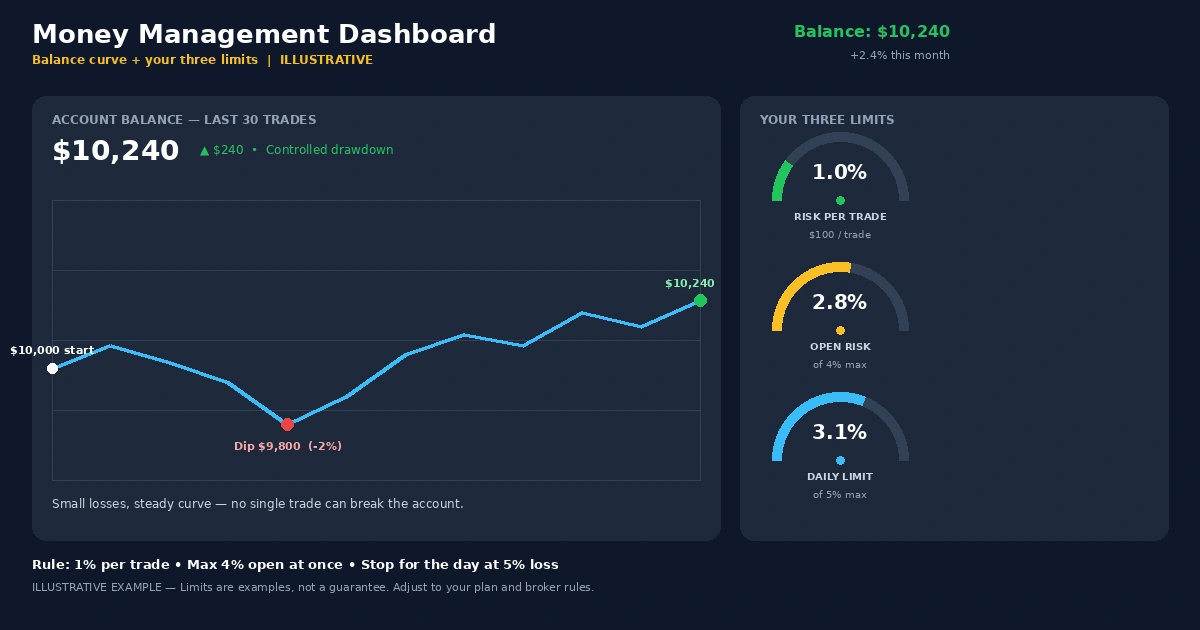
Who should skip it: anyone who needs the money within a few years, anyone without an emergency fund, and anyone who’d be tempted to chase losses with funds meant for other goals. Account-level rules for the speculative side are covered in money management in trading.
A Core-and-Satellite Split for Readers Who Want Both
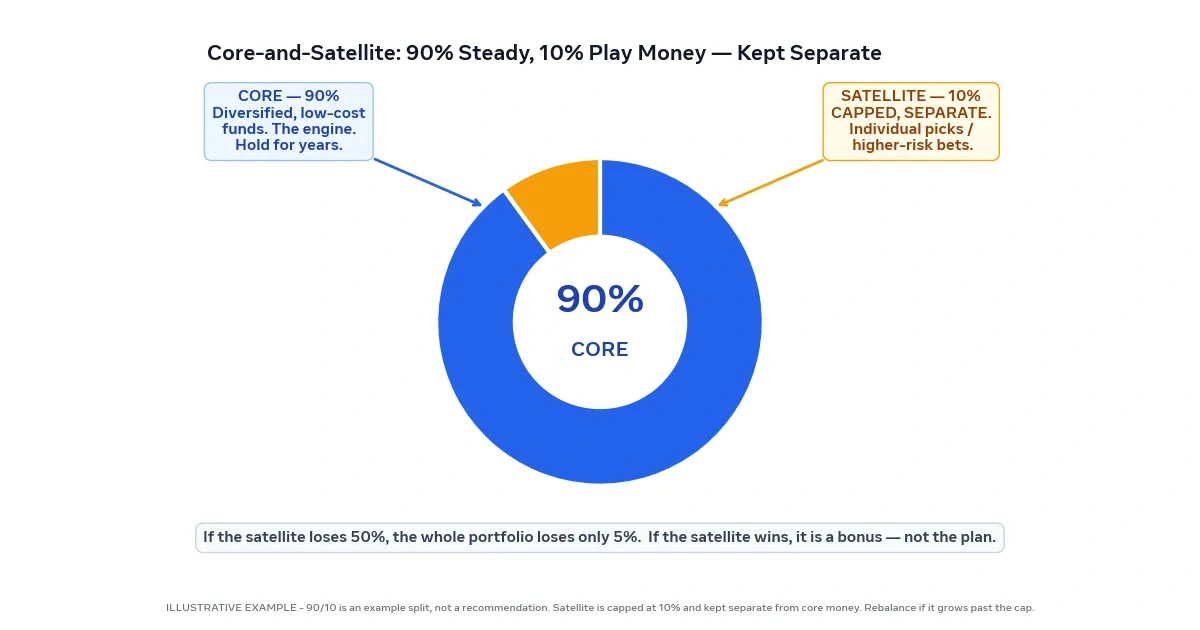
Some people want a long-term base and a small speculative outlet. A core-and-satellite structure handles that. The core holds long-term, diversified investments. The satellite is a small, capped slice used for short-term trading.
Take a hypothetical $30,000 total: $27,000 in the core and $3,000 in the satellite. If the satellite lost everything, the total would fall 10%, painful but not ruinous, while the core keeps compounding.
The split is a structural idea, not a recommendation. The right proportion depends on your goals, income, and tolerance for loss, and some people sensibly choose a satellite of zero.
Slips That Turn a Plan Into a Gamble
- Calling speculation “investing.” A leveraged, two-day trade doesn’t become an investment because you used the word.
- Holding a failed trade “for the long term.” Turning a losing trade into an investment after the fact is how small stopped-out losses become large unplanned ones.
- Using long-term money for trading. Retirement savings and the house deposit shouldn’t fund a leveraged position.
- Judging from screenshots. Winning trades get posted, losing months don’t.
- Ignoring cumulative costs. Small per-trade fees add up across hundreds of trades.
- Applying leverage to long-term holdings. Borrowed exposure changes a patient plan into one that can be forced out by a dip.
Where Patience Can Still Lose Money
Saying long-term investing often compares well isn’t saying it’s safe. Know the specifics.
- Long downturns. A broad decline can last years, and no rule guarantees a recovery within your timeline.
- Concentration. Holding few assets magnifies the damage when one fails, and some holdings can go to zero.
- Inflation. Cash and low-yield holdings can lose buying power even when the balance doesn’t fall.
- Currency risk. Foreign-priced assets can gain or lose value from exchange-rate moves alone.
- Forced selling. Needing the money during a decline can lock in losses.
- Behavior. Panic and trend-chasing are the usual reasons good plans fail.
Speculation carries its own risks: leverage can wipe out a deposit quickly, margin rules can force closures, gaps and slippage can push losses past your plan, and costs eat into thin edges. Past performance does not predict future results, and rules on taxes, fees, and leverage vary by country, so check your local regulator.
Common Puzzles About Holding Versus Trading
Is long-term investing actually better than short-term trading?
Not in every case, but the structure favors it for most people: fewer costs, no required leverage, fewer emotional decisions, and uninterrupted compounding. Skilled, disciplined traders can do well, though results vary widely and aren’t guaranteed. Which approach fits depends on your goal, timeline, experience, and tolerance for loss.
Is forex trading investing or speculation?
Leveraged forex and CFD trading is usually speculation. Positions are typically held for short periods, there’s no underlying earnings stream, and margin magnifies both gains and losses. Some people hold currency positions for longer periods, but that still depends on exchange-rate moves, not on assets producing returns.
Why do many beginners struggle with short-term trading?
Several pressures combine: costs on every trade, leverage that amplifies mistakes, emotional decisions after losses, and a lack of a tested, written edge. Beginners also often size too large. Practicing on a demo account and risking small amounts first can help, though neither guarantees results.
How long counts as “long term”?
There’s no official line. Most people mean at least five years, and often ten or more. The right length depends on the goal: money needed in three years shouldn’t depend on volatile assets, while retirement savings decades away can ride out more swings.
Is speculation the same as gambling?
They aren’t identical. Speculation can rest on analysis, written rules, and defined risk, while gambling relies on chance with a built-in disadvantage. But speculation without a tested edge, risk limits, or cost awareness starts to look a lot like gambling, and the account results often show it.
Pick the Game Your Calendar Can Support
Time is the quiet advantage of long-term investing: fewer costs, fewer decisions, and compounding left undisturbed. Speculation can have a place, but only with capped, separate money. Take thirty minutes this week and list everything you hold or have open, tagging each item “investment” or “speculation” next to the date you’d need that money. Any speculative item tied to a near-term goal is worth rethinking before the market does it for you.
Disclaimer
This article is for educational purposes only and is not financial advice. Forex and CFD trading involves a high level of risk, and you can lose some or all of your capital. Leverage can magnify both gains and losses. Never trade with money you can’t afford to lose.
This is educational content, not personalized investment advice. Your financial situation, goals, and local regulations are different, so consider speaking with a licensed financial professional before making decisions.
Any percentages or figures shown are historical averages or hypothetical examples, not guarantees. Past performance does not predict future results.
Join now
Comments (0)
Be the first to comment.