
Scalping vs Day Trading vs Swing Trading: Which Style Fits You?
A trader with a full-time job opens a chart at 9 p.m., sees a promising setup, and decides to scalp it. Forty minutes later the trade is still open, the stop is gone, and what began as a quick scalp has quietly become an overnight hold. Mix-ups like this are why scalping vs day trading vs swing trading matters. The three styles differ in more than speed. They change how much a trade costs you, how big your position can be, how many hours you spend at the screen, and how stress builds. This guide compares them with numbers so you can judge which one fits your life.
Hold Time Is the Dividing Line
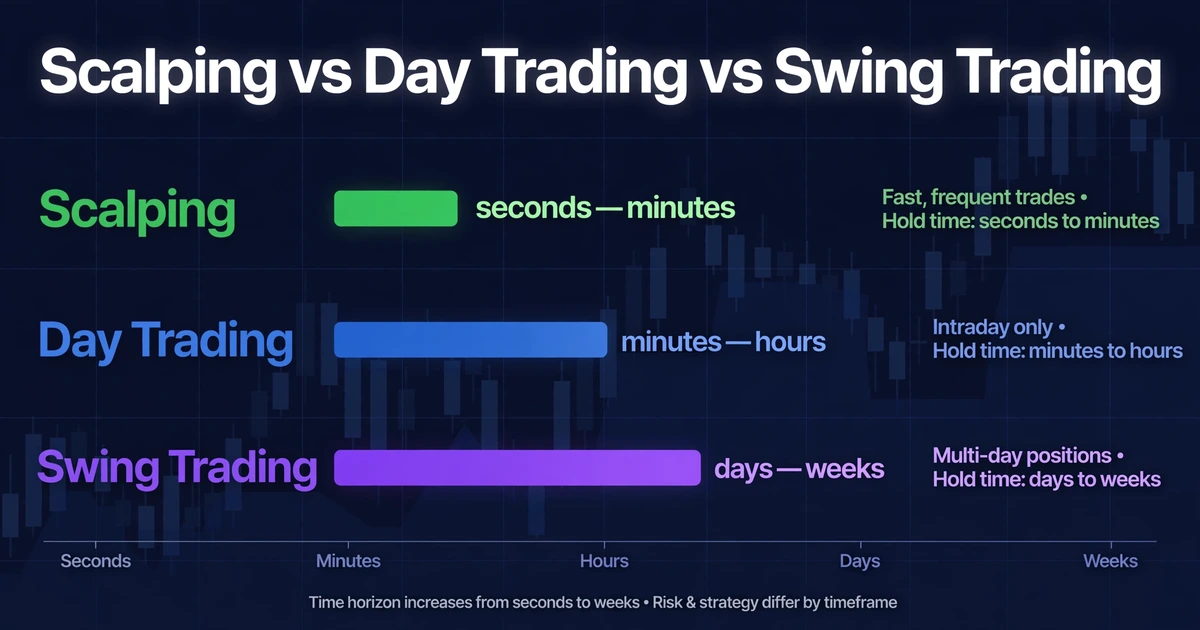
- Scalping means holding trades for seconds to a few minutes and aiming for very small gains, often a handful of pips.
- Day trading means opening and closing positions within the same session or day, with no position held overnight.
- Swing trading means holding for several days to a few weeks, aiming to capture one “swing” of a larger move.
- Shorter holding times make transaction costs a bigger share of each trade, and longer holding times expose you to overnight gaps and swap charges.
- No style is easier or more profitable by nature. The right one is the one whose demands you can meet consistently.
Minutes, Hours, or Days: How Each Style Spends Your Time
Every trading style is really a decision about time. A pip is the smallest standard price increment in most currency pairs, and a spread is the gap between the buy and sell price, which you pay each time you open a trade. Both matter more as your timeframe shrinks.
Scalping: Many Small Trades, Thin Margins
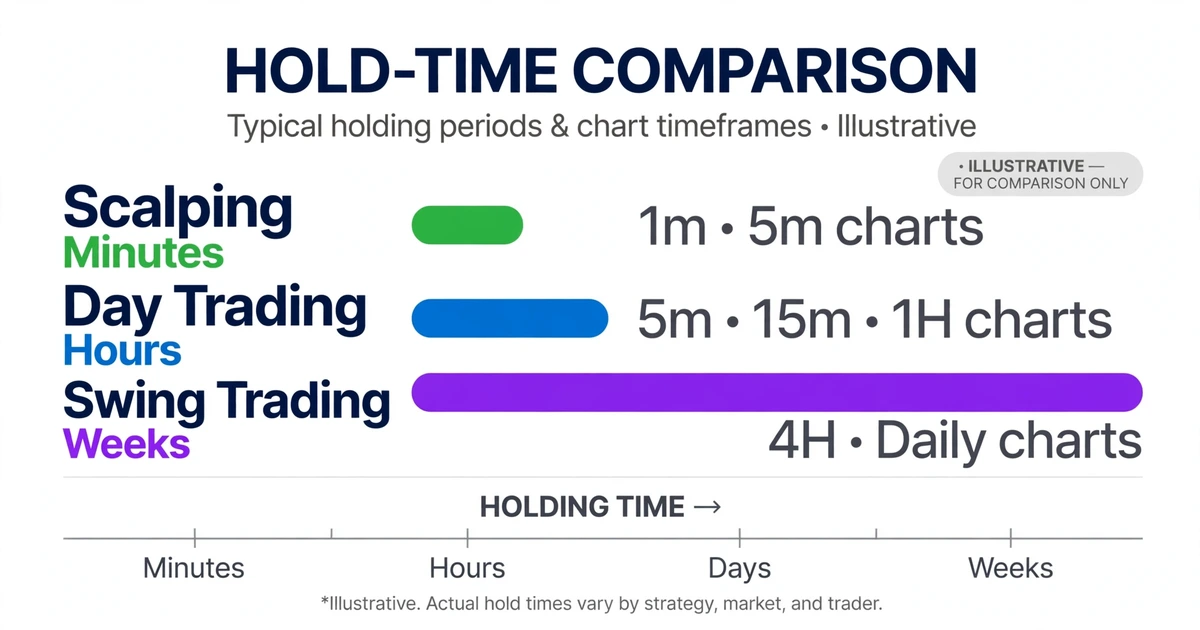
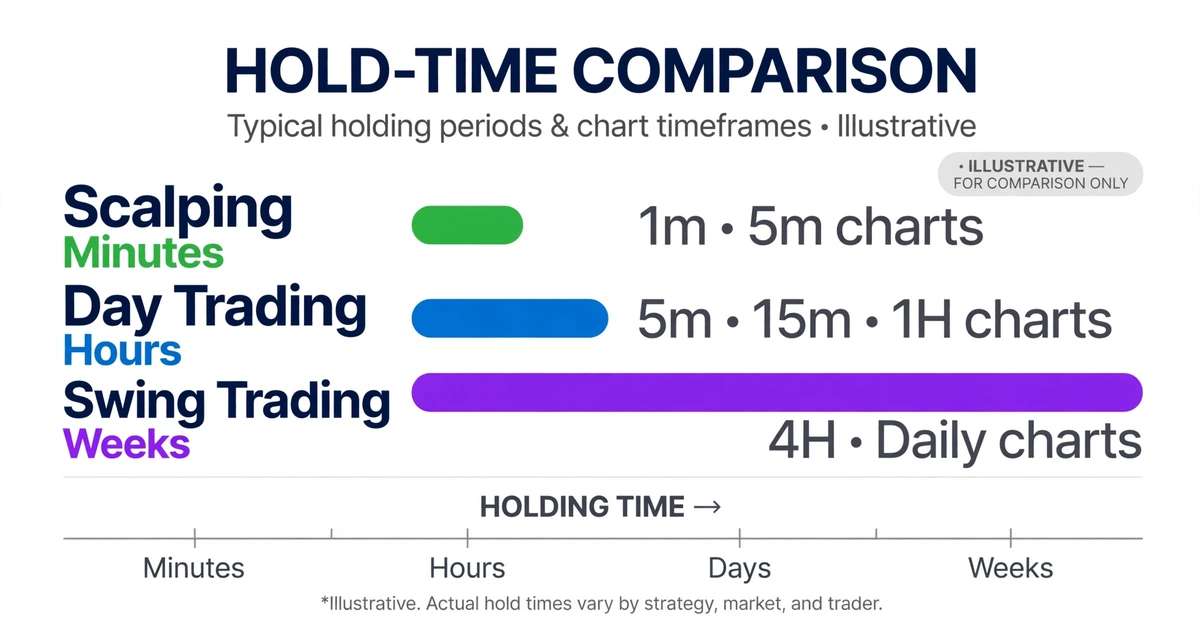
Scalpers work on one-minute to five-minute charts and take many trades, sometimes dozens in a session. Each trade targets a small move and uses a tight stop-loss. The edge, if there is one, comes from repeating a clear setup with strict discipline.
The catch is that tight margins leave no room for error. A one-pip rise in spread, a half-second of slippage (getting filled at a worse price than you clicked), or a slow connection can erase the whole expected gain. Scalping also demands sustained focus. How emotions affect trading decisions is worth reading before you try it, because rapid-fire trades put pressure on exactly the habits that cause revenge trading and overtrading.
Day Trading: One Session, Flat by the Close
Day traders usually use charts from five minutes to one hour and take a few trades per day. They finish flat, meaning no open positions, so they never face overnight swap charges or weekend gaps. Targets are larger than a scalper’s, so costs weigh less on each trade.
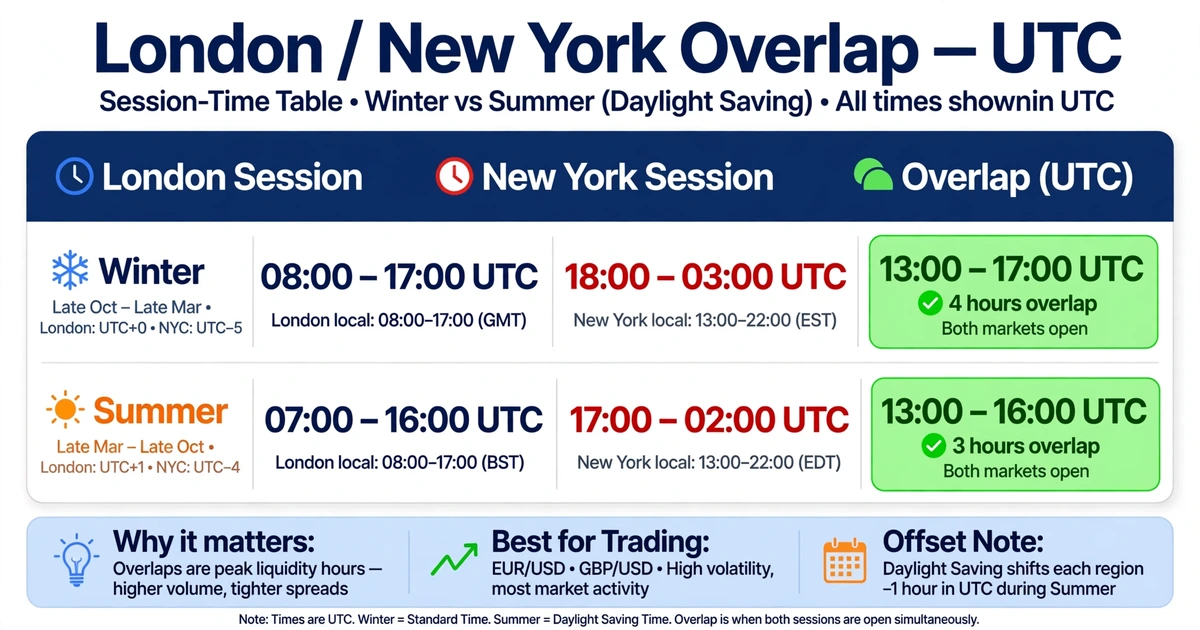
The trade-off is time. You must be at your screen during the hours when your pair moves. For many traders that means the London and New York overlap, which runs roughly 13:00–17:00 UTC in northern-hemisphere winter and an hour earlier (12:00–16:00 UTC) when the US and UK are on summer time. The two countries change their clocks on slightly different dates, so check the offset in spring and autumn. A deeper look at when pairs move is in forex trading sessions explained.
Swing Trading: Holding Through the Noise for Days
Swing traders use four-hour and daily charts, check them once or twice a day, and place orders in advance. Each trade has a wide stop and a wide target. Because they act rarely, spread and commission become a very small part of the picture.
What you give up is certainty overnight. Prices can gap on news while you sleep, and your stop may fill at a worse price than you set. You also pay or receive swap (a financing charge for holding a position past the daily rollover), which can add up on longer holds. And a wide stop means you must trade a smaller position to keep your risk fixed, which is the next point.
The Three Styles Side by Side
| Factor | Scalping | Day Trading | Swing Trading |
|---|---|---|---|
| Typical hold | Seconds to minutes | Minutes to hours | Days to weeks |
| Common charts | 1–5 minute | 5-minute to 1-hour | 4-hour to daily |
| Trades per day | Many | A few | Often less than one |
| Screen time | Continuous during sessions | Focused blocks | Brief daily check-ins |
| Cost sensitivity | Very high | Moderate | Low (but swap applies) |
| Overnight gap risk | None | None | Yes |
| Stress pattern | Constant, fast decisions | Concentrated pressure | Waiting, doubt, patience |
Same Risk, Three Position Sizes: A Hypothetical Costs Comparison
Assume a $4,000 USD account risking 1% ($40) per trade on GBP/USD, where one pip equals about $10 per standard lot. Assume a combined cost of 1.7 pips per round trip (1.0 pip spread plus 0.7 pip commission). Real costs vary by broker and by time of day, and the stop distances below are simplified.
| Scalper | Day trader | Swing trader | |
|---|---|---|---|
| Stop-loss | 5 pips | 20 pips | 80 pips |
| Target | 5 pips | 30 pips | 150 pips |
| Position size ($40 ÷ stop × $10) | 0.8 lot | 0.2 lot | 0.05 lot |
| Cost in pips vs. target | 1.7 / 5 = 34% | 1.7 / 30 ≈ 5.7% | 1.7 / 150 ≈ 1.1% |
| Cost in dollars | $13.60 | $3.40 | $0.85 |
| Cost as share of the $40 risk | 34% | 8.5% | 2.1% |
This is a hypothetical example for illustration only.
Two things stand out. First, risking the same $40 forces three very different position sizes, because the stop distance decides the lot size. Second, the scalper pays about a third of the risk in costs on every trade before the market has moved at all. The swing trader pays about a fiftieth of that burden. This is why scalpers care so much about spreads and execution speed, and why a wide-spread period can make a scalping setup unworkable.
Swing traders should add swap to this picture. Holding the 0.05-lot position over several nights could cost or earn a small amount depending on the direction and the pair, and it varies by provider.
Matching a Style to Your Schedule, Temperament, and Account
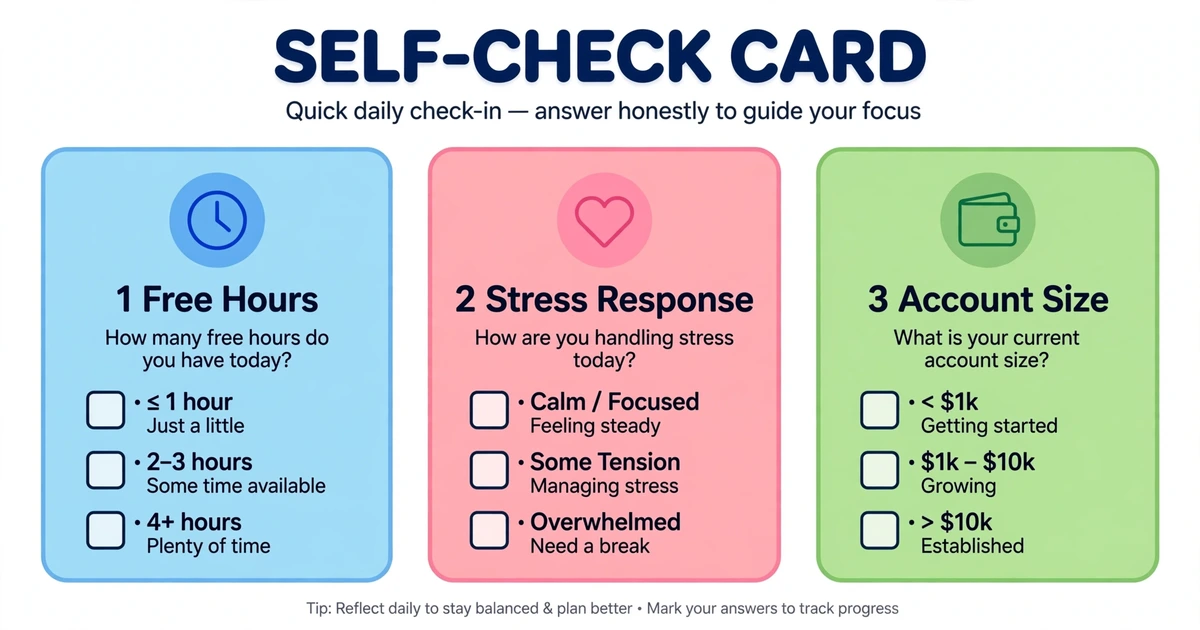
Start With the Hours You Actually Have
Count the uninterrupted hours you can give to charts on a typical weekday. If you can’t guarantee a focused block during active market hours, scalping and even day trading will be unreliable for you, because both depend on being present when the setup forms. Swing trading works with a schedule built around work or study, since it needs only short, planned check-ins.
Be Honest About How You Handle Stress
Some people think clearly under speed and others freeze or overreact. Ask yourself what a string of three quick losses does to your next decision. If the answer is “I take a bigger trade to win it back,” fast styles will amplify that habit. If waiting through a drawdown makes you move your stop or close early, swing trading will test you in a different way. Neither weakness disqualifies you, but you should know which one you have. Our guide to how to choose your trading style covers this in more depth.
Consider Account Size and Costs
Small accounts feel the cost problem most. A $500 account scalping with a 1.7-pip cost has little room to absorb it, and many traders discover that the costs, not the market, are the main drag. Wider stops on slower styles make position sizes small but costs tolerable. Remember that high leverage magnifies both gains and losses, so trading a larger position than your risk plan allows can wipe out a small account quickly.
Who Should Probably Skip Which Style
- Skip scalping if you have an unstable connection, can’t watch charts continuously, tend to trade emotionally after losses, or trade through a high-spread broker.
- Skip day trading if you can’t be present during active hours, or you feel pressure to “make something happen” every session.
- Skip swing trading if you can’t tolerate overnight gaps, or you will check the position every ten minutes and interfere with it.
Style Drift and Other Habits That Blur Your Edge
- Drifting between styles mid-trade. Opening a scalp, ignoring the exit, and calling it a swing is the most common way a plan becomes a hope. Decide your style and hold time before you click.
- Choosing a style for how it looks. Rapid-fire scalping screenshots look exciting, but the style can’t be copied without the matching costs, speed, and discipline.
- Switching every few weeks. A style needs enough trades to judge. Changing after two bad weeks gives you no useful data on any of them.
- Ignoring costs in your test results. A scalping record that ignores spread and slippage will look better than live trading will be.
- Using swing-sized stops with scalp-sized positions. Mixing the two breaks your risk math. Recalculate your lot size every time the stop distance changes.
Where Each Style Breaks: Slippage, Fatigue, and Overnight Gaps
Every style has a weakness, and knowing it ahead of time helps you plan for it.
Scalping is most exposed to execution risk: slippage, requotes, widening spreads around news, and platform or connection failures. It also drains attention, and decision fatigue late in a session can lead to sloppy entries.
Day trading is exposed to overtrading and to chasing setups when a session has been slow. Pressure to “finish green” before the close can push you to break your rules.
Swing trading is exposed to gaps, where price jumps past your stop and fills you at a worse level. This can happen over weekends and around major news. Swap charges and the slow grind of a losing position also test patience.
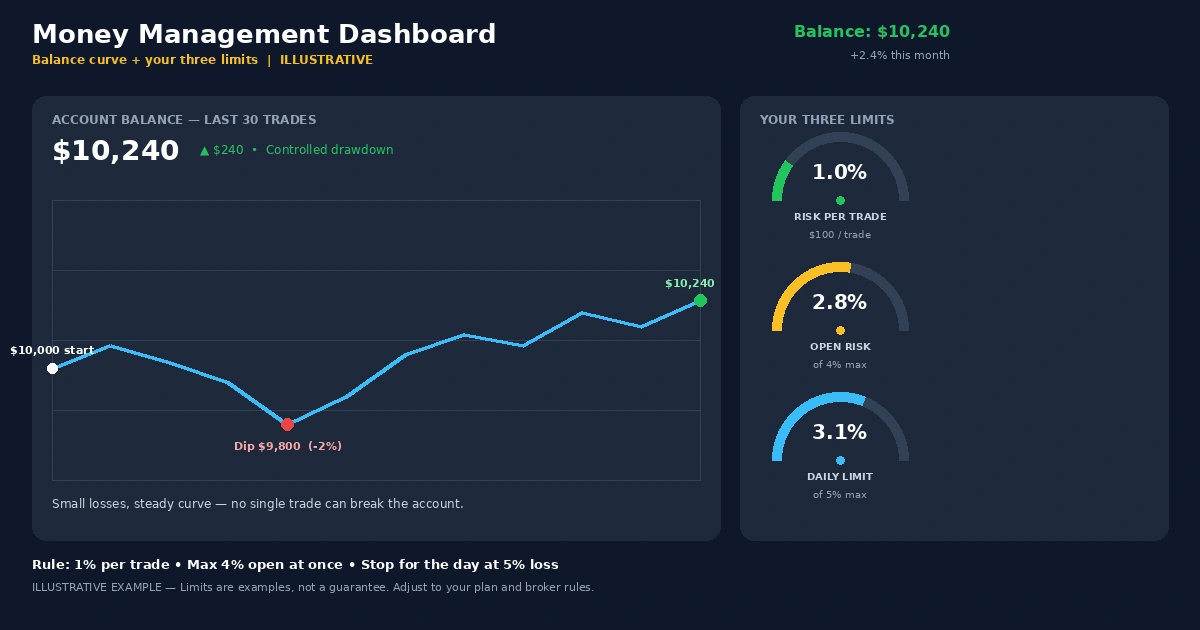
All three styles carry leverage risk. Your stop-loss limits loss only when the market fills it near your price, and there is no guarantee it will. Fixed-percentage position sizing, covered in the forex risk management complete guide, applies to every one of them.
Backtested results for any of these styles also tend to overstate live performance, because they rarely capture real spreads, slippage, and the emotions of an open trade.
Style-Choice Questions Traders Ask Before Committing
Which is more profitable: scalping, day trading, or swing trading?
None of them is more profitable by design. Results depend on your edge, discipline, costs, and risk control. Scalping faces the highest cost drag, while swing trading faces gap and swap risk. Many traders lose money in all three styles, so choose the one you can execute consistently.
Can a beginner start with scalping?
It’s possible, but most beginners find scalping the hardest to start with because mistakes happen quickly and costs are high relative to targets. Slower timeframes give you more time to think and review. Whichever style you pick, practice on a demo account first.
How much capital do I need for each style?
There’s no fixed amount, and requirements vary by broker and country. What matters more is whether your account can handle the position sizing and costs of your style while risking a small, fixed percentage per trade. Very small accounts struggle most with scalping.
Can I combine styles?
Some traders use a swing-style view of the daily trend to guide shorter entries. That can work, but only if each trade has a defined plan and hold time before it opens. Mixing styles without rules is how scalps turn into accidental swings.
Do scalpers and day traders need a VPS or fast internet?
Fast, stable execution matters more the shorter your hold time, especially for scalping. A reliable connection helps, and some traders use a VPS (a remote server that runs the platform around the clock). Swing traders usually need it far less.
Pick the Clock You Can Keep
The deciding factor isn’t which style sounds best but which clock you can follow without bending your rules: seconds, hours, or days. Cost drag shrinks and gap risk grows as your holding time lengthens, so each style costs you something different.
For your next step, write down how many focused chart hours you truly have on a normal week, then match that number to a style. Once you have a shortlist, how to choose your trading style walks through testing the fit before you commit real money.
Disclaimer
This article is for educational purposes only and is not financial advice. Forex and CFD trading involves a high level of risk, and you can lose some or all of your capital. Leverage can magnify both gains and losses. Never trade with money you can’t afford to lose.
This is a trading framework, not a guarantee. No strategy wins every trade, and results vary with market conditions, execution, and risk management.
Any percentages or figures shown are historical averages or hypothetical examples, not guarantees. Past performance does not predict future results.
Join now
Comments (0)
Be the first to comment.