
How to Choose Your Trading Style: A Practical Guide
Most beginners pick a trading style the way people pick a gym routine: by watching someone else’s highlights. A scalper posts ten quick wins, a swing trader posts one big screenshot, and the style that looks best gets copied. Then the real schedule, nerves, and account size arrive. To choose your trading style well, start with your own constraints, not the strategy’s reputation. Below are four filters, a simple scoring table, and a 30-trade trial that shows whether a style fits before it costs you real money.
Four Filters That Narrow the Field Before You Open a Chart
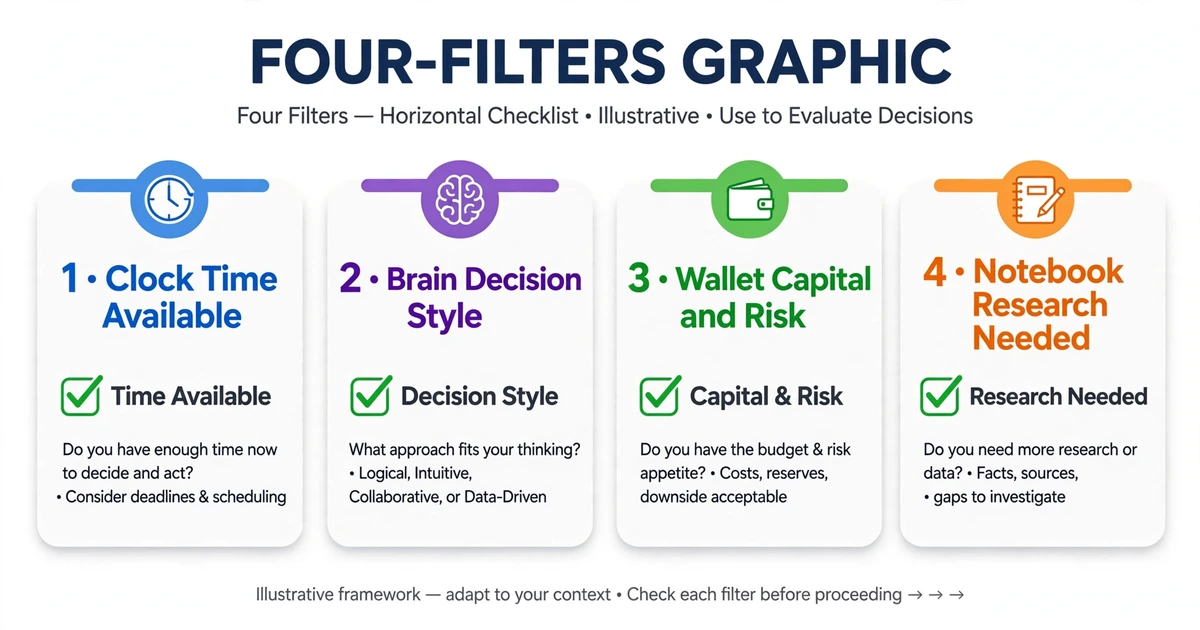
- Hours: how many focused chart hours you can guarantee on a normal week, and at what time of day.
- Temperament: whether you think clearly when decisions are fast, or when you have to sit through uncertainty.
- Capital: whether your account can absorb the costs and position sizes a style demands.
- Evidence: a style is only a fit after a trial with a journal. Preference isn’t proof.
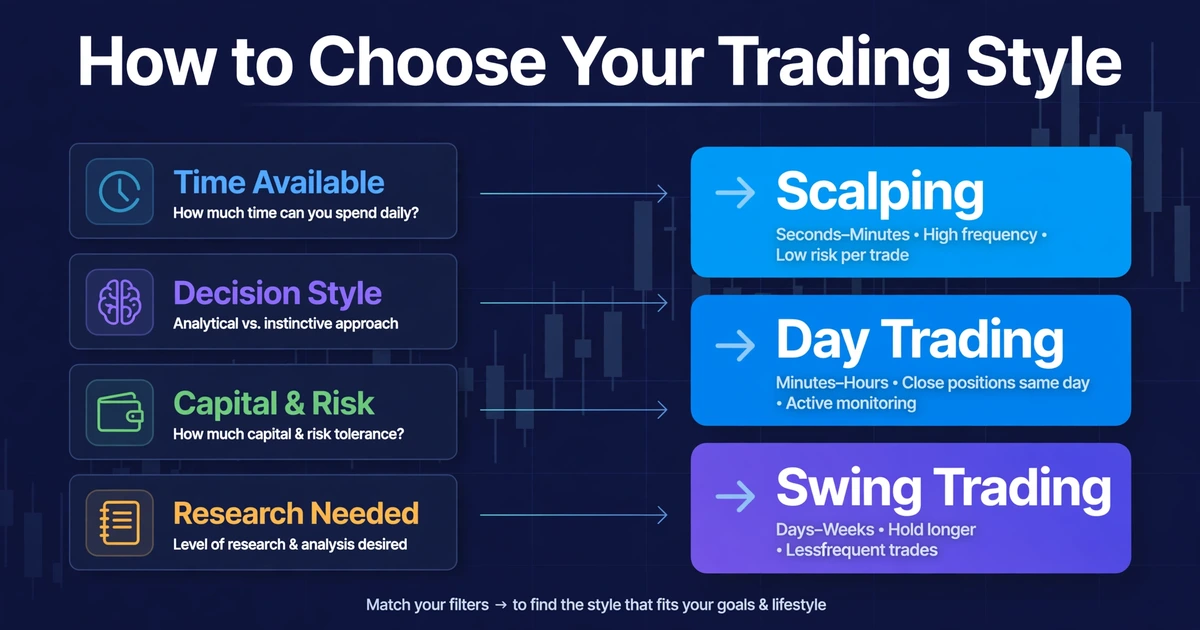
- Three styles cover most retail trading: scalping (seconds to minutes), day trading (flat by the close), and swing trading (days to weeks). Our trading styles explained guide defines each, and scalping vs day trading vs swing trading compares their costs in detail.
Why Copying Someone Else’s Style Backfires
A trading style is a set of demands, and the person you are copying may be able to meet them while you can’t. A full-time trader can watch a one-minute chart for four hours. Someone with a day job cannot. A trader with a large account can absorb a wide stop. Someone with a small account may find the position size too small to matter, or the costs too heavy.
The other trap is survivorship in what you see online. Screenshots show the trades that worked, not the weeks of small losses, the missed entries, or the nights of poor sleep. Treat any style you see online as a hypothesis about what might suit you, not a recommendation.
Let Your Calendar Pick First, Your Personality Second
Start with a hard question: what hours can you reliably give, without guessing?
Write down your fixed commitments for a normal week, then mark the blocks where you could sit at a chart without interruption. Next, check which of those blocks overlap with the hours your pair moves. Liquidity and volatility differ by session, so a pair that is quiet during your free evening may suit a slower style better than a fast one. When quoting session hours, use UTC and remember that daylight saving changes the offset in the US and UK on slightly different dates.
A rough rule follows from this:
- If you have no reliable block during active hours, scalping and day trading are poor matches, because both need you present when setups form.
- If you have one or two focused blocks, day trading on a short list of pairs may be workable.
- If you can only check in briefly, a few times a day, swing trading is the style your calendar already supports.
Calendar alone doesn’t decide, but it removes options honestly.
Temperament Tests You Can Run on Yourself
Hours tell you what is possible. Temperament tells you what you’ll tolerate. Try these quick self-checks, and answer them from past behavior, not hopes.
The three-quick-losses test. Imagine three small losses in twenty minutes. Do you pause, or do you want the next trade immediately to make it back? If it’s the second, fast styles will magnify that habit. Our guide on how emotions affect trading decisions explains why that urge is so common.
The open-trade test. Picture a trade sitting 30 pips against you with your stop untouched. Can you leave it alone, or will you check every few minutes, move the stop, or close early? If leaving trades alone is hard, swing trading will test you, though in a slow, grinding way.
The boredom test. Some traders feel restless when nothing happens for hours and start forcing trades. That points away from day trading on slow days and toward styles with fewer, pre-planned entries.
The decision-speed test. Can you read a chart, size a position, and act in under a minute without errors? If you’ve never tested this, don’t assume you can. Run it on a demo account first.
No answer disqualifies you. The goal is to know which weakness you carry so your style doesn’t feed it.
How Account Size Narrows the Menu
Smaller accounts squeeze styles from two sides. Tight stops need large position sizes to produce a meaningful result, and costs take a bigger share of a small target.
Here is a hypothetical walk-through. Assume a $2,500 account risking 1% ($25) per trade on AUD/USD, where one pip is about $10 per standard lot, and assume a round-trip cost of 1.5 pips.
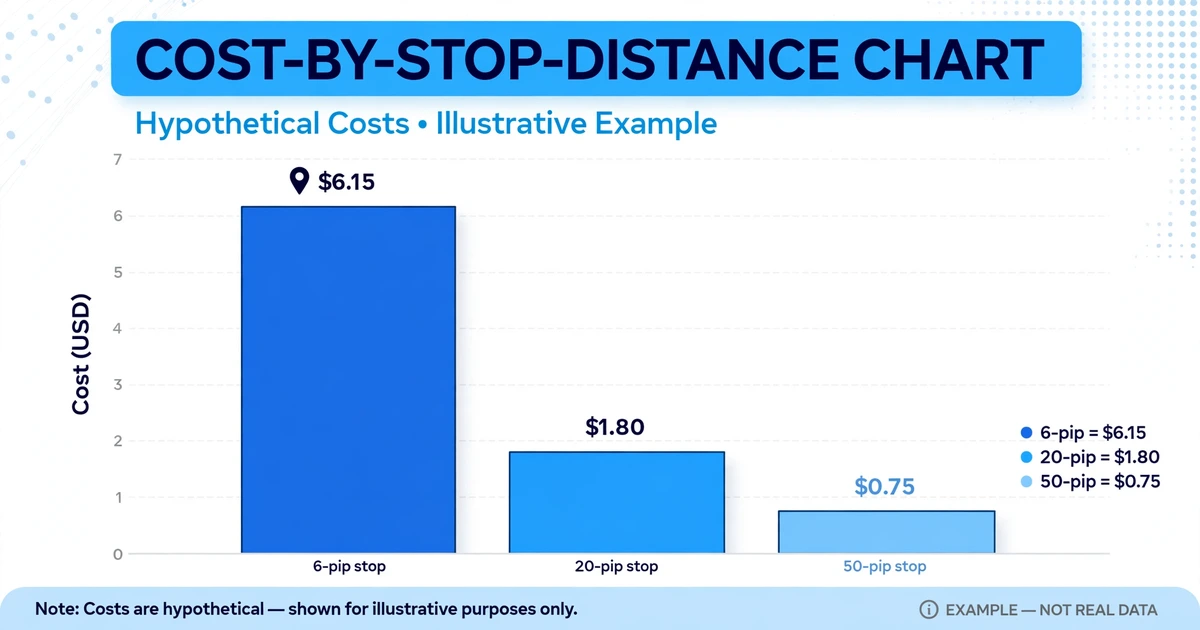
- With a 6-pip stop, the position works out to about 0.41 lots ($25 ÷ (6 × $10) ≈ 0.417, rounded down). The 1.5-pip cost is a quarter of the stop distance, roughly $6 per trade before the market moves.
- With a 20-pip stop, the position is about 0.12 lots, and the same cost is about $1.80.
- With a 50-pip stop, the position is 0.05 lots, and the cost is about $0.75.
This is a hypothetical example for illustration only. Real costs vary by broker, time of day, and market conditions. The lesson is that the same cost weighs very differently depending on your stop distance, so a small account often gets more room to be right from a slower style. High leverage also magnifies losses, so a position sized above your risk plan can end an account quickly.
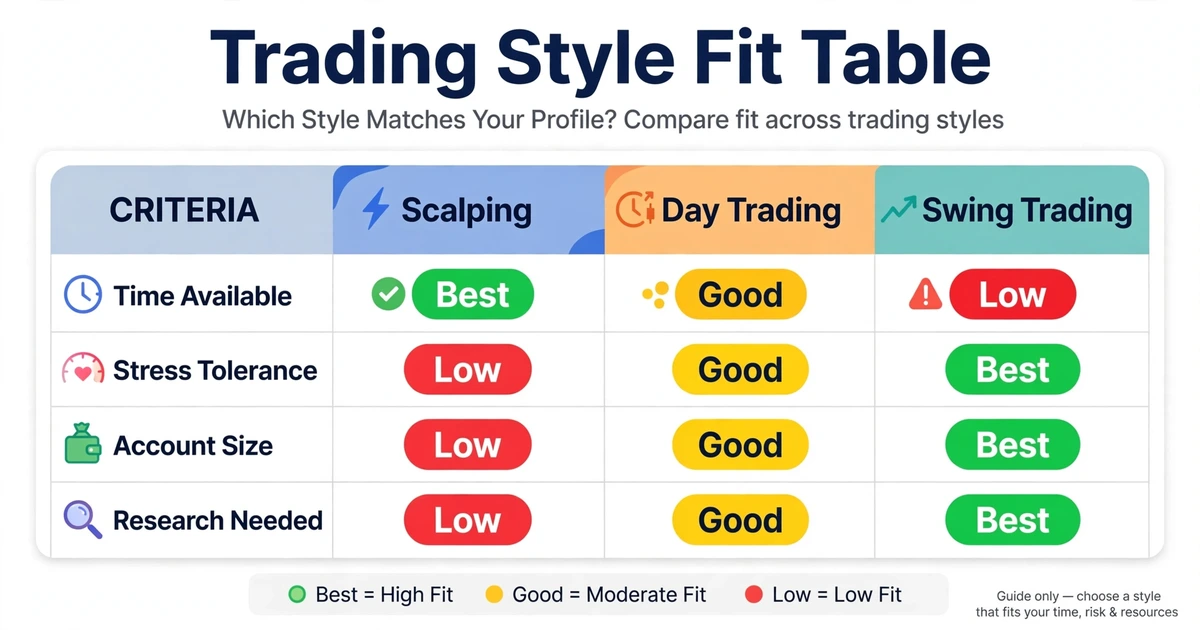
A Fit Table: Which Description Sounds Like You?
Use this table as a starting guess, not a verdict. Read each row and note where you land most often.
| If this describes you | It leans toward |
|---|---|
| Free for long, uninterrupted blocks during active sessions, and you enjoy rapid decisions | Scalping, if costs and execution are also workable |
| Free for one or two focused blocks, comfortable closing everything before the day ends | Day trading |
| Only brief daily check-ins, comfortable waiting and using pre-set orders | Swing trading |
| Tend to react emotionally after quick losses | Slower styles, with fewer decisions |
| Tend to fiddle with open trades | Day trading with a hard close, or swing trading with fixed orders |
| Small account and high sensitivity to spread costs | Wider stops and slower timeframes |
If your rows point in different directions, that’s normal. It means your trial matters more than your guess.
Thirty Trades Before You Commit
Reading about a style is cheap, and trading it is the only real test. Run a structured trial on a demo account before using real funds.
- Pick one style and one pair. Changing both at once makes the data useless.
- Fix your rules in writing first. Define timeframe, entry condition, stop, target, and risk per trade before the first click.
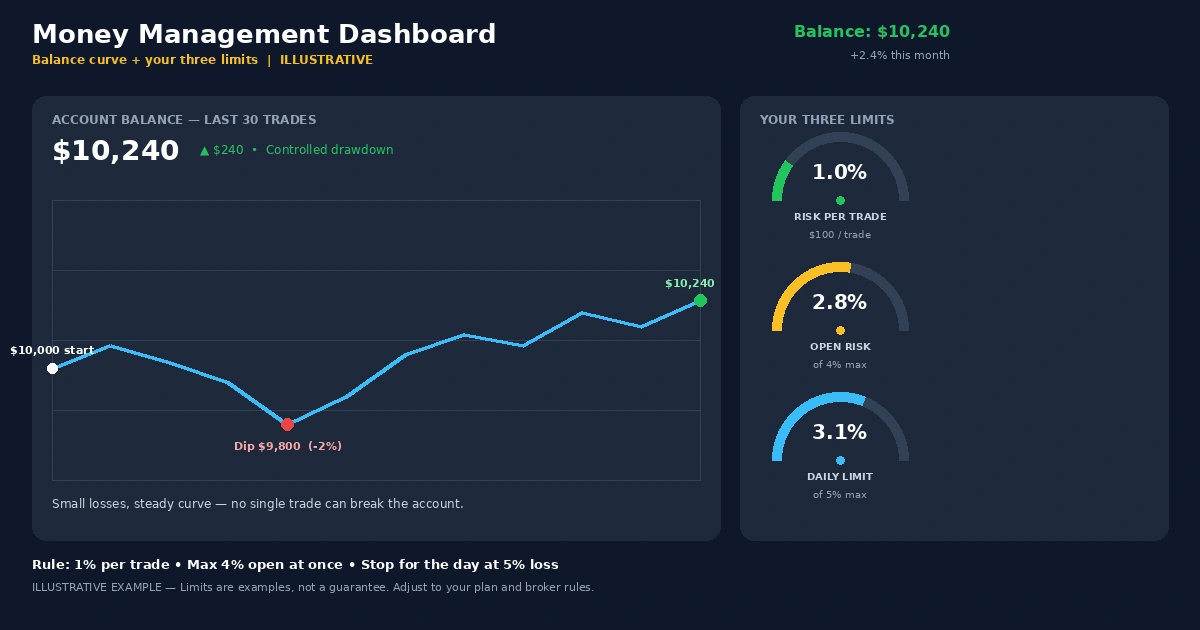
- Journal every trade. Record time, setup, result, and a one-line note on how you felt. Our guide to forex risk management explains why fixed risk per trade keeps results comparable.
- Include costs. Enter the spread and any commission, or the trial will flatter you.
- Review after thirty trades. Look at rule-breaks, not just profit. A style where you broke your own rules often is a poor fit, even if the numbers look fine.
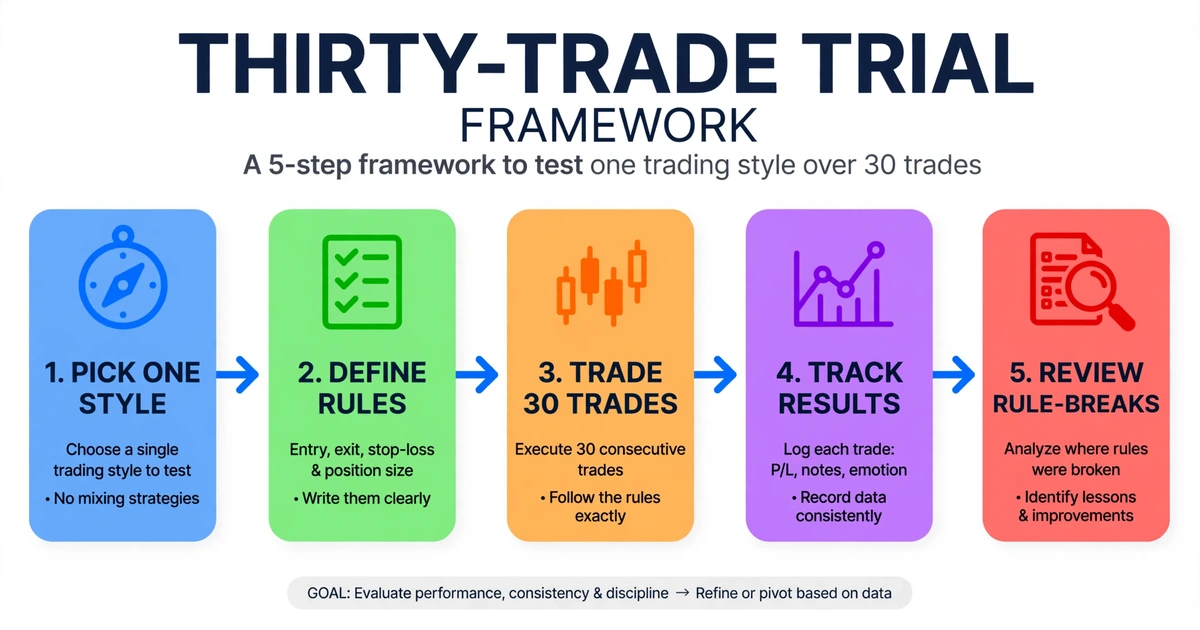
Thirty trades isn’t enough to prove an edge, and no sample is a guarantee. It is enough to learn whether you can follow the style, which is the question you’re answering here.
A Hypothetical Trader Works Through the Filters
Picture a trader who works until 6 p.m., has about 90 spare minutes each evening, and holds a $2,500 account. She gets anxious watching a trade run against her and admits she sometimes closes early.
Her calendar rules out continuous scalping. Ninety minutes could support day trading, but her anxiety around open positions suggests concentrated pressure may push her to close early and break rules. Swing trading on four-hour charts, with orders placed in advance and a short evening review, fits her hours and limits how often she watches. Her weakness, closing early, remains, so she plans to place stops and targets as orders and avoid touching them.
This is a hypothetical case, and a different person with the same facts might choose differently. The 30-trade trial would then confirm or reject her choice with evidence.
Warning Signs That the Style Doesn’t Fit
- You keep breaking your own rules in the same direction. Always exiting early or always adding to losers points at a mismatch between style and temperament.
- Costs consume your results on paper. If spread and commission take a large share of each trade, the style may be too tight for your account.
- You dread the next session. Dread and fatigue are information, not weakness.
- Your trial results change wildly between weeks. Without enough trades to judge, changing style at this point just resets the data.
- You chose it because of a screenshot. Re-run the four filters with your own numbers.
Where Style Fit Falls Short
Matching a style to your life makes you more consistent, not more profitable. A style that fits can still lose money if the setup has no edge, if costs are too high, or if the market changes.
Gaps, slippage, and widening spreads around news affect every style, and a stop-loss limits loss only if the market fills it near your price. Leverage magnifies losses as well as gains. A demo account also can’t reproduce the pressure of real money, so behavior may change when you go live. And a good fit today may stop fitting if your job, schedule, or capital changes, so it’s worth reviewing your choice from time to time. No style is safe, and none removes the risk of losing your capital.
Style Selection Questions From Traders Still Deciding
Can I switch styles later?
Yes, and many traders do as their schedule, capital, and experience change. Switch deliberately, after a defined trial, not after a bad week. Keep your journal so you can compare the two styles on the same terms, including costs and rule-following.
Is there a best trading style for beginners?
No single style suits every beginner. Slower timeframes give more time to think and review, which many beginners find easier, but your schedule and temperament still decide. Whatever you choose, practice on a demo account and risk a small fixed percentage per trade.
How long should I test a style before deciding?
A common starting point is about thirty trades on a demo account, though this is a guideline, not a rule. The aim is to learn whether you can follow your rules, not to prove profitability. Extend the test if trades are infrequent.
Can I use more than one style at once?
Some traders do, for example using a daily chart for direction and a shorter chart for entries. It only works if each trade has a defined plan and hold time before it opens. Without that, positions drift from one style into another.
Does my time zone matter?
It can. Currency pairs move most during certain sessions, and your free hours may fall in quiet periods for the pair you prefer. Check session times in UTC, account for daylight saving, and consider whether a different pair or a slower style suits your hours.
The Style That Survives a Bad Week
The right style isn’t the most exciting one. It’s the one you can still follow after three losing days, a late shift, or a wide spread. Your hours, temperament, and account size narrow the choices, and a logged trial confirms them.
Your next step is to write a one-page style card: your free hours, your main behavioral weakness, your account size, and the single style you’ll test for thirty demo trades. Keep it where you can see it before every session.
Disclaimer
This article is for educational purposes only and is not financial advice. Forex and CFD trading involves a high level of risk, and you can lose some or all of your capital. Leverage can magnify both gains and losses. Never trade with money you can’t afford to lose.
This is a trading framework, not a guarantee. No strategy wins every trade, and results vary with market conditions, execution, and risk management.
Any percentages or figures shown are historical averages or hypothetical examples, not guarantees. Past performance does not predict future results.
Join now
Comments (0)
Be the first to comment.