
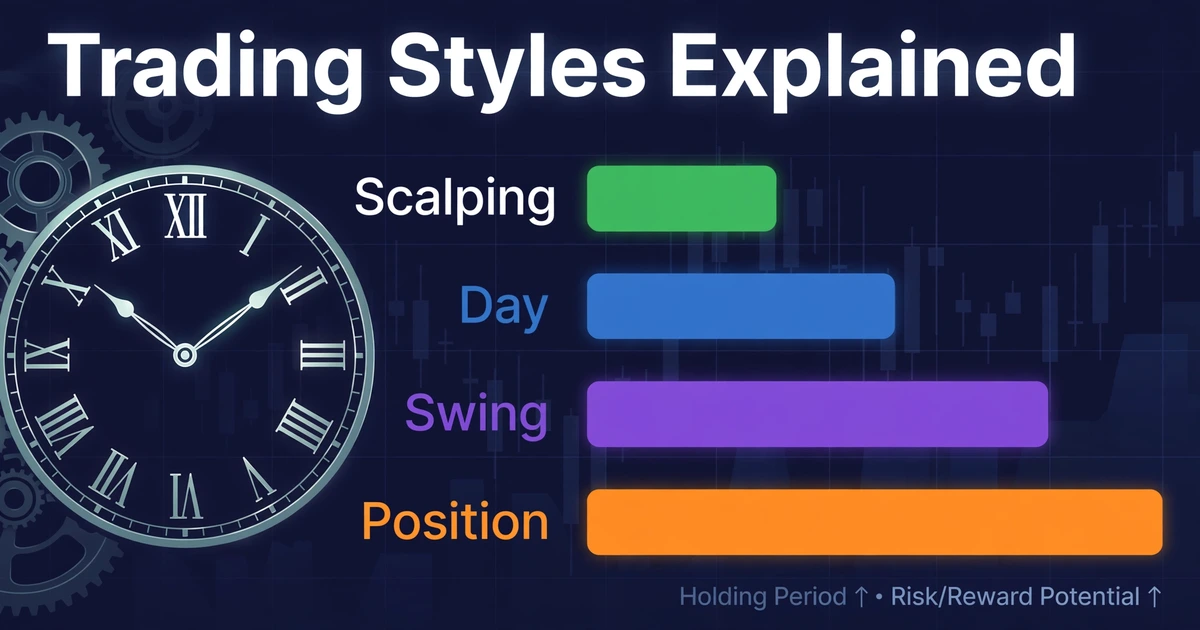
Trading Styles Explained: Scalping, Day, Swing, and Position Trading
Ask five traders what “short-term” means and you’ll get five answers: ten seconds, two hours, three days, two weeks, six months. That confusion is why trading styles explained in a clear, side-by-side way is so useful to beginners. A style is simply a habit about time. It sets how long you hold a trade, which chart you read, how many trades you take, and which costs and risks matter most. Below are the four main retail styles, a comparison table, a fully worked position trade, and the misreadings that push people toward the wrong one.
Four Styles in Four Sentences
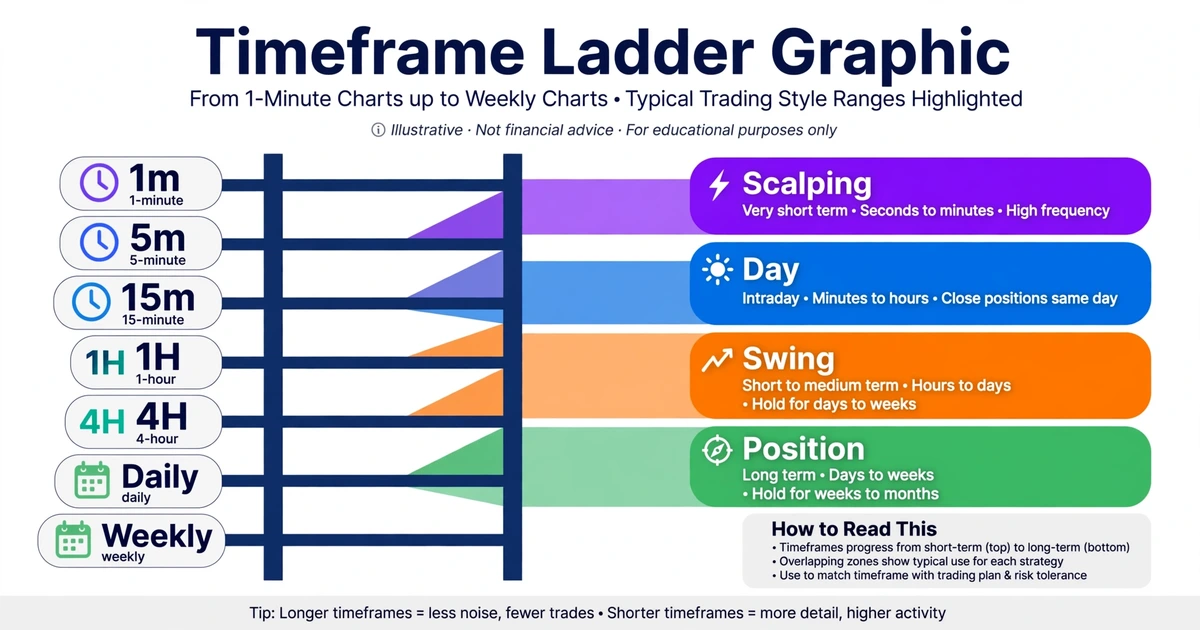
- Scalping holds trades for seconds to minutes and chases very small moves, so spread and execution speed matter enormously.
- Day trading opens and closes positions within one day, leaving you flat overnight.
- Swing trading holds for several days to a few weeks, aiming to catch one leg of a larger move.
- Position trading holds for weeks to months, following the broader trend on daily and weekly charts.
The boundaries blur at the edges, and no style is easier or more profitable by nature.
Scalping: Small Targets, Heavy Execution Demands
Scalpers work on one-minute to five-minute charts and often take many trades in a session. A pip is the standard smallest price step in most currency pairs, and scalpers may target only a few of them per trade, with stops just as tight.
The core challenge is the spread, the gap between the buy and sell price that you pay every time you enter. If the spread plus commission is 1.2 pips and your target is 4 pips, costs eat 30% of the gross move before anything else goes wrong. Add slippage, which is getting filled at a worse price than the one you clicked, and the margin gets thinner.
Scalping also asks for sustained attention, a stable connection, and a broker whose execution holds up during volatile moments. Many traders find that sort of tempo tiring and error-prone. A tight stop-loss limits the damage on any one trade, but it cannot protect you from a platform freeze or a sudden spread widening.
Day Trading: Opening and Closing Inside One Session
Day traders usually read five-minute to one-hour charts and take a handful of trades per day, finishing flat. Targets run larger than a scalper’s, so costs take a smaller bite, and there is no exposure to weekend gaps or overnight financing charges.
The price of that freedom is presence. You need to be at your screen when your pair is moving. For many pairs, that is the London and New York overlap, which falls roughly between 12:00 and 17:00 UTC depending on how US and UK daylight saving dates line up in a given week, so confirm the offset each spring and autumn. The logic behind session timing is covered in forex trading sessions explained.
Day trading’s characteristic temptation is overtrading. A slow morning invites a forced entry, and a losing morning invites a revenge trade. Many day traders set a maximum number of trades or a daily loss limit in advance so those moods can’t make decisions for them.
Swing Trading: Riding One Leg of a Larger Move
A swing trader reads four-hour and daily charts and looks for a pullback or breakout inside a trend. Entries, stops, and targets are often placed as orders in advance, so the day-to-day workload is a short chart review rather than hours of screen time.
Wider stops lead to smaller position sizes for the same money at risk, and costs shrink to a minor share of each target. In return, you hold positions overnight. Two things follow:
- Gaps: price can jump from one level to another between sessions, especially over weekends or around major news, and a stop can fill well beyond the level you set.
- Swap: a financing charge or credit applied when a position is held past the daily rollover. Over several days, it can add up, and it varies by pair, direction, and provider.
Swing trading can suit people with jobs, but holding through a drawdown tests patience in its own way.
Position Trading: Weeks to Months on Weekly Charts
Position traders look at daily and weekly charts, make a small number of trades per year, and hold through minor pullbacks to follow a major trend. The decision-making is slow: a view on direction, a wide stop beyond a significant level, and a plan to leave the trade alone.
Costs per trade become nearly negligible compared with the target, but other burdens grow. Swap accumulates over many weeks, stops must be wide enough to survive ordinary noise, and your capital stays committed for a long time. Position sizes also get small, since a 250-pip stop and a fixed dollar risk leave little room for lot size.
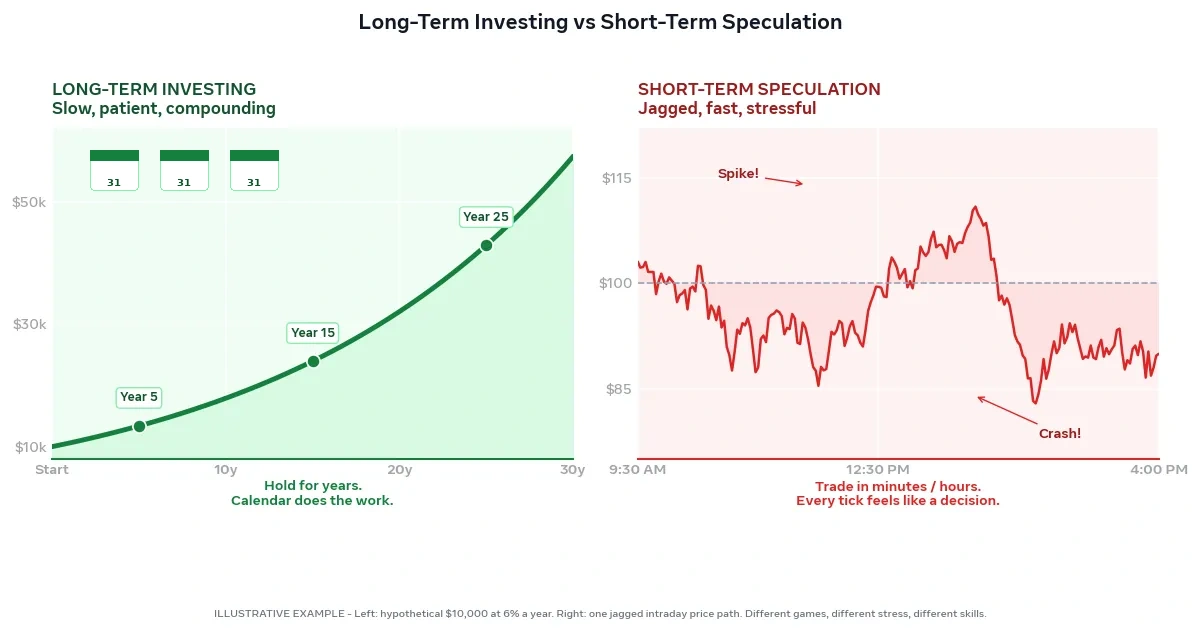
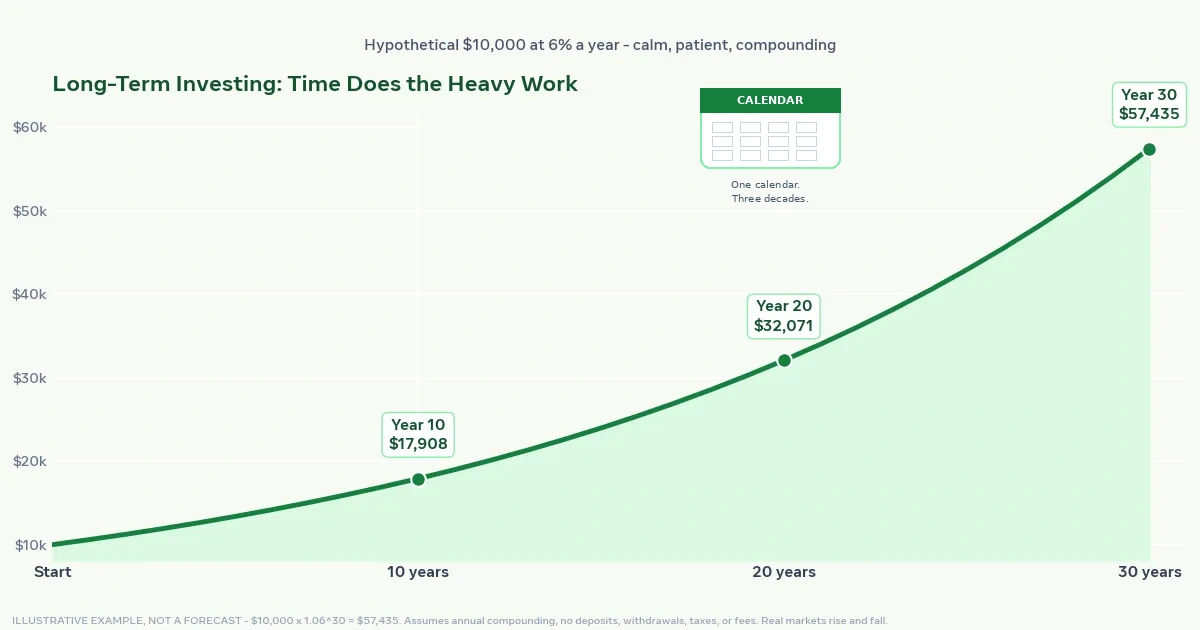
Position trading is not the same as long-term investing in stocks or funds. It is still leveraged speculation in a margin account, with the risks that implies. The difference between the two mindsets is covered in long-term investing vs short-term speculation.
Four Styles Lined Up by Cost, Effort, and Failure Mode
| Style | Typical chart | Trade frequency | Where the money leaks | Typical way it fails |
|---|---|---|---|---|
| Scalping | 1–5 minute | Very high | Spread, slippage | Costs outweigh the edge; fatigue errors |
| Day trading | 5-minute to 1-hour | Moderate | Overtrading, commissions | Forcing trades on slow days |
| Swing trading | 4-hour to daily | Low | Gaps, swap | Stops filled past the level; early exits |
| Position trading | Daily to weekly | Very low | Swap, tied-up capital | Abandoning the plan during a long drawdown |
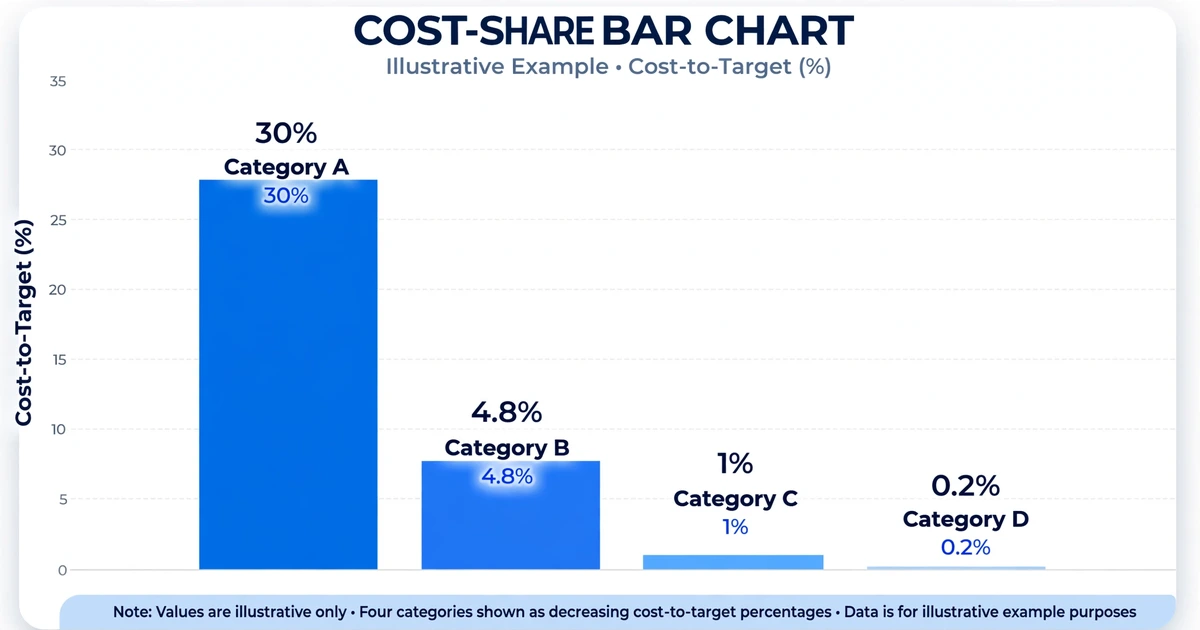
To see how cost sensitivity scales, assume a 1.2-pip round-trip cost and typical targets of 4, 25, 120, and 600 pips. Costs would then represent 30%, 4.8%, 1%, and 0.2% of each target respectively. This is a hypothetical example for illustration only, and real costs vary by broker, pair, and time of day. For a direct cost comparison of three of the styles with position sizing, read scalping vs day trading vs swing trading.
A Position Trade in Numbers: NZD/USD With a Wide Stop
Here is a hypothetical position trade, written as prose rather than a table so you can see the reasoning.
A trader has an $8,000 account and plans to risk about 0.5%, or $40, on a trade. She sees NZD/USD pulling back inside a weekly uptrend and places a stop 240 pips below her entry, beyond a prior swing low, with a target 600 pips above. The reward-to-risk ratio is 600 ÷ 240 = 2.5.
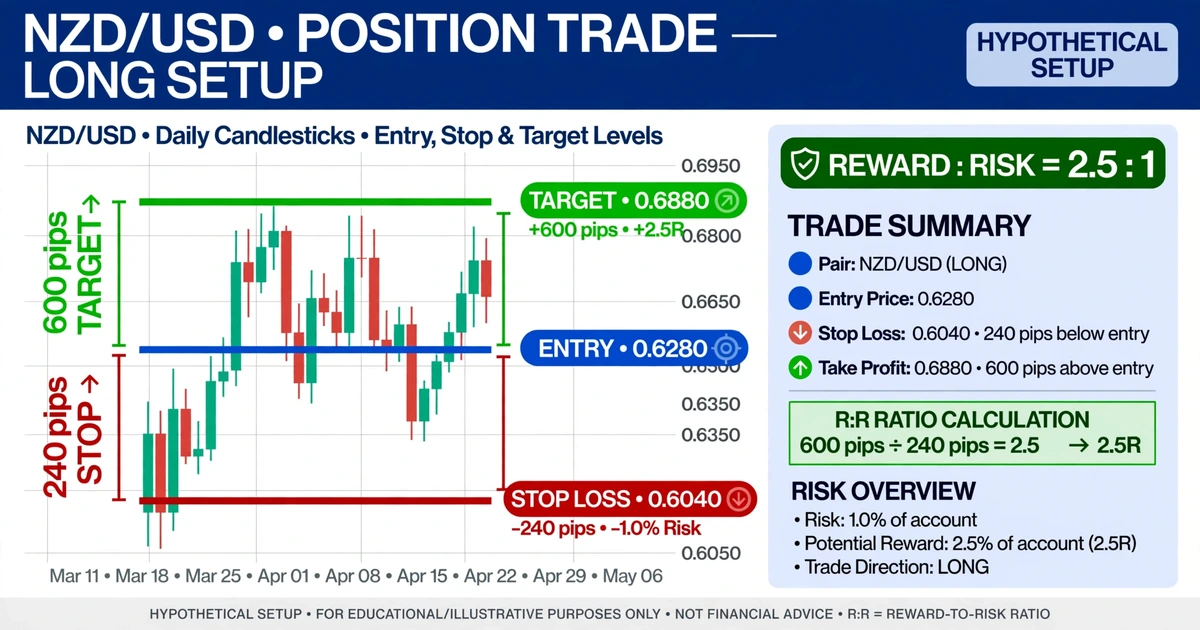
On NZD/USD, one pip is worth about $10 per standard lot. At 0.02 lots, 240 pips would risk $48, which breaks her $40 plan. At 0.01 lots, a pip is $0.10, so the stop risks 240 × $0.10 = $24, about 0.3% of the account. She rounds down to 0.01 lots and accepts the smaller risk.
Now the costs. A 1.4-pip spread costs 1.4 × $0.10 = $0.14. Assume a hypothetical swap charge of $0.05 per night, and a 45-night hold in either outcome for simplicity: 45 × $0.05 = $2.25. Total costs are about $2.39.
- If the target is hit: 600 × $0.10 = $60, minus $2.39, leaves about $57.61.
- If the stop is hit: $24 plus $2.39 means a loss of about $26.39.
This is a hypothetical example for illustration only. Real swap rates, spreads, and fills differ by provider, and a gap could fill the stop at a worse price than planned. Even with sensible sizing, the trade could easily lose, and months of waiting can end in a stop-out.
Misreadings That Send Traders to the Wrong Style
- Treating timeframe as the whole definition. A trader who opens a five-minute trade and holds it for three days has not become a swing trader. The style is defined by the plan made before entry, including stop distance, target, and review schedule.
- Believing faster means more money. More trades mean more costs and more decisions. Speed multiplies whatever your process already is, good or bad.
- Believing slower means safer. Longer holds trade fewer costs for gap, swap, and drawdown risk. The risk changes shape but does not go away.
- Copying a style because of its screenshots. Public examples show winners, not the dull weeks, the costs, or the account size behind them.
- Mixing stop distances and position sizes across styles. A scalp-sized position on a swing-sized stop breaks your risk math. Recalculate lot size whenever the stop changes.
- Forgetting that a style needs a calendar. Fast styles need matching hours, and slow styles need patience during idle time. Check both against your own week.
How Trade Length Multiplies Loss: Gaps, Swaps, and Slippage
Each style stretches a different kind of risk.
Scalping concentrates risk in execution: wider spreads around news, requotes, platform lag, and slippage. A small miss costs a large share of a small target.
Day trading concentrates risk in behavior. Overtrading, chasing after missed entries, and loosening rules late in the session usually do more damage than any single bad trade.
Swing and position trading concentrate risk in time. Gaps can jump past your stop, swap charges accumulate, and long drawdowns tempt you to move stops or close early. The more days a trade stays open, the more outside events can intervene.
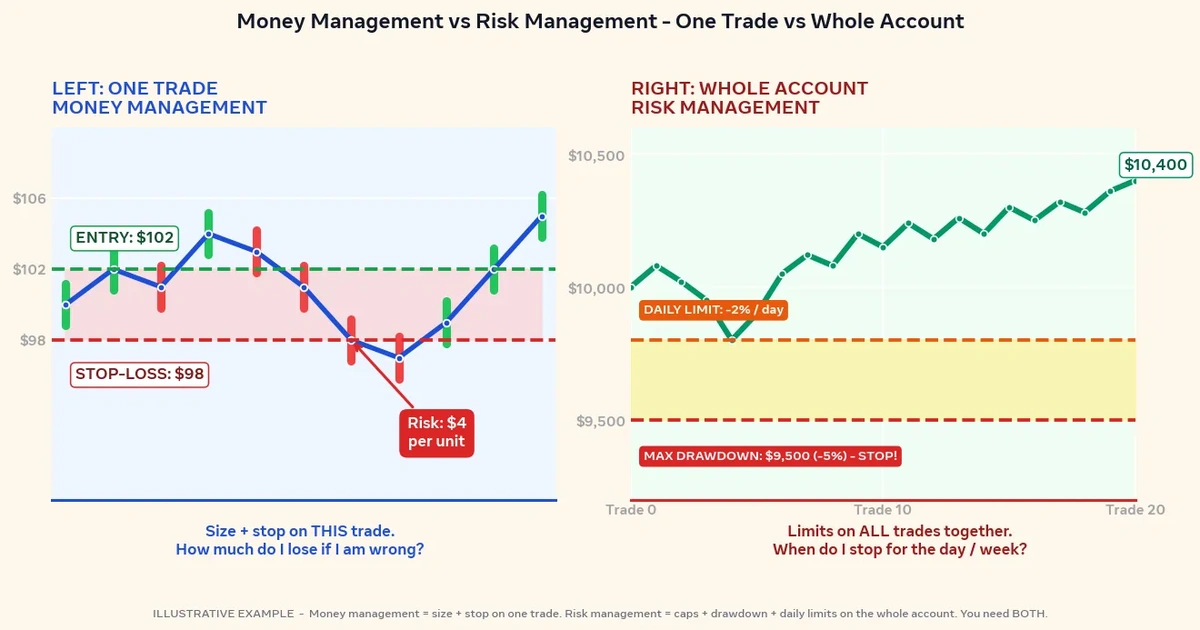
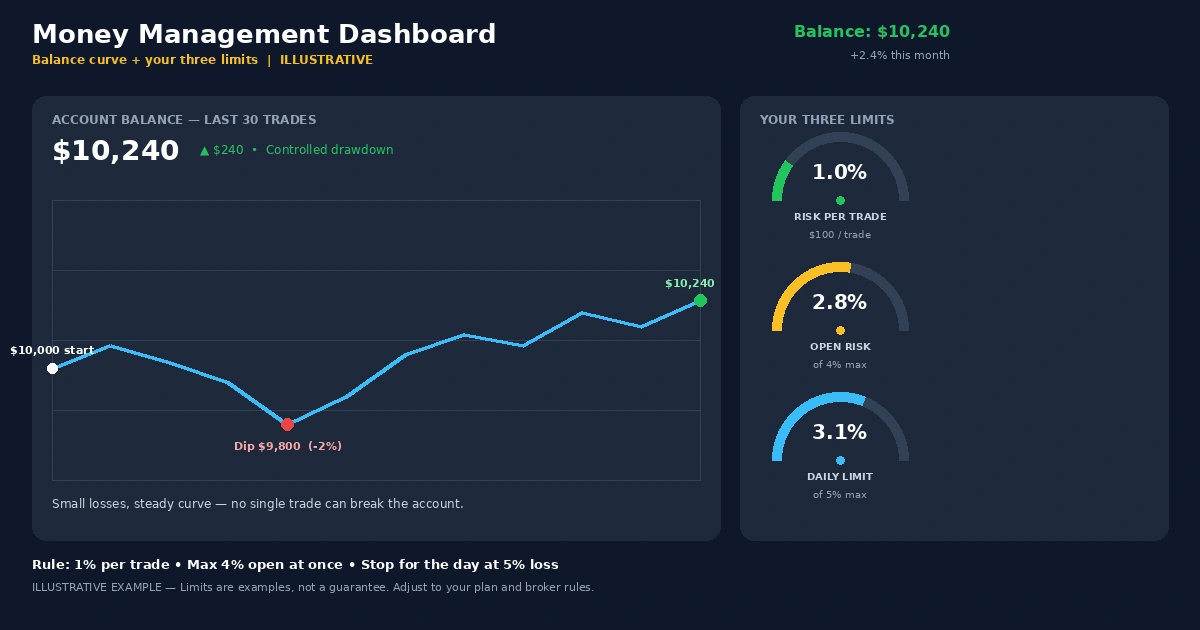
All four styles use leverage, which magnifies losses as well as gains, and in some cases a trader can lose the full amount deposited. A stop-loss limits risk only if the market fills it near your price, and there is no guarantee that it will. Fixed-percentage sizing helps keep losses survivable, as laid out in the forex risk management complete guide.
Backtests of any style usually look better than live results because they rarely capture real spreads, slippage, or the pressure of an open trade. Demo accounts also can’t reproduce what real money does to your decisions.
Four-Style Questions Beginners Raise
What is the difference between swing trading and position trading?
Swing trading targets one move within a trend, over days to a few weeks, usually on four-hour and daily charts. Position trading follows the larger trend over weeks to months on daily and weekly charts. Position trades use wider stops, trade less often, and pay more swap.
Which trading style is easiest for beginners?
No style is easy, and the answer depends on your schedule and temperament. Many beginners find slower styles easier because there is more time to think and review. Whichever you try, practice on a demo account first and risk a small, fixed percentage per trade.
Can the same trader use more than one style?
Yes, though it needs discipline. Some traders read a weekly chart for direction and a shorter chart for entry. Each trade still needs a defined plan, stop, and hold time before it opens, or it drifts into a different style by accident.
Do I need a lot of capital for position trading?
Not necessarily, but wide stops require small position sizes to keep risk fixed, and trades tie up margin for a long time. The workable amount varies by broker, pair, and country, so check your own provider’s requirements.
Are these styles specific to forex?
No. Traders use the same four labels in stocks, indices, commodities, and crypto. The costs and risks differ by market, so confirm how spreads, overnight fees, and gaps work in the market you trade.
Same Market, Different Patience
All four styles read the same prices. What separates them is how long you are willing to be wrong, how often you are willing to decide, and what you will pay in costs and attention. Picking one is a decision about your own constraints more than about the market.
For your next step, choose the style that sounds closest to your week and write down its stop distance, target, and review schedule on a single page. Then work through how to choose your trading style to test that choice before real money is involved.
Disclaimer
This article is for educational purposes only and is not financial advice. Forex and CFD trading involves a high level of risk, and you can lose some or all of your capital. Leverage can magnify both gains and losses. Never trade with money you can’t afford to lose.
This is a trading framework, not a guarantee. No strategy wins every trade, and results vary with market conditions, execution, and risk management.
Any percentages or figures shown are historical averages or hypothetical examples, not guarantees. Past performance does not predict future results.
Join now
Comments (0)
Be the first to comment.