
What Is Investing? A Simple Explanation
A $2,000 balance sits in a low-interest account while the price of groceries creeps up year after year. That quiet gap is what pushes many people to ask what investing is and whether they should be doing it. In plain terms, investing means putting money into assets, such as company shares, loans to governments, or funds, with the aim of earning growth or income over a long period. It carries risk, and there is no promise of gain. This article covers the basic asset types, where returns come from, and where things can go wrong.
Investing, Boiled Down to Three Ideas
- You give up spending money today in exchange for a chance at more value later.
- Returns come from price growth, income paid to you, or both, and neither is guaranteed.
- Time and diversification matter more than any single pick, and your holdings can lose value.
Owning a Piece or Lending Money: The Two Basic Deals
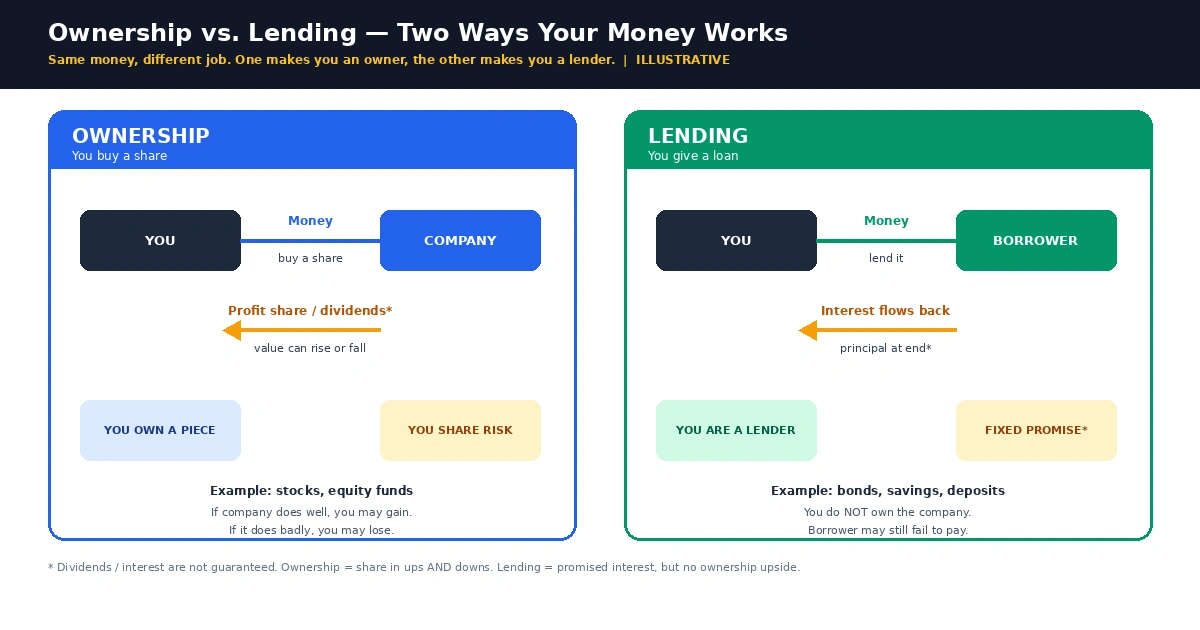
Almost every investment is one of two arrangements. Either you own a slice of something, or you lend money and expect it back with interest.
| Type | What you get | Main risk |
|---|---|---|
| Stocks (shares) | Part ownership of a company; value can grow, and some pay dividends | Share prices can fall sharply, and a company can fail |
| Bonds | A loan to a government or company that pays interest and returns the amount at maturity | The issuer may default, and bond prices tend to fall when interest rates rise |
| Funds | A bundle of many stocks, bonds, or both in one purchase | Still exposed to market declines; costs vary by provider |
| Real estate | Rental income and possible price growth | Hard to sell quickly, and costs can be high |
Stocks and bonds behave differently. Bonds often swing less than stocks, but not always, and neither is a safe place to park money you’ll need next month.
Where Investment Returns Come From
Returns arrive in two forms. Price growth happens when you sell for more than you paid. Income is cash paid while you hold, such as dividends from shares or interest from bonds.
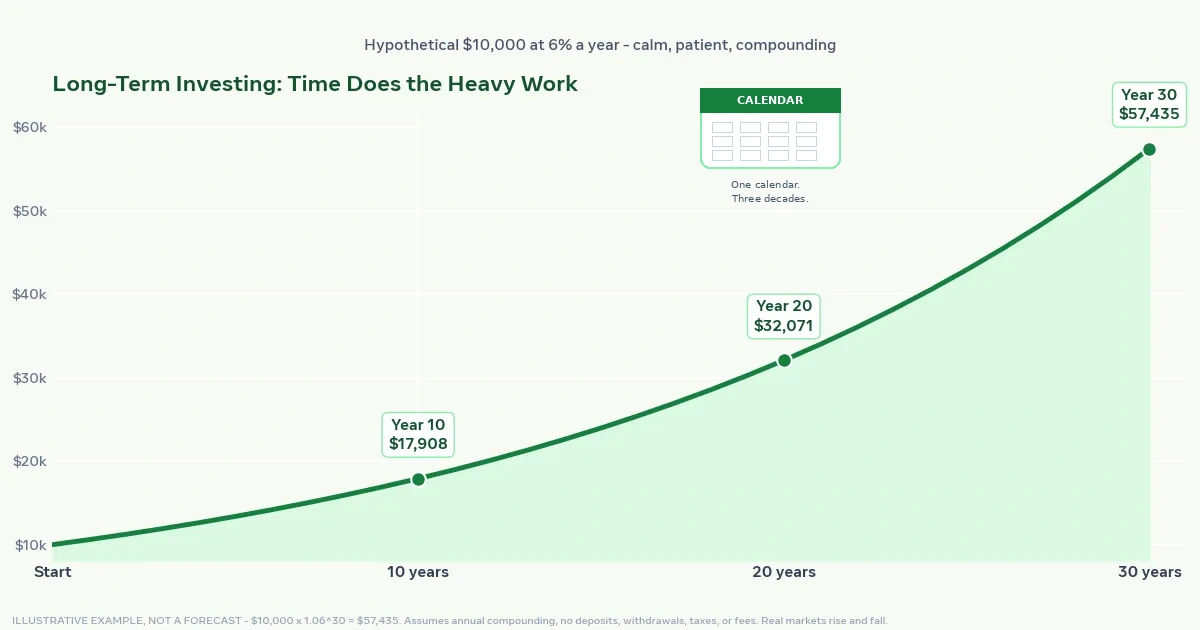
The effect that surprises beginners is compounding: earnings that are kept invested start earning their own returns. Here’s a hypothetical case. Suppose $2,000 grows at 4% a year for 10 years. With simple growth, where you only earn on the original $2,000, you’d reach $2,800. With compounding, you’d reach about $2,960. The extra $160 comes entirely from earning on earlier earnings.
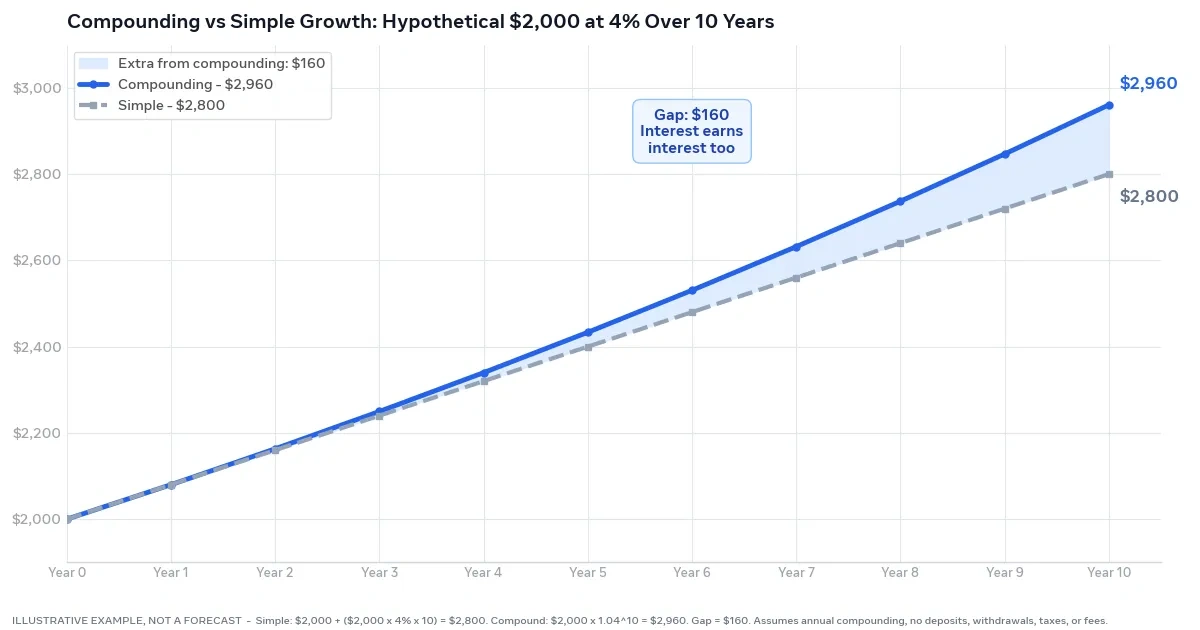
This is a hypothetical example for illustration only. Real returns rise and fall each year, and some years are negative. Inflation, which is the general rise in prices, also reduces what your money can buy, so a gain only counts if it beats the cost of living and any fees.
A Falling Price Is Not Yet a Loss
When an investment drops in value, the loss is on paper until you sell. If the asset later recovers, the dip may never have cost you anything. This is why time horizon matters so much. Money you won’t touch for ten years can ride out swings that would hurt money you need next year.
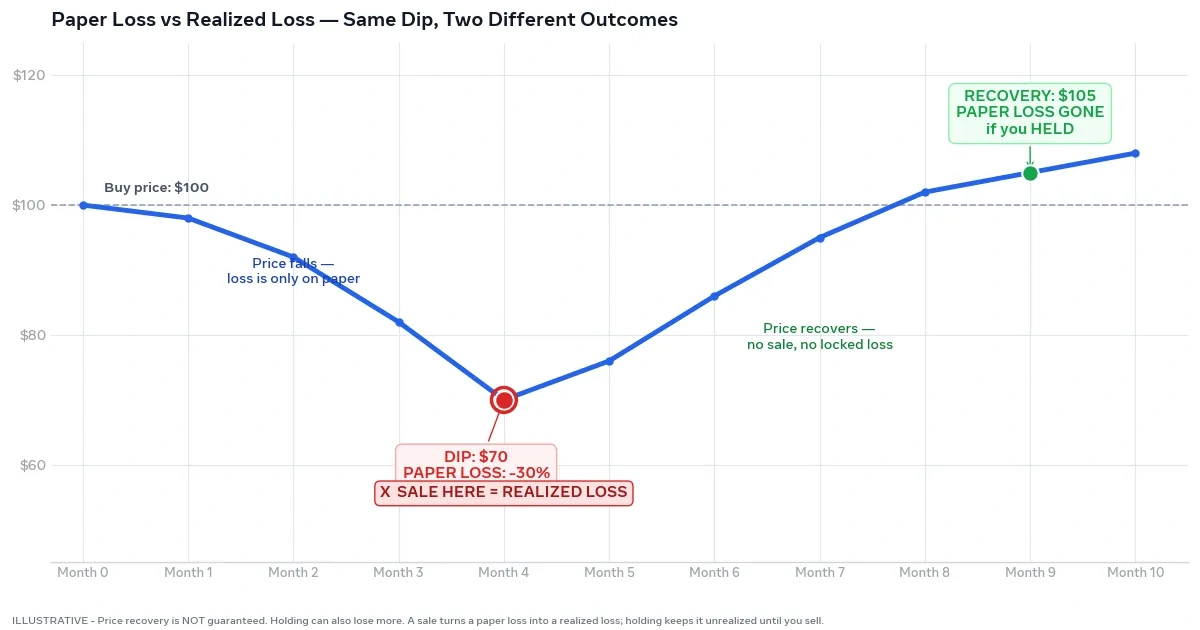
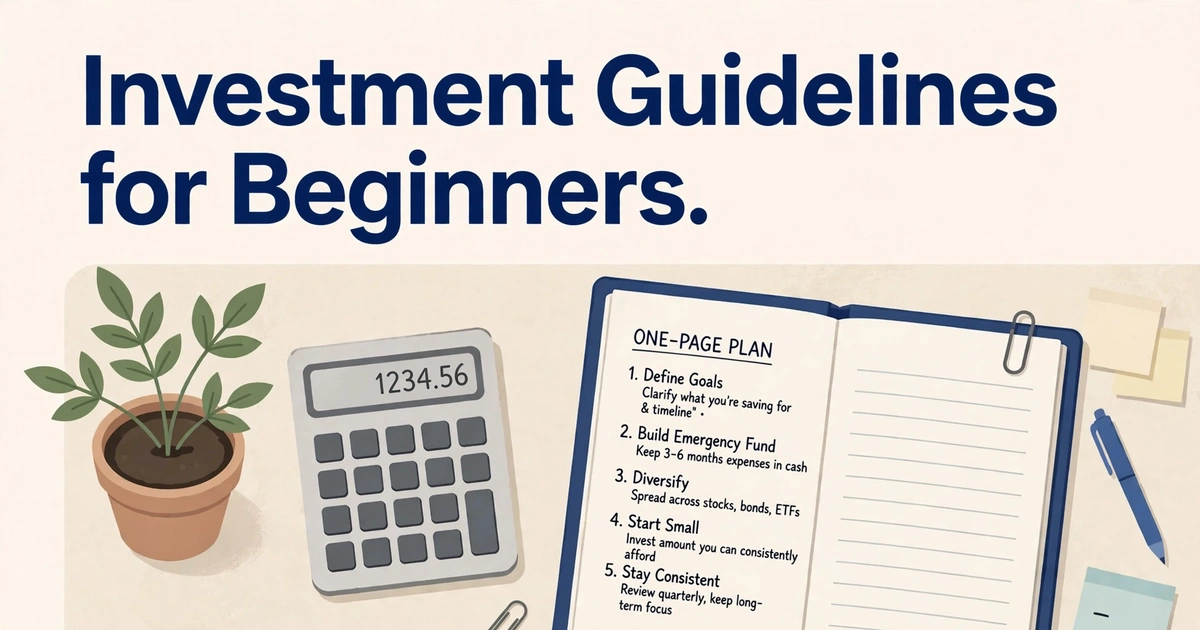
There’s a catch. A paper loss becomes real if you sell, and some losses never reverse, such as when a company fails. That’s the reason diversification exists: owning many things so that one failure doesn’t decide the outcome. The investment guidelines for beginners walk through emergency cushions, fees, and how to match money to a deadline.
Where Forex Trading Fits, and Where It Doesn’t
Investing and trading can look alike, since both involve prices on a screen. The difference is usually time and structure. Investors typically hold assets for years and rely on growth or income. Forex traders typically hold for hours or days, profit only from price movement, and often use leverage, which magnifies both gains and losses.
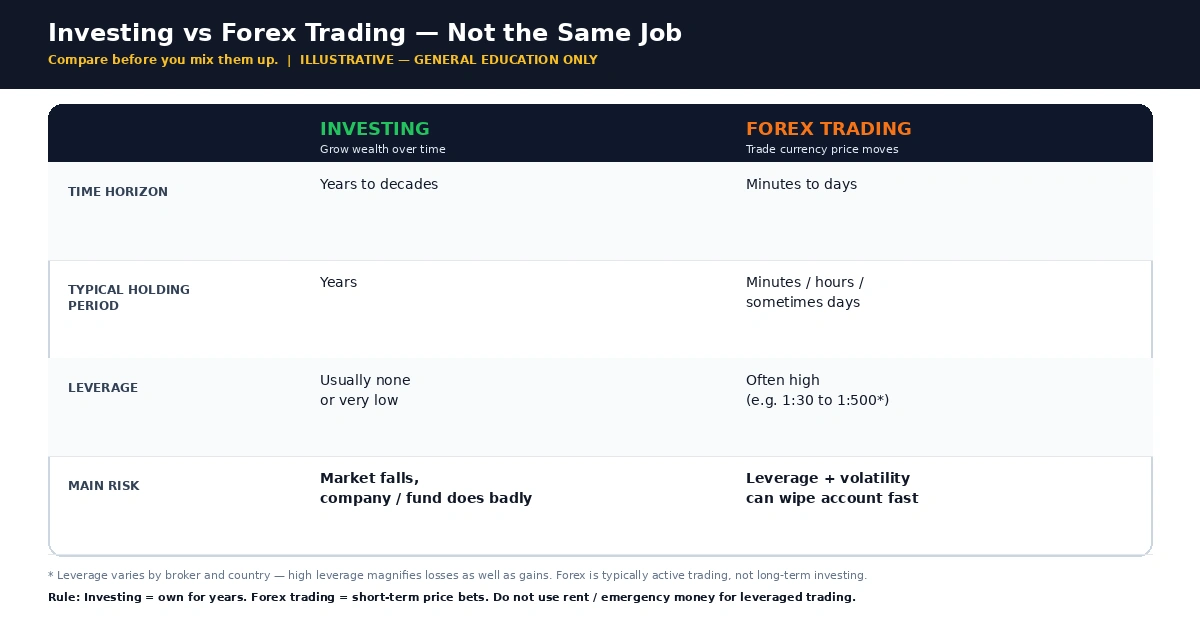
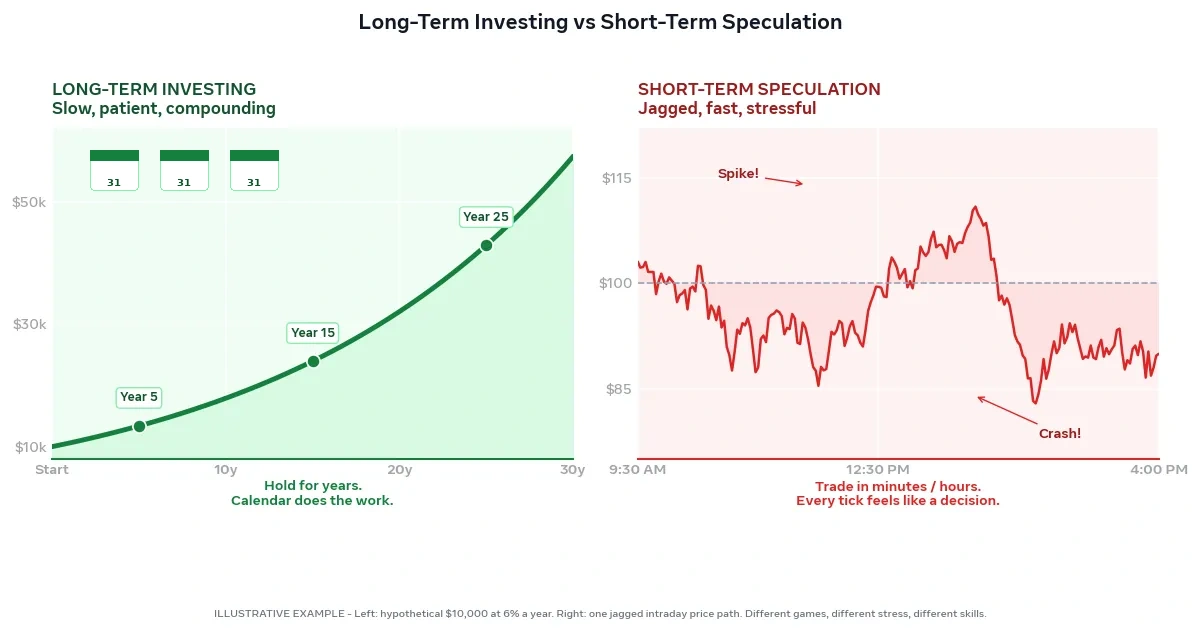
Neither approach is safe. Leveraged trading can lose money faster, and in some cases you can lose your entire deposit. For a closer look, compare long-term investing and short-term speculation.
Four Ideas About Investing That Sound Right but Aren’t
- “You need a lot of money to start.” Many providers allow small amounts, though minimums vary. What you need first is money you can leave alone.
- “Investing is just gambling.” Gambling has no underlying asset or income. Investing in a diversified, unleveraged way is different, though it still carries real risk.
- “Prices always recover.” Many markets have recovered over long periods, but that’s history and not a promise. Individual companies can fail permanently.
- “Picking stocks is the only way.” Many people hold broad funds instead. They don’t remove risk, but they spread it.
What Can Go Wrong When You Own Assets for Years
Owning assets over time exposes you to risks that rarely appear in beginner explanations:
- Market risk: A broad decline can hit nearly everything you own at once.
- Company risk: A single business can lose most or all of its value.
- Interest-rate risk: Bond prices tend to fall when interest rates rise, which can surprise people who thought bonds were calm.
- Liquidity risk: Some assets, like property, can’t be sold quickly without a discount.
- Inflation risk: Holdings that grow slower than prices lose purchasing power.
- Fraud risk: Claims of high, steady returns with little risk are a warning sign. Check any firm with your local regulator before sending money.
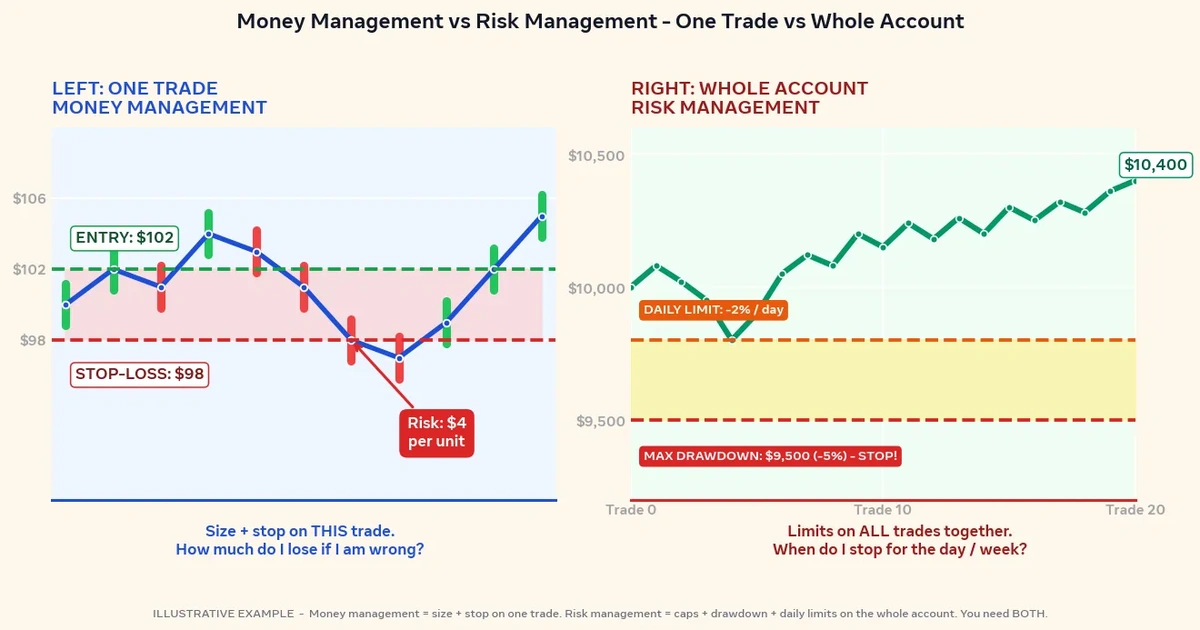
- Leverage risk: Borrowed money magnifies losses and can leave you owing more than you expected.
There is no guarantee of profit, and results vary by person and period.
Plain Questions About Putting Money to Work
Is investing the same as gambling?
No, though both involve uncertainty. Investing means buying assets that can produce income or grow with an underlying business or loan. Gambling depends on chance with no underlying asset. Speculative, leveraged short-term trading sits closer to gambling than long-term diversified investing, and either can lose money.
Do I need a lot of money to start?
Not necessarily. Many providers allow small starting amounts, though minimums and fees vary. More important is having an emergency cushion first and using money you won’t need soon. Starting small also lets you learn how price swings feel before larger sums are involved.
What’s the difference between stocks and bonds?
A stock is a share of ownership in a company, with returns from price growth and sometimes dividends. A bond is a loan that pays interest and returns the principal at maturity. Stocks usually swing more, while bonds carry default and interest-rate risks. Both can lose value.
Can I lose all my money?
Yes, in some cases. A single company can fail completely, and leveraged positions can wipe out a deposit. A broadly diversified, unleveraged portfolio is less likely to lose everything, but it can still fall a lot, so only invest money you can leave alone.
How long should I stay invested?
It depends on your goal. Many educators treat money needed within a few years differently from money needed in a decade or more. Longer horizons give more time to recover from declines, but recovery isn’t guaranteed. Read about long-term investing to see how this works.
Ownership, Lending, and a Long Clock
Investing comes down to two moves, owning something or lending to someone, plus a long stretch of time in which values will rise and fall. Before you buy anything, open a fund fact sheet from any provider and read its holdings and cost lines. Write down every term you can’t explain in your own words. If that list is long, you’ve found what to study next.
Disclaimer
This article is for educational purposes only and is not financial advice. Forex and CFD trading involves a high level of risk, and you can lose some or all of your capital. Leverage can magnify both gains and losses. Never trade with money you can’t afford to lose.
This is educational content, not personalized investment advice. Your financial situation, goals, and local regulations are different, so consider speaking with a licensed financial professional before making decisions.
Any percentages or figures shown are historical averages or hypothetical examples, not guarantees. Past performance does not predict future results.
Join now
Comments (0)
Be the first to comment.