
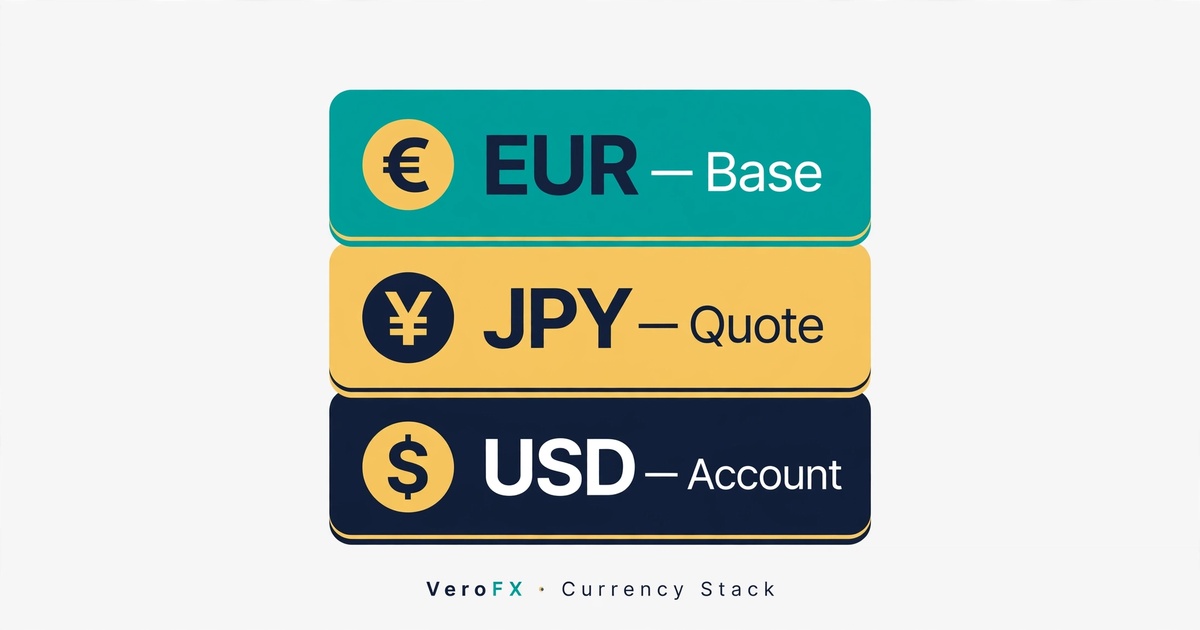
Account Currency vs Base Currency vs Quote Currency: What’s the Difference?
Picture a trader who opens a EUR/JPY chart with $2,000 sitting in a USD account. Three currencies are now on one screen. One is the thing being traded, one is its price tag, and one decides how profit and loss land in the balance. Account currency, base currency, and quote currency get mixed up constantly, and the mix-up quietly produces wrong pip values and confusing margin numbers. Here’s how the three fit together and which one answers which question.
Three Currencies, Three Jobs
- Base currency: the first currency in a pair. It’s the unit you buy or sell (EUR in EUR/JPY).
- Quote currency: the second currency in a pair. It prices one unit of the base (JPY in EUR/JPY).
- Account currency: the currency your balance, profit, loss, and margin are held in. You pick it with your broker, and it has nothing to do with the pair on your chart.
Reading EUR/JPY: The Product on the Left, the Price on the Right

A currency pair is a price quote. If EUR/JPY shows 160.00 (a hypothetical figure), one euro costs 160 yen. The euro is the base because it’s the unit being priced. The yen is the quote because it’s the currency doing the pricing.
That order decides what your trade really does:
- Buying the pair means buying the base and selling the quote.
- Selling the pair means selling the base and buying the quote.
The base currency stays fixed at one unit, and the quote number moves. When the quote rises, the base is worth more yen. For a deeper look at base vs quote currency in a pair, including how the order of names is set, that guide covers the mechanics.
One common misreading: being listed first doesn’t make a currency “stronger.” It’s a naming convention for how the pair is quoted, not a ranking.
Your Account Currency Sits Outside the Pair
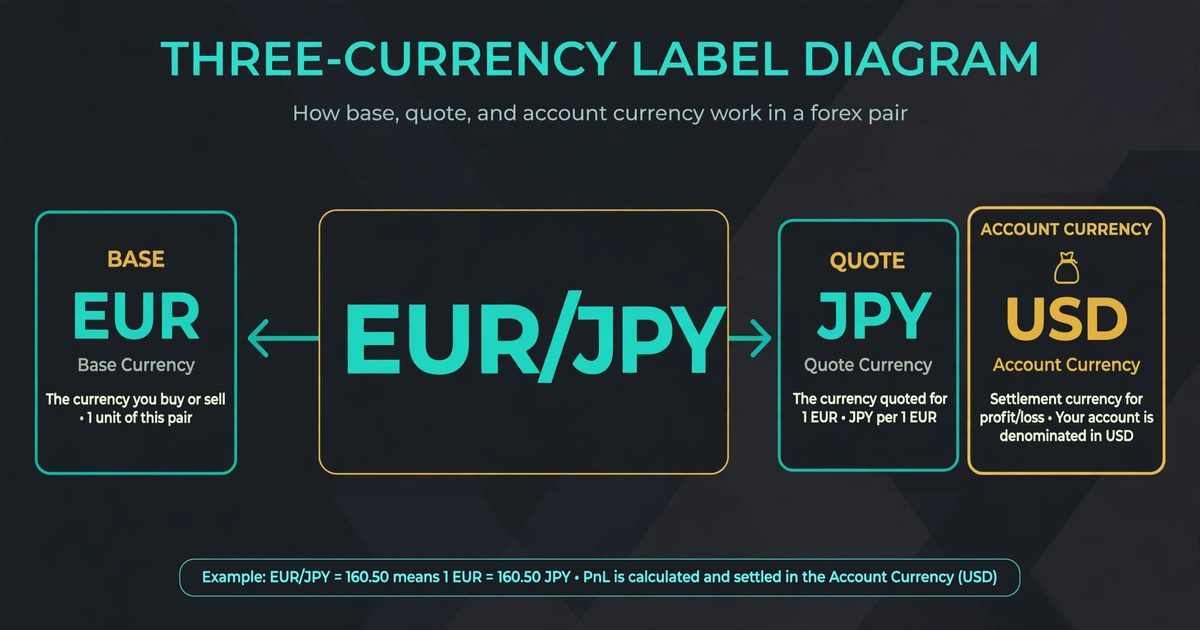
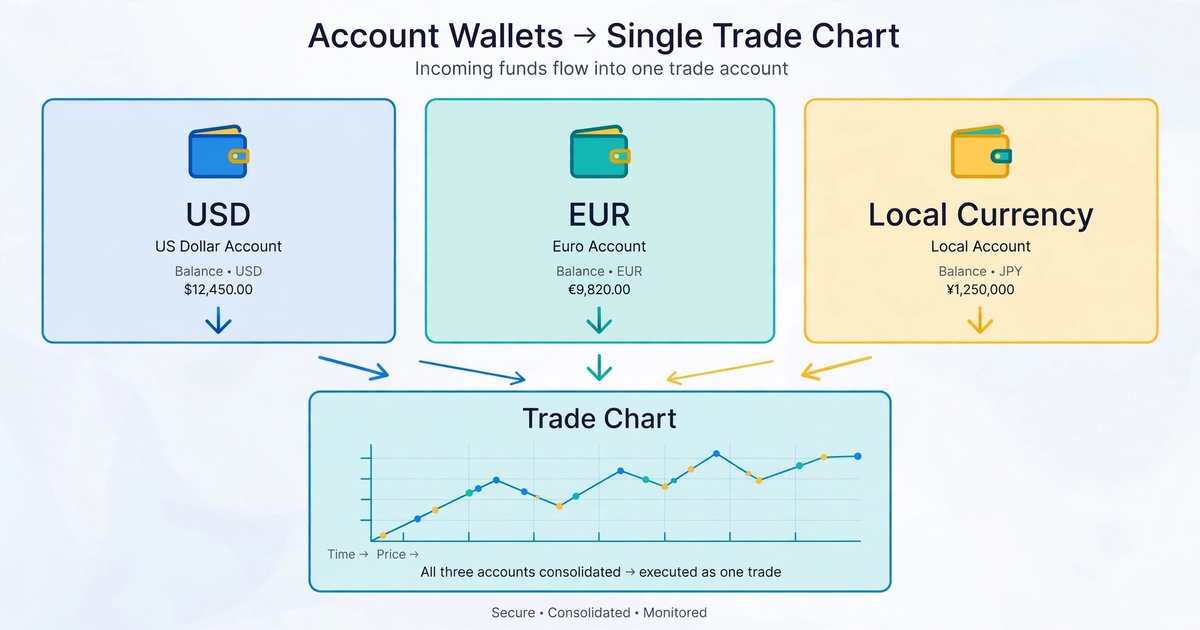
Account currency belongs to you, not to the market. It’s the denomination of your deposit, your balance, your equity, your floating profit or loss, and the margin the broker sets aside for open positions. Every money figure on your platform is expressed in it.
You can trade a pair that doesn’t contain your account currency at all. A USD account can trade EUR/JPY, and the platform converts results into dollars in the background. Choosing the currency happens once, usually when the account is opened, and options differ by broker. If you want the full picture of what an account currency is, start there.
Side by Side: Which Currency Answers Which Question
| Question | Base currency | Quote currency | Account currency |
|---|---|---|---|
| Where does it come from? | First name in the pair | Second name in the pair | Your choice at the broker |
| What does it measure? | The unit being traded | The price of one base unit | Balance, profit/loss, margin |
| Does it change with each pair? | Yes | Yes | No |
| In EUR/JPY with a USD account | EUR | JPY | USD |
When the Pair Names Your Currency, and When It Doesn’t
How much conversion happens behind the scenes depends on how your account currency lines up with the pair. There are three situations.
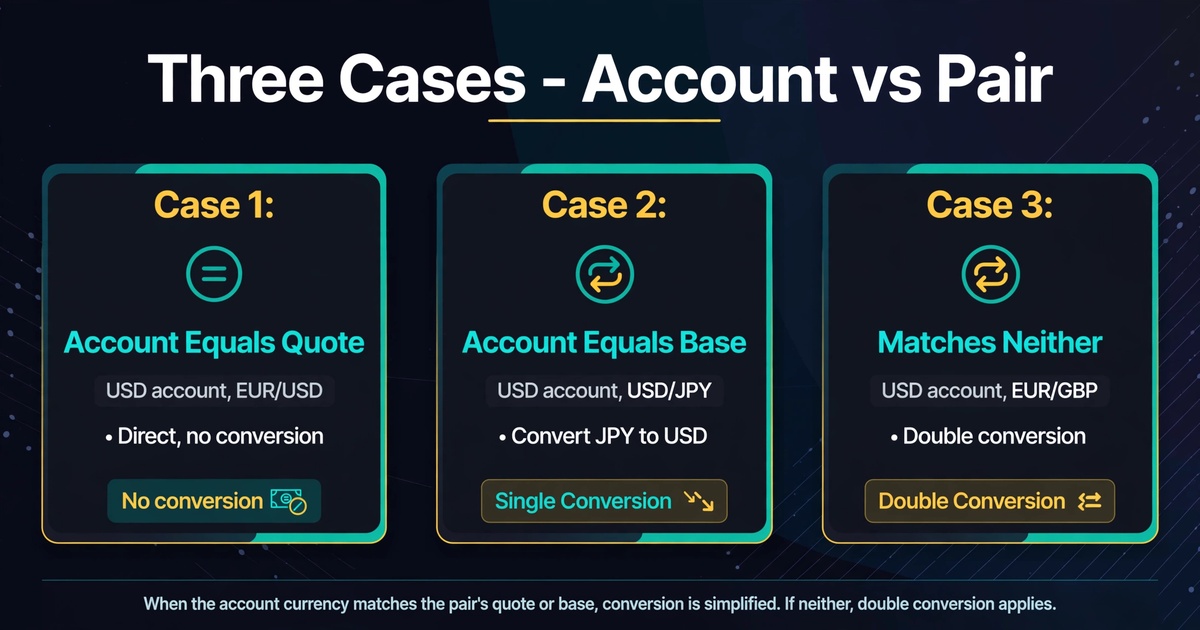
Account currency equals the quote currency. Take a USD account trading GBP/USD. A pip is worth $10 per standard lot (100,000 × 0.0001), and no conversion is needed. This is the simplest case.
Account currency equals the base currency. Take a USD account trading USD/JPY. A pip is first measured in yen, so the platform divides by the USD/JPY price to express it in dollars. The result shifts slightly as the rate moves.
Account currency matches neither. Take a USD account trading EUR/JPY. Pip value starts in yen and needs a third rate, here USD/JPY, to reach dollars. This is the case where beginners are most often surprised.
One EUR/JPY Lot, Three Different Account Currencies
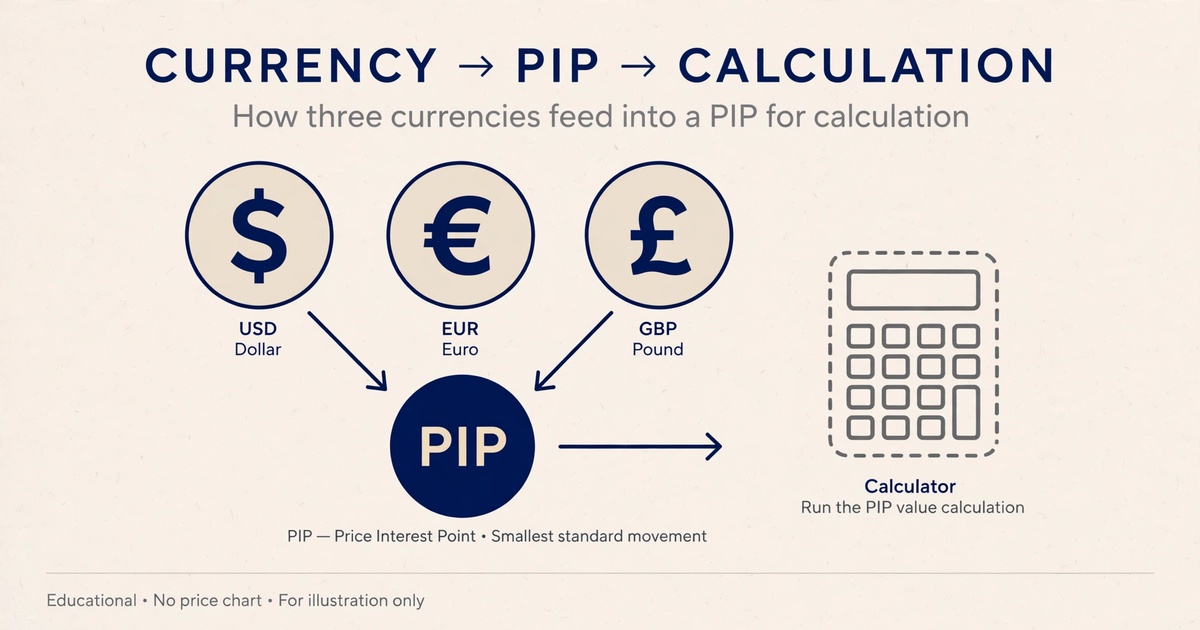
A pip in EUR/JPY is 0.01 yen. On one standard lot (100,000 euros), that’s 1,000 yen per pip. What that’s worth in your balance depends on your account currency. For the table below, assume EUR/JPY at 160.00 and USD/JPY at 150.00.
| Account currency | Conversion | Value of one pip |
|---|---|---|
| JPY | none needed | ¥1,000 |
| USD | 1,000 ÷ 150.00 | $6.67 (rounded) |
| EUR | 1,000 ÷ 160.00 | €6.25 |
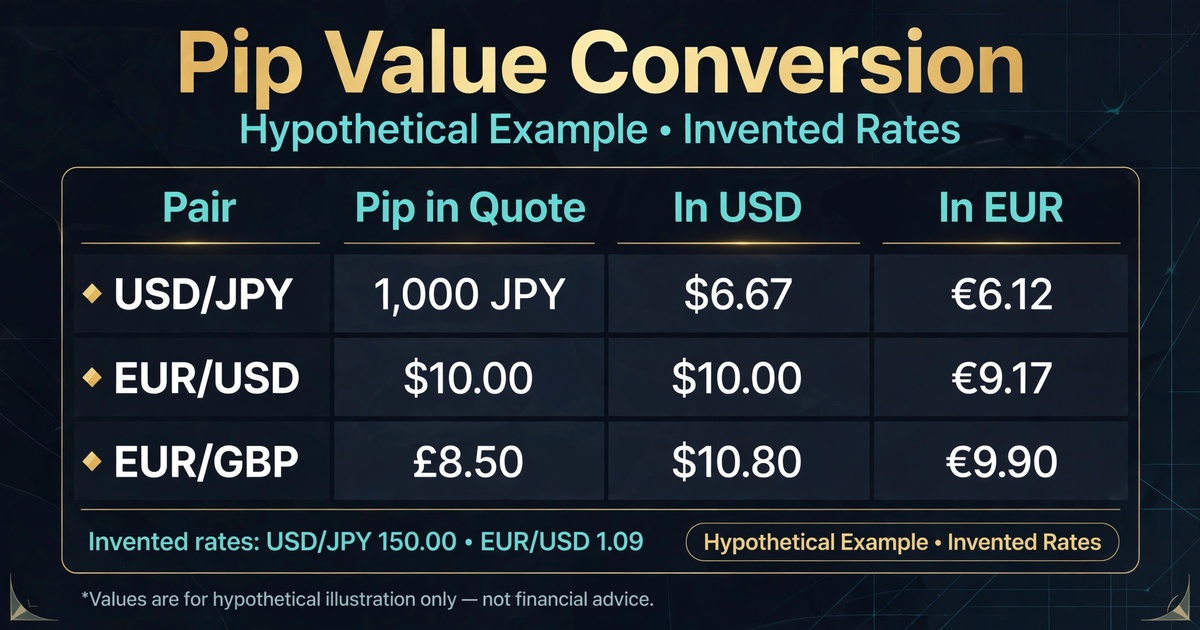
A 20-pip move on that lot equals ¥20,000, which shows as about $133.33 in the USD account or €125.00 in the EUR account. This is a hypothetical example for illustration only, and the rates are invented, not market quotes.
The same trade is identical in the market, yet the number on the screen differs by account currency. That’s why a worked account currency pip value and profit calculation is worth keeping nearby when you size positions. Spreads, commissions, and slippage will also move the real result.
Mix-Ups That Skew Pip Value and Lot Size
- Treating the account currency as part of the pair. EUR/JPY doesn’t care that your balance is in dollars. Only the conversion step does.
- Assuming pip value is fixed per lot. It’s fixed only when the quote currency matches your account currency. Otherwise it floats with the conversion rate.
- Reading margin in the quote currency. Margin appears in your account currency, calculated through the same conversion.
- Calling the base currency “the one you hold.” You don’t hold either currency of a retail pair. You hold a contract priced in the quote, settled in your account currency.
Where a Currency Mismatch Quietly Costs You
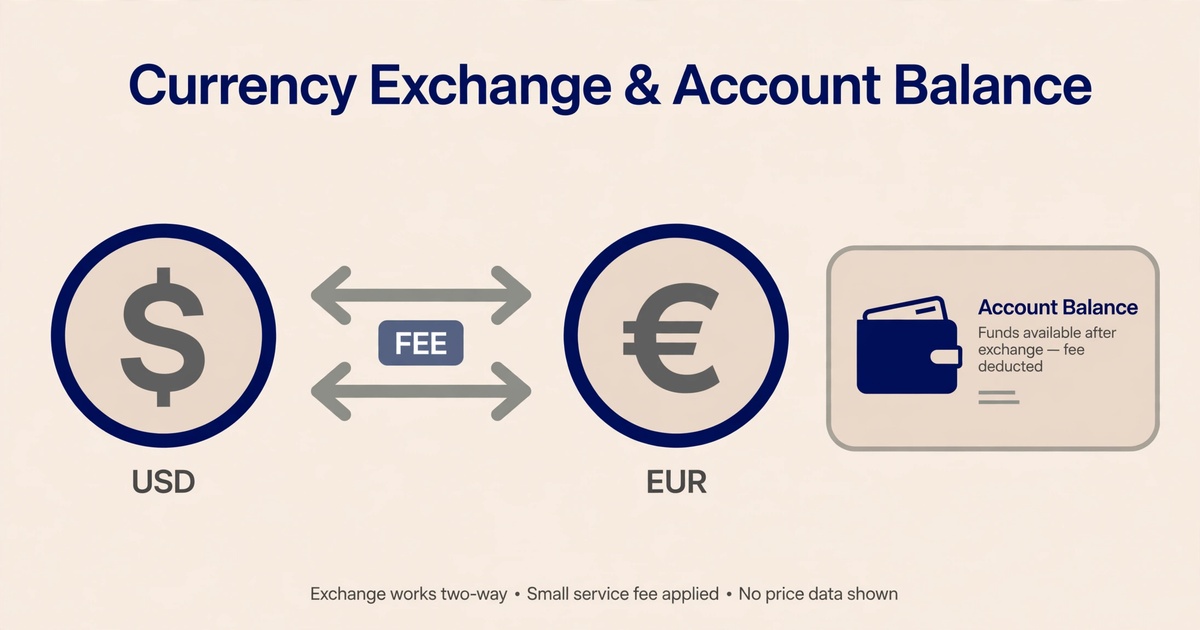
Conversion isn’t free of friction. Some brokers apply a markup or fee when results are converted into your account currency, and the cost varies by provider. Our guide on account currency conversion fees covers what to look for.
Floating pip values also affect risk. A stop-loss set at a fixed number of pips can represent a slightly different amount in your currency by the time it triggers, because the conversion rate moved. Leverage magnifies this along with every gain and loss, and a trader can lose some or all of the deposited capital. Many traders size positions from an amount they’re willing to risk in their account currency, then work back to lots; the right level depends on your situation.
Finally, rules and available account currencies differ by broker and country, so check current terms before you deposit.
Currency Terms Traders Keep Mixing Up
Is account currency the same as base currency?
No. Base currency is the first currency in a pair, such as EUR in EUR/JPY. Account currency is the one your balance is held in. They only match by coincidence, for example when you hold a USD account and trade USD/JPY.
Can I trade pairs that don’t include my account currency?
Yes. A USD account can trade EUR/JPY, GBP/CHF, or any other pair your broker offers. The platform converts profit, loss, and margin into your account currency in the background. That conversion adds a moving rate to your results, and some brokers charge for it.
Which currency do profits and losses come in first?
In the quote currency. A pip’s value is first measured in the second currency of the pair, then converted to your account currency for display. In EUR/JPY, results start in yen and appear in your balance in dollars, euros, or whatever you hold.
Does the account currency change how much I risk per trade?
It changes how risk is expressed, not what the market does. A fixed-pip stop can translate to slightly different amounts in your currency as conversion rates move. Many traders size positions from an amount in their account currency, then work backward to lots.
Can I change my account currency later?
That depends on the broker. Many require opening a separate account in the new currency and transferring funds, which can involve conversion costs. Check your broker’s terms before you deposit, since the choice usually shapes every figure on your platform.
Label the Three Currencies on Every Trade Plan
The base currency is what you trade, the quote currency is what prices it, and the account currency is how you’re scored. Before your next demo trade, write all three at the top of your journal entry, then note the pip value in your own currency. If you’re still deciding which currency to hold, how to choose a forex account currency is the natural next read.
Disclaimer
This article is for educational purposes only and is not financial advice. Forex and CFD trading involves a high level of risk, and you can lose some or all of your capital. Leverage can magnify both gains and losses. Never trade with money you can’t afford to lose.
Any percentages or figures shown are historical averages or hypothetical examples, not guarantees. Past performance does not predict future results.
Join now

Comments (0)
Be the first to comment.