
What Is Account Currency? Meaning in Forex Trading
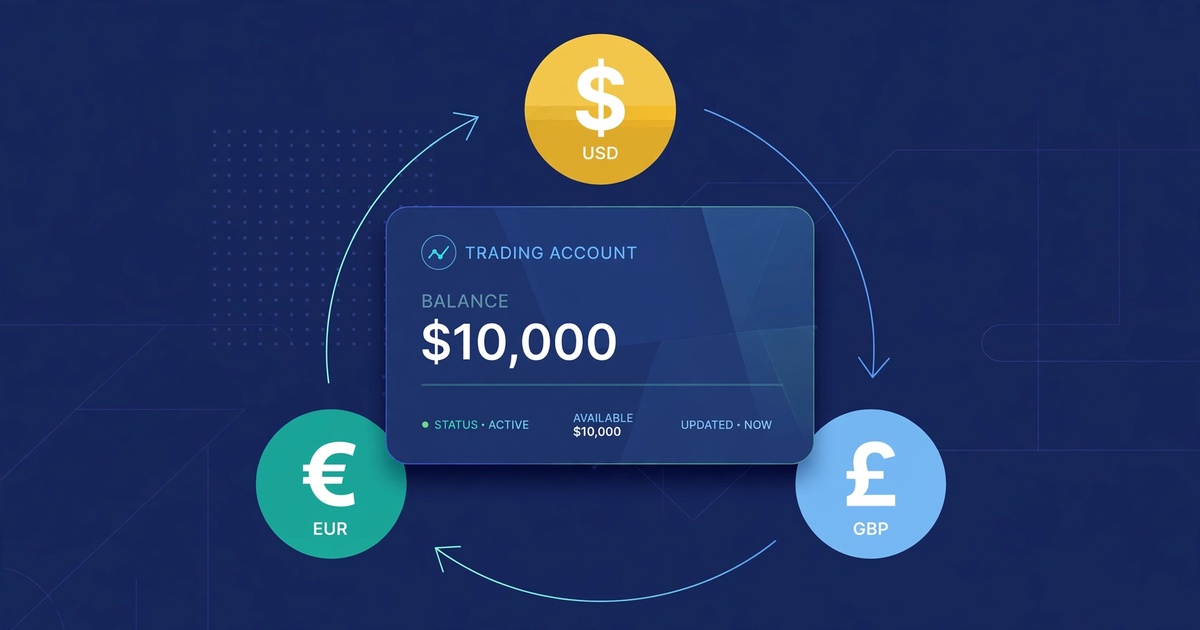
Picture a trader who deposits funds, glances at the sign-up screen, and accepts the default currency without a second thought. A few weeks later, her platform shows a profit that doesn’t match her pip count, and she can’t tell why. The mismatch usually isn’t an error. Your account currency is the currency your balance, profits, losses, and margin are measured in, and every trade that closes in a different currency gets converted into it. That conversion changes your pip value, shapes your costs, and adds a layer of exchange-rate movement most beginners never see on the chart.
One Currency Behind Every Number on Your Statement
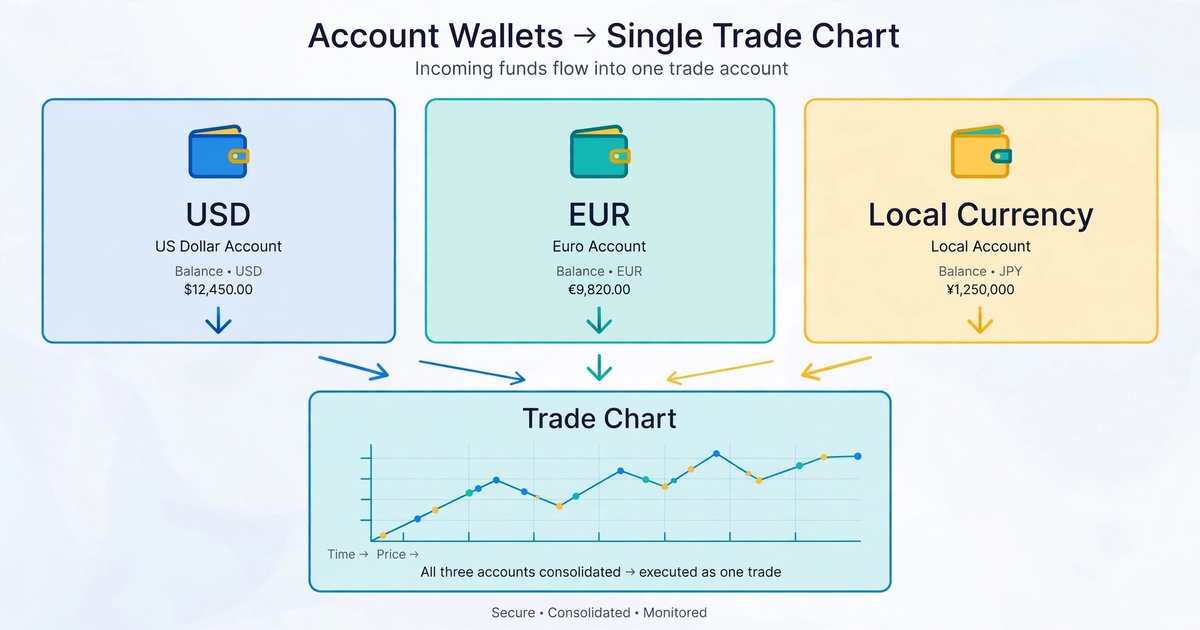
- Your account currency is the currency your trading balance is held and reported in, such as USD, EUR, or GBP.
- Profit or loss earned in a pair’s quote currency is converted into it when a trade closes.
- Pip value, margin, and any commissions your broker charges are expressed in it.
- You choose it when you open the account, and some brokers don’t allow a change afterward, so check before you fund.
How a Trade in Another Currency Lands in Your Balance
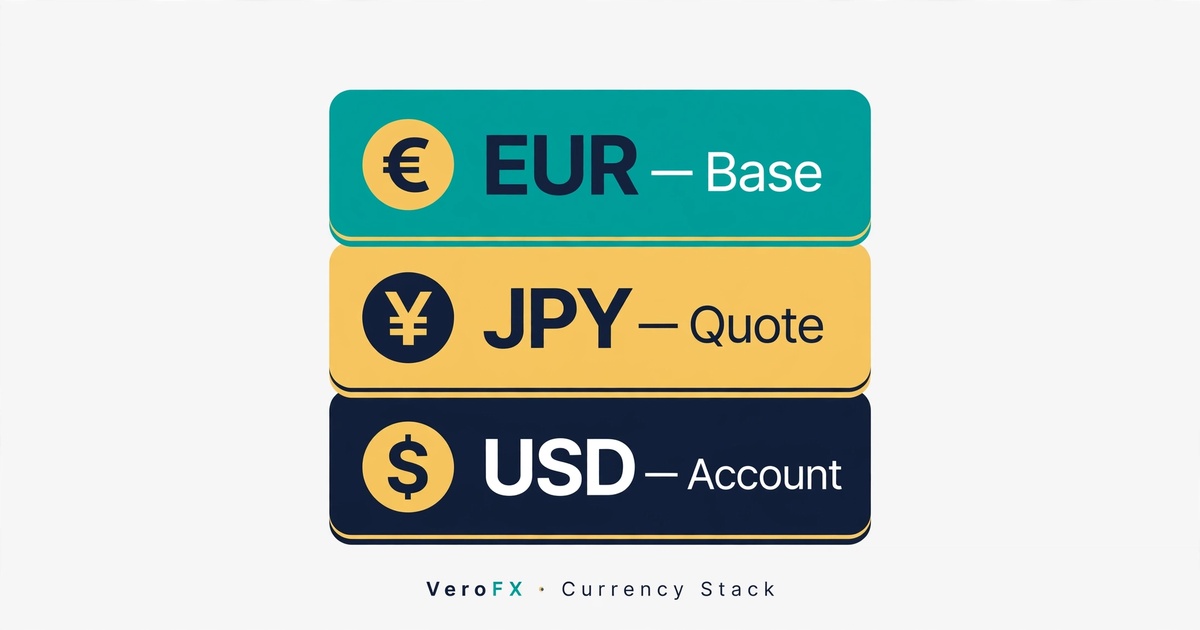
Every forex price is a pair, and the profit on a trade is first calculated in the pair’s quote currency, the second one listed. If that’s unfamiliar, how base and quote currencies work is worth a quick read first.
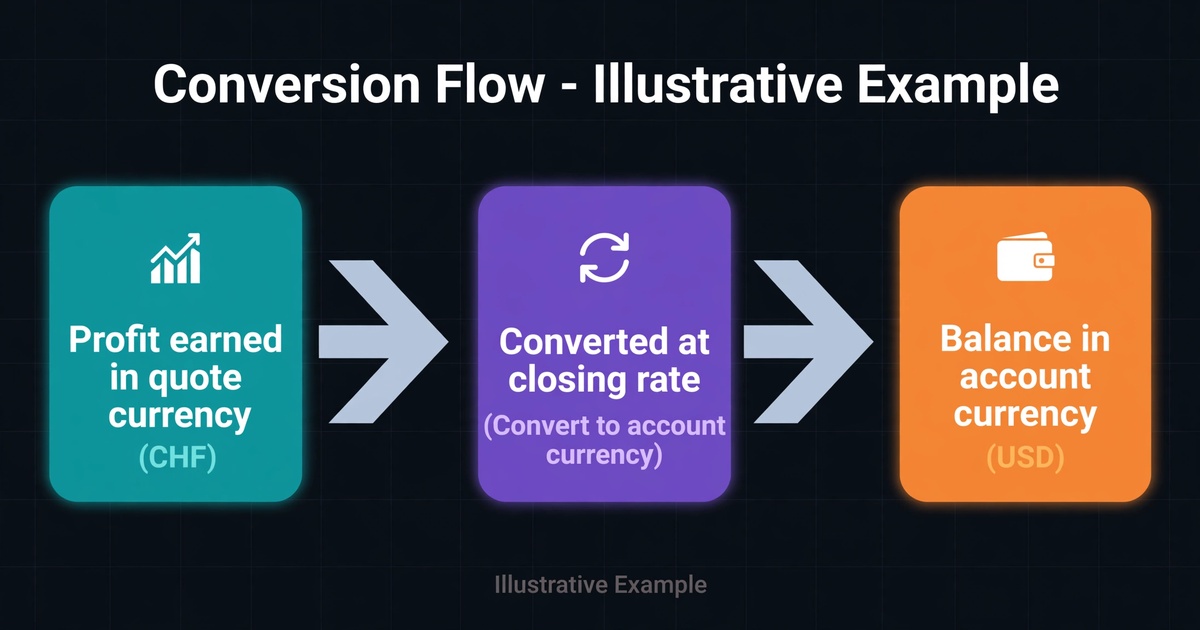
Say you buy USD/CHF and the price rises. Your gain is earned in Swiss francs. But your account holds dollars, or euros, or pounds. The platform converts the francs into your account currency at the going rate when you close, and that converted number is what hits your balance.
When the Quote Currency Is Also Your Account Currency
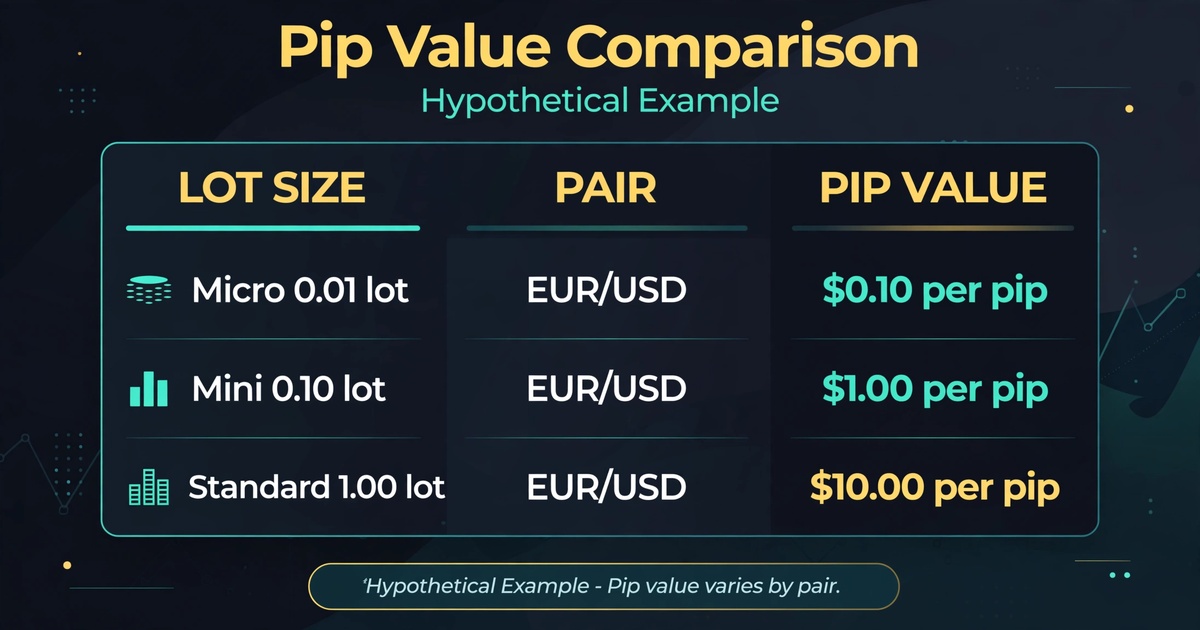
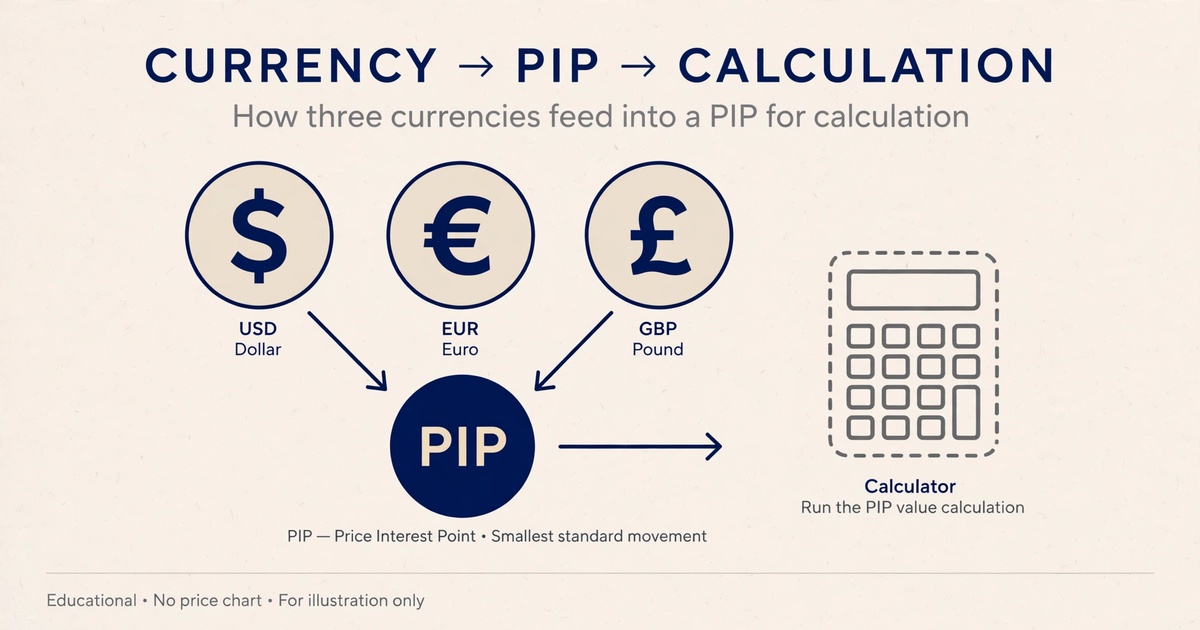
Trade EUR/USD from a USD account and nothing needs converting. A pip is the smallest standard price step, usually 0.0001, and a standard lot is 100,000 units. So one pip on one standard lot is 100,000 × 0.0001 = $10, every time. This is the cleanest case, and it’s the source of the “a pip is worth $10” shortcut many beginners memorize.
When It Isn’t
Move to USD/CHF, or any pair whose quote currency differs from your account currency, and the pip value is no longer fixed. It floats with the exchange rate between the quote currency and your account currency. Pairs with the yen as the quote currency add another wrinkle: their pip is 0.01, not 0.0001. The shortcut breaks, which is exactly where the numbers on your screen can look “off.”
One USD/CHF Trade, Three Account Currencies
Suppose a trader buys 0.20 lots (20,000 units) of USD/CHF and the price rises 35 pips. To keep the math visible, the rates are held constant: USD/CHF at 0.9000, GBP/USD at 1.2500, which makes GBP/CHF 1.1250. Spread, commission, and swap are left out. This is a hypothetical example for illustration only.
| Account currency | Pip value calculation | Value per pip | Gain on 35 pips |
|---|---|---|---|
| CHF | 20,000 × 0.0001 = 2.00 CHF | 2.00 CHF | 70.00 CHF |
| USD | 2.00 CHF ÷ 0.9000 | $2.22 | $77.78 |
| GBP | 2.00 CHF ÷ 1.1250 | £1.78 | £62.22 |
Same trade, same 35 pips, three different-looking results. Nobody earned more. Each account simply counts in its own unit. In a live account the conversion uses the rate at the moment you close, so the figures drift a little from any table you built earlier.
What Else Is Priced in Your Account Currency
Pip value gets the attention, but several other numbers ride on the same choice:
- Margin. The portion of your balance a broker holds as a deposit for open positions is calculated in your account currency.
- Commissions and fees. Many brokers charge these in the account currency, though schedules vary by provider.
- Overnight financing (swap). Interest-rate differences between a pair’s two currencies are converted into your account currency before they’re added or deducted.
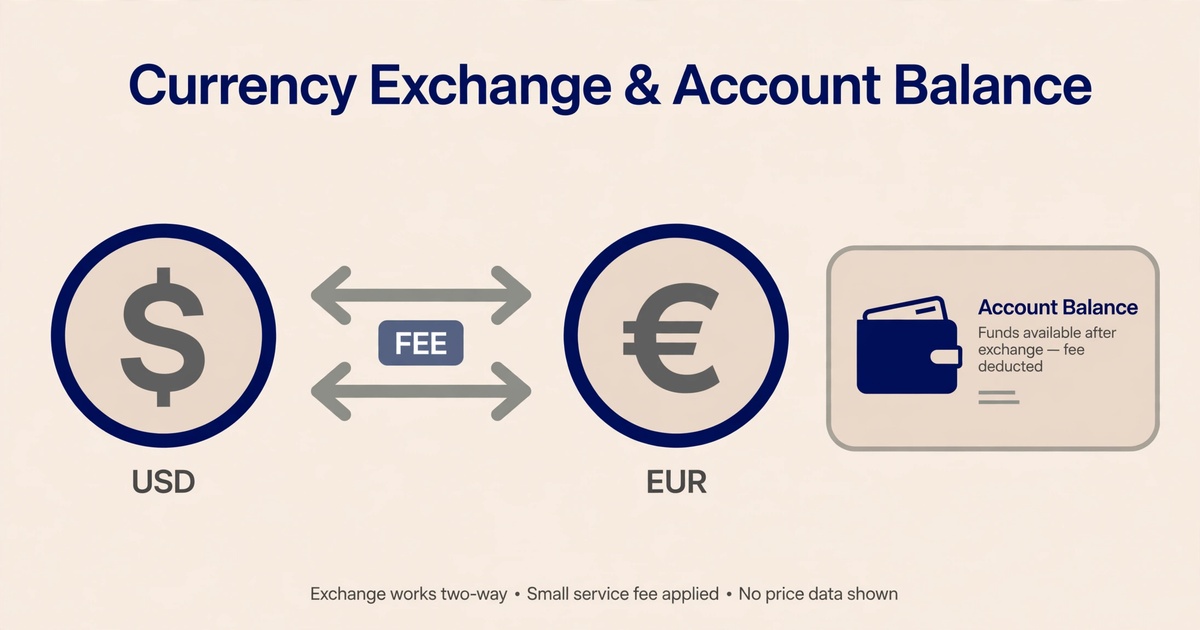
- Deposits and withdrawals. If you fund in a currency that differs from your account currency, the broker or payment provider may convert it, and conversion rates and fees vary by provider.
- Platform statistics. Equity, drawdown, and profit totals all display in the account currency.
Picking an Account Currency at Sign-Up
There’s no universally right answer, but four things are worth weighing:

- Where your money enters and leaves. Matching your funding and withdrawal currency can remove a conversion on each side. Check what your payment method charges for conversion.
- What you’ll spend or save in. If your trading proceeds end up in a specific currency, an account in that currency keeps the final conversion out of your results.
- The pairs you plan to trade. If most of your pairs quote your account currency, pip values stay stable and position-size math stays simple. The overview of major, minor, and exotic currency pairs shows which currencies tend to appear as the quote.
- What the broker offers. The list of available account currencies differs by broker, and some let you open extra accounts in other currencies. Ask before you fund.
A currency match also doesn’t remove exchange-rate exposure from your life outside trading. It only moves where the conversion happens.
Slip-Ups That Distort Your Numbers
- Treating a pip as a fixed $10. That’s true only for a USD account on a pair quoted in USD, trading a standard lot.
- Copying a pip value from a table built for another account currency. A cheat sheet made for a USD account will mis-size trades in a GBP account.
- Comparing results across accounts without converting. A 70 CHF win and a $77.78 win can be the same trade.
- Assuming the deposit conversion is free. The rate and fee on funding in a different currency are part of your cost.
- Accepting the default without reading it. The sign-up screen is the one point where the decision is easy to make and, with some brokers, hard to undo.
Where Currency Conversion Can Work Against You
Because profits and losses are converted at close, the exchange rate between the quote currency and your account currency can move while a trade is open. A winning trade measured in francs can look smaller in dollars if the franc weakens before you exit, and a loss can grow the same way. Neither shows up on the chart.
Leverage magnifies all of this, since it enlarges both gains and losses, and a trader can lose the entire deposit. Slippage and gaps can change the closing rate, and a margin call is triggered by your balance in account-currency terms, not by pip counts. Conversion costs on deposits and withdrawals are a quieter drag. None of this can be eliminated, only understood and planned around. Sizing positions from a fixed risk amount, as covered in this forex risk management guide, keeps currency effects from surprising you.
Can You Change It? Account Currency Puzzles, Solved
What does account currency mean in forex?
It’s the currency your trading account is denominated in. Your balance, equity, profits, losses, and margin all display in it. When a trade closes in another currency, the platform converts the result into your account currency at the prevailing rate.
Can I change my account currency later?
It depends on the broker. Some handle a change by request, others require a new account in the new currency, and some don’t offer either. Read the terms before you deposit rather than assuming you can switch once you’ve started trading.
Does account currency affect how much I make or lose?
The price move is the same, but the figure you see is measured in your account currency. Exchange-rate shifts between the quote currency and your account currency, plus any conversion fees, can nudge the final amount up or down.
Which account currency should a beginner choose?
No single choice fits everyone. Many traders pick the currency they deposit and withdraw in, since it avoids extra conversions. Compare that with the pairs you expect to trade and the options your broker lists.
Does account currency change pip value?
Yes, unless it matches the pair’s quote currency. For a USD account trading EUR/USD, a standard-lot pip is $10. For other combinations, convert the pip value from the quote currency using the current exchange rate.
Know the Unit Before You Trust the Number
Your account currency isn’t a cosmetic setting. It decides what every balance, pip, and margin figure is measured in, and whether each trade carries a hidden conversion. Open your platform’s history, pick one closed trade, and multiply its pips by the pip value in the pair’s quote currency. Then convert that result into your account currency and compare it with the profit your platform reports. If the two differ by more than a rounding gap, find out why before you size your next position.
Disclaimer
This article is for educational purposes only and is not financial advice. Forex and CFD trading involves a high level of risk, and you can lose some or all of your capital. Leverage can magnify both gains and losses. Never trade with money you can’t afford to lose.
Any percentages or figures shown are historical averages or hypothetical examples, not guarantees. Past performance does not predict future results.
Join now
Comments (0)
Be the first to comment.