
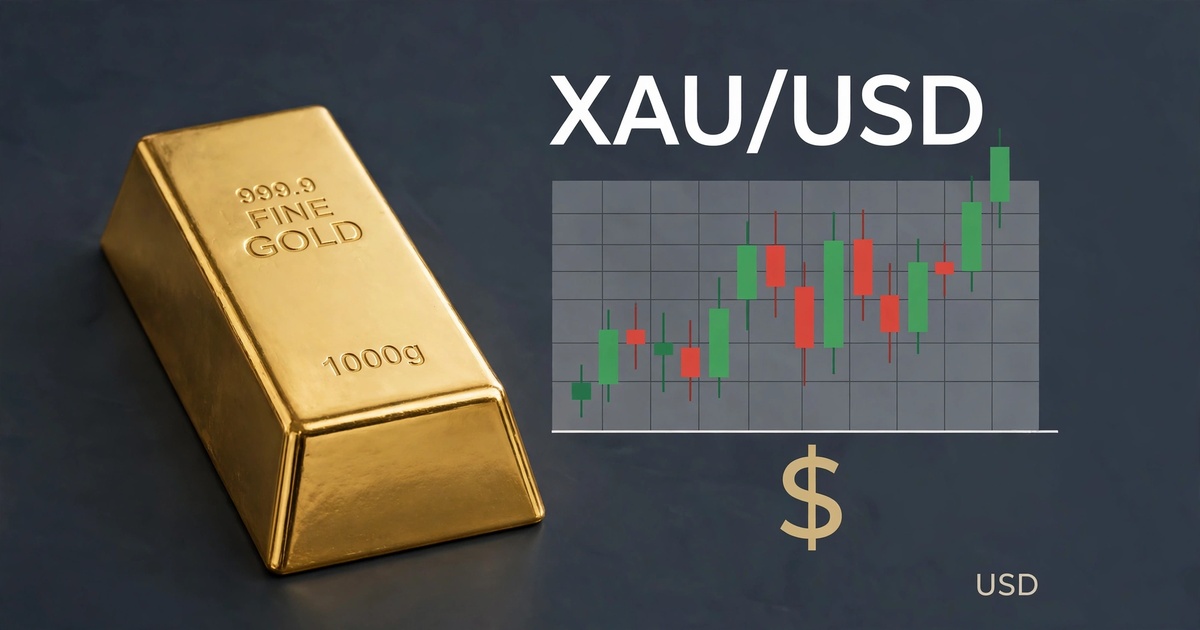
Gold Trading for Beginners: What Is XAU/USD?
Scroll through a trading platform’s symbol list and you’ll find EUR/USD, GBP/JPY, and then something odd: XAU/USD. It looks like a currency pair and trades like one, yet no country issues a currency called XAU. Gold trading for beginners usually starts with this small puzzle, because the symbol hides three things you need before risking money. They are what’s being priced, what one “lot” really means, and why a position that looks small can move your balance fast. Below, the symbol is decoded first, followed by contract details, a sized example, and the risks that catch newcomers.
Reading the Symbol: One Ounce of Gold Priced in Dollars
- XAU is the market code for one troy ounce of gold, and XAU/USD is the price of that ounce in US dollars.
- If XAU/USD rises, gold is more expensive in dollar terms. If it falls, gold is cheaper.
- Retail brokers typically offer it as a CFD or spot-style contract, so you speculate on the price without owning any metal.
- Contract size, point value, spread, and margin vary by broker, so check the specifications before sizing a trade.
- Gold can move many dollars in a single day, which makes position size matter more than the symbol itself.
The Letters XAU and the Troy Ounce Behind Them
In the international system of currency codes, symbols starting with X are set aside for items that aren’t a single country’s national currency. Gold’s code is XAU: X for that category, and AU from aurum, the Latin root of the chemical symbol for gold. Silver follows the same logic as XAG, platinum is XPT, and palladium is XPD.
The unit is the troy ounce, about 31.1 grams. That’s heavier than the 28.35-gram ounce used for groceries. When XAU/USD shows a price such as 2,500.00, one troy ounce of gold costs 2,500 US dollars. That number is invented here to explain the format, not a market price.
Gold as the Base Currency: Reading a Buy or a Sell
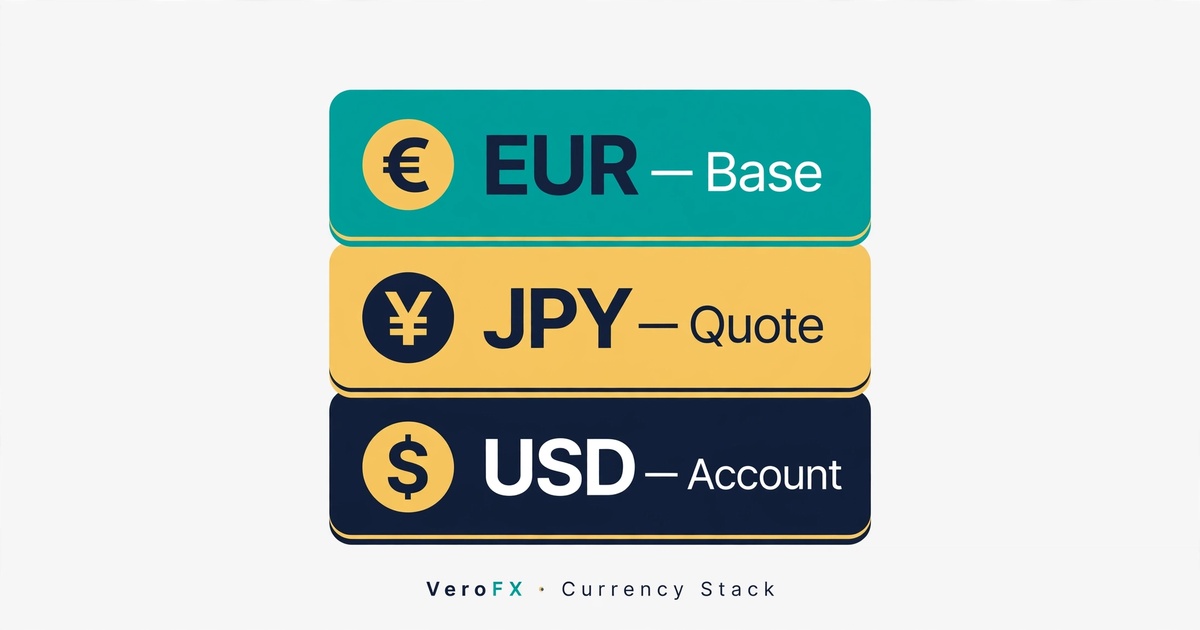
In any pair, the first asset is the base and the second is the quote, and the price tells you how much of the quote you pay for one unit of the base. If that’s new, this walkthrough of base vs quote in a currency pair covers it in full. In XAU/USD, gold is the base (one ounce) and the US dollar is the quote.
That gives you two simple readings:
- Buying XAU/USD means you expect gold to rise in dollar terms.
- Selling XAU/USD means you expect gold to fall. With a CFD you don’t need to own gold first, so you can open a sell position.
Because the quote currency is the dollar, profit and loss on a USD account is straightforward: the price change in dollars multiplied by the number of ounces. You’ll also see two prices on screen. The buy price sits slightly above the sell price, and the gap between them is the spread, a cost you pay the moment you enter.
Owning Bars Versus Trading CFDs: Four Routes to Gold Exposure
“Trading gold” can mean quite different things, each with its own costs and risks:
- Physical gold (bars or coins): you own the metal, but you pay dealer premiums and storage or insurance costs.
- Gold funds and ETFs: you hold units in a product designed to track gold. Structures, fees, and backing differ by product.
- Futures: standardized exchange-traded contracts with set sizes and expiry dates.
- CFDs or spot-style margin contracts: what XAU/USD usually is at a forex broker. You profit or lose from price changes without owning gold, and you typically pay the spread and sometimes an overnight financing charge called a swap.
With a CFD, your broker is also your counterparty. Availability and rules vary by country, and some regulators restrict CFDs for retail clients, so check what your local regulator allows.
The Forces That Move XAU/USD, Briefly and Without Predictions
A few themes come up in almost every discussion of gold: the US dollar, interest rates and bond yields, inflation expectations, and demand for safe-haven assets during periods of stress. A deeper breakdown of what moves the price of gold lays them out in order.
One relationship deserves early attention. Gold is priced in dollars, so a stronger dollar often coincides with weaker gold, and the reverse. The gold and US dollar relationship explains when that link tends to hold and when it breaks. These are tendencies, not rules, and they can pull in opposite directions on the same day. This article doesn’t forecast where gold is headed.
Lot Size, Point Value, and Margin on a Gold Contract
Gold contracts are less standardized than major forex pairs, so the specification sheet matters. The right-hand column of the table shows why each item deserves a look before your first trade.
| Specification | What it tells you | Why it matters |
|---|---|---|
| Contract size | Ounces controlled by 1.00 lot (often 100 oz at many brokers, but not universal) | Sets how many dollars each $1 price move is worth |
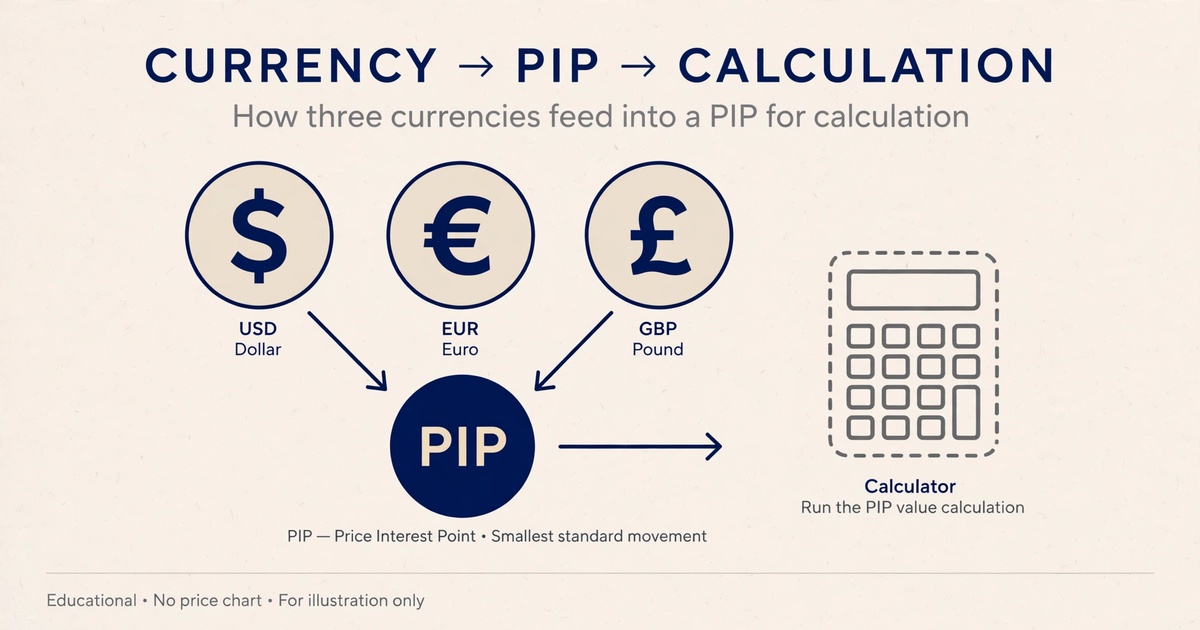
| Price decimals and point value | How your platform counts a point or “pip” on gold | Brokers define these differently, so pip-based advice may not transfer |
| Spread | Gap between buy and sell prices | It’s an entry cost and can widen around news |
| Leverage and margin | Deposit your broker holds against the position | Lower margin means a bigger position for the same deposit, which magnifies losses |
| Swap | Financing charge or credit for holding overnight | Adds up on multi-day trades |
| Trading hours | Daily break and weekend close | Price can gap across closures |
Sizing a 5-Ounce Gold Trade on a $3,000 Account
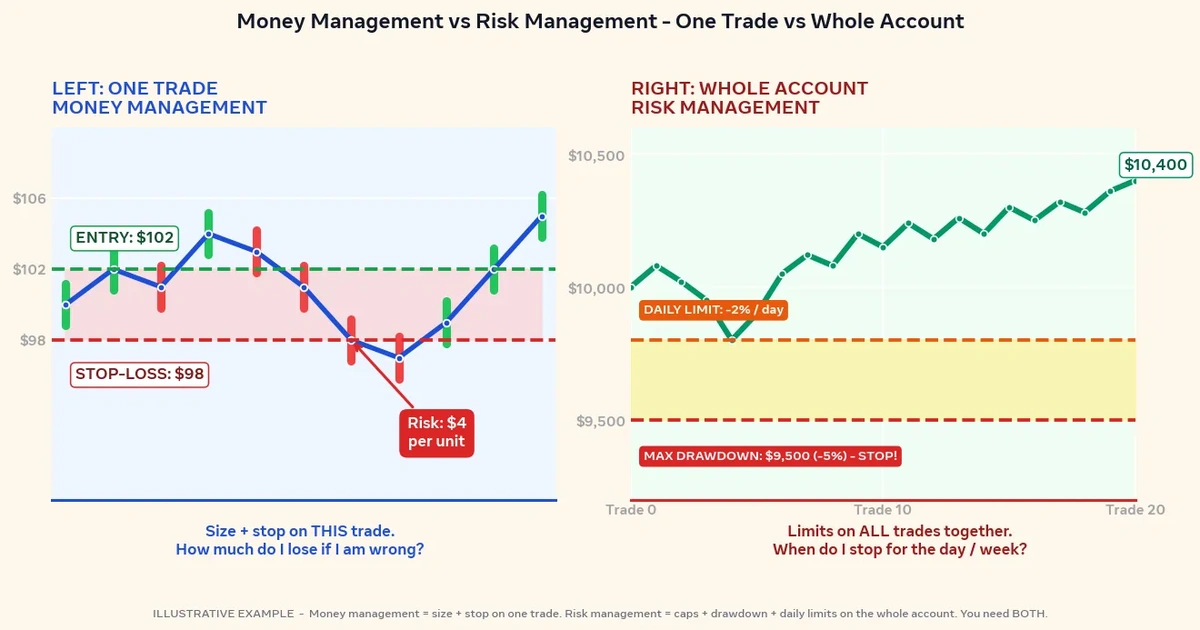
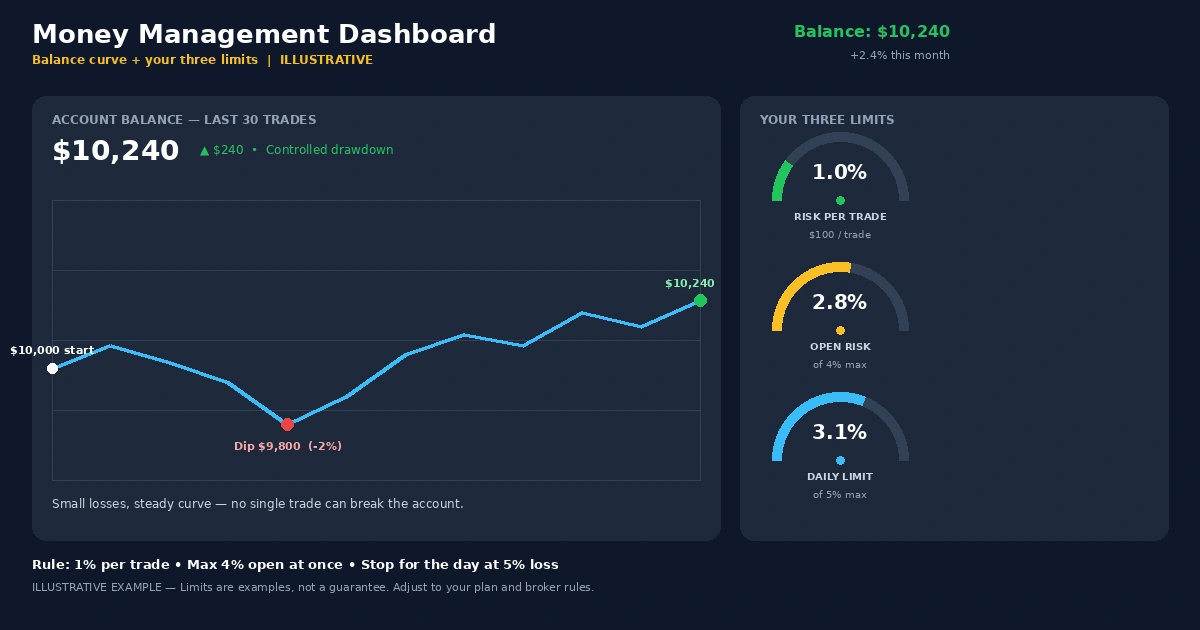
Take a $3,000 account at a broker where 1.00 lot equals 100 ounces, and an invented XAU/USD price of 2,500.00. The trader decides to risk about 1% of the account, or $30, on one trade. Many traders use a small fixed percentage like this, but the right level depends on your situation.
The sizing formula is: ounces = dollar risk ÷ stop distance in dollars.
A stop-loss $6.00 from entry puts $6 of risk on every ounce. That gives $30 ÷ $6 = 5 ounces, or 0.05 lots. From there, check what the position means:
- Position value: 5 oz × $2,500 = $12,500.
- Margin required: at 1:20 leverage, $12,500 ÷ 20 = $625. At 1:100 leverage, $12,500 ÷ 100 = $125.
- Target at twice the risk: $12 away, so 5 × $12 = $60.
- Spread cost: at an assumed $0.30 spread, 5 × $0.30 = $1.50.
- Slippage case: if the stop fills $4 beyond your level, the loss is 5 × $10 = $50, or about 1.7% of the account.
- Ordinary volatility: a $20 move against a 5-ounce position costs $100, or about 3.3% of the account.
The margin figure looks reassuringly small at high leverage, but margin isn’t your risk. Your risk is the stop distance multiplied by the ounces. Also, a $6 stop may be too tight in some conditions, because gold can move that far in minutes. If you need a wider stop, the formula says to trade fewer ounces, not to keep the same size.
This is a hypothetical example for illustration only. Contract size, spreads, and leverage vary by broker and market conditions.
Session Timing for Gold: The London–New York Overlap in UTC
Gold trades nearly around the clock on weekdays, but activity isn’t even. Many traders find it most active when the London and New York sessions overlap. That window is roughly 12:00–16:00 UTC in northern-hemisphere summer and 13:00–17:00 UTC in winter. UK and US clocks change on different dates, so the overlap shifts a little during the transition weeks.
Scheduled US economic releases can also produce sharp, fast moves, and spreads often widen around them. Checking an economic calendar before holding a position through a release is a sensible habit. Busy hours mean more movement, not more certainty.
Contract-Size Surprises and Other Early Gold Errors
- Assuming gold works like EUR/USD. A standard lot of a major pair controls 100,000 units of currency. A standard lot of gold often controls 100 ounces. The dollar value of each price move per lot is not comparable, so recalculate everything for gold.
- Starting with a standard lot. On a small account, 1.00 lot can turn a routine $5 swing into a very large loss relative to your balance.
- Using forex-style stop distances. A 20-pip stop on a currency pair means something very different from 20 points on gold. Define your stop in dollars per ounce.
- Ignoring spread widening. Entering right before a major data release can mean a worse fill and a stop triggered by the spread alone.
- Skipping the stop because gold is “safe.” Calling gold a safe haven describes how it has behaved in some stress periods. It doesn’t protect an individual trade from loss.
- Mixing up symbols. Brokers label gold differently, such as XAUUSD, GOLD, or versions with suffixes. Confirm that the symbol you trade is the contract you think it is.
How Leverage and Volatility Combine to Hurt Gold Traders
Gold isn’t an inherently gentle market for beginners, and the risks compound:
- Large dollar swings. Gold can move many dollars in a day, so even small positions can produce losses that feel disproportionate.
- Leverage magnifies both directions. High leverage lets you open a position much larger than your deposit, and a position that size can lose a meaningful share of your account, or in some cases all of it, quickly.
- Gaps and slippage. Prices can jump over weekends, around news, or during thin liquidity, and a stop-loss then fills at a worse price than you set.
- Spread and swap costs. Both rise in volatile conditions and eat into small-target trades.
- Counterparty and regulatory differences. CFD terms, protections, and legality for retail clients vary by country and broker. Check your local regulator.
- Overconfidence from the safe-haven label. Gold has fallen sharply in the past. Past behavior doesn’t guarantee how it will react next time.
Anyone who can’t tolerate quick swings in their balance may be better off practicing on a demo account for longer before using real funds.
Gold Trading Loose Ends: What Beginners Ask Before a First Trade
What does XAU stand for?
X is the prefix used for items that aren’t a single country’s national currency. AU comes from aurum, the Latin root of gold’s chemical symbol. Together, XAU means one troy ounce of gold, and XAU/USD is that ounce priced in US dollars. Silver uses the same pattern as XAG.
Is trading XAU/USD the same as buying gold?
No. At most forex brokers, XAU/USD is a CFD or spot-style contract. You profit or lose from the price change without owning any metal, and you can also trade it downward. Buying physical gold or a fund involves different costs, storage or fees, and rules, so compare them before deciding.
How much money do I need to start?
There’s no honest single number. It depends on your broker’s minimum deposit, the contract size, your leverage, and how much you’re willing to risk per trade. Some brokers offer small sizes such as 0.01 lots, which is often about one ounce. Check your broker’s specifications and start with money you can afford to lose.
Is gold less risky than forex?
Not necessarily. Gold can be highly volatile, and leveraged gold positions can lose money quickly. The safe-haven label describes how gold has behaved in some stress periods, not a guarantee against loss. Risk depends on your position size, stop placement, and leverage, not on the asset’s reputation.
Do I need to follow the US dollar to trade gold?
It helps. Gold is priced in dollars, and the two often move in opposite directions, though not always. Knowing what drives the dollar, including interest-rate expectations and US data releases, gives you context for gold. Treat it as background, not a signal.
Know the Ounce Before You Trade the Chart
XAU/USD is simple once decoded: one troy ounce of gold, priced in dollars. The real work is understanding the contract attached to the symbol. Before your first trade, open your broker’s specifications and write down the contract size, the dollar value of a $1 move per 0.01 lot, the typical spread, and the margin for that size. Once you have those numbers, the complete guide to forex risk management shows how to turn them into a per-trade limit.
Disclaimer
This article is for educational purposes only and is not financial advice. Forex and CFD trading involves a high level of risk, and you can lose some or all of your capital. Leverage can magnify both gains and losses. Never trade with money you can’t afford to lose.
Any percentages or figures shown are historical averages or hypothetical examples, not guarantees. Past performance does not predict future results.
Join now
Comments (0)
Be the first to comment.