
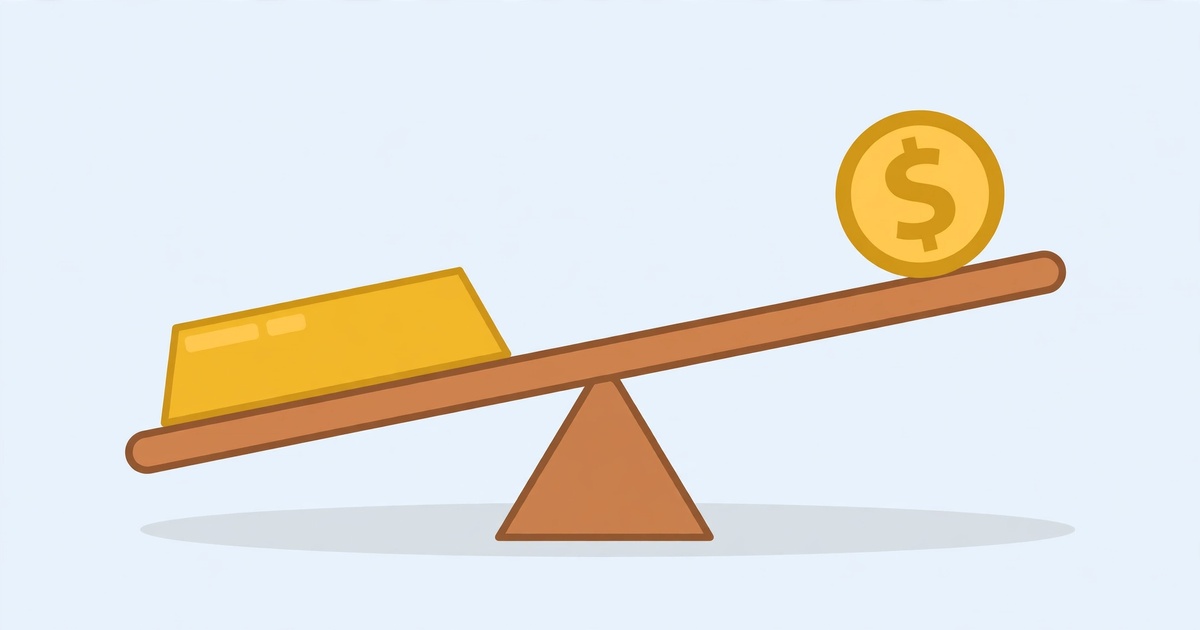
Gold and the US Dollar: Why They Move in Opposite Directions
“Dollar down, gold up.” Most traders pick up that line within their first week of watching XAU/USD, and it’s right often enough to feel like a law. It isn’t one. The link between gold and the US dollar is a strong tendency with real mechanics behind it, along with stretches where both rise together or both fall. Knowing why the two usually move in opposite directions, and what breaks the pattern, turns a slogan into something you can check against a chart before you risk money.
The Inverse Link in Four Lines
- The pricing effect: Gold is quoted in dollars, so a stronger dollar tends to lower the dollar price and a weaker one tends to raise it.
- The demand effect: A stronger dollar makes gold costlier for buyers using other currencies, which can cool their demand.
- The shared cause: Interest rate expectations often drive the dollar and gold in opposite directions at the same time.
- The exception: Fear, or heavy official buying, can lift both together, and the link can fail for weeks.
Dollars per Ounce: The Pricing Arithmetic
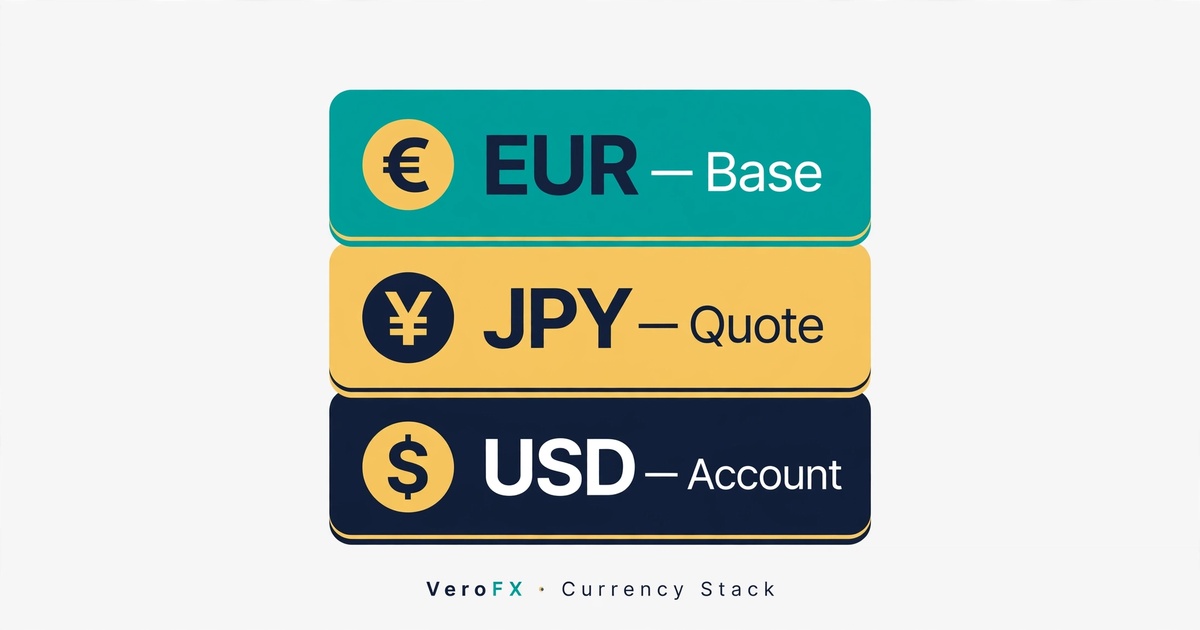
XAU/USD is the price of one troy ounce of gold in US dollars. In currency terms, gold is the base and the dollar is the quote, the same structure covered in currency pair base vs. quote. So if the dollar gains value against other currencies, you generally need fewer of them... but the dollar price of gold isn’t mechanically fixed by that. What the dollar does is change what gold costs everyone else.
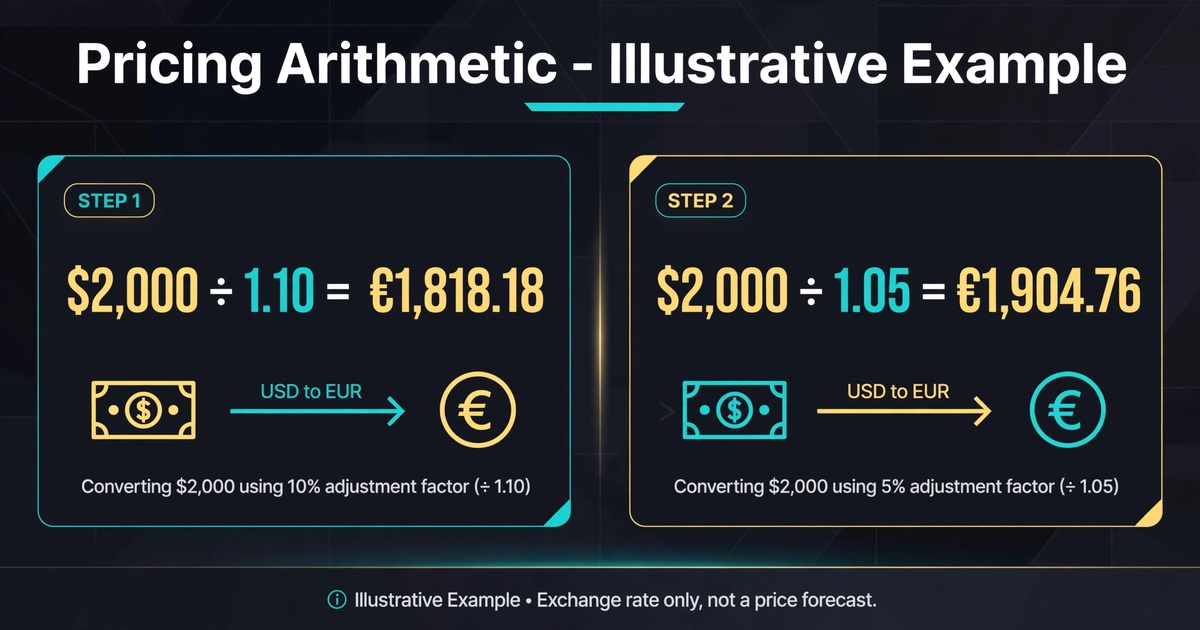
Here’s the arithmetic, using invented figures. Suppose gold is $2,000 per ounce and EUR/USD is 1.10.
- A euro-based buyer pays $2,000 ÷ 1.10 = €1,818.18 per ounce.
- The dollar strengthens and EUR/USD falls to 1.05, a drop of about 4.5%. With gold unchanged at $2,000, the same buyer now pays $2,000 ÷ 1.05 = €1,904.76.
- That’s a rise of about 4.8% in euro terms, with no change at all in the dollar price.
This is a hypothetical example for illustration only.
A euro buyer facing a 4.8% higher price may postpone a purchase. Multiply that across jewelers, funds, and central banks outside the US, and you can see how demand can soften and push the dollar price lower. A weaker dollar works the opposite way, making gold cheaper abroad.
Three Channels Linking the Dollar to Gold
The inverse pattern comes from several mechanisms working together:
- Foreign purchasing power: As shown above, dollar strength raises gold’s cost in other currencies, and dollar weakness lowers it.
- Alternative reserve assets: Central banks and large investors hold both dollars and gold. When confidence in the dollar’s value drops, some shift toward gold, and when the dollar looks strong, there’s less urgency.
- Rate and yield expectations: The dollar tends to strengthen when US yields rise relative to other countries. Gold tends to weaken when real yields rise. One cause, two charts.
One Cause, Two Charts: When Yields Move Both
Often the dollar isn’t “causing” gold to move. A US inflation report, a jobs number, or a central bank hint changes interest rate expectations, and both assets respond to the same news in opposite directions.
A hotter-than-expected inflation print can lift rate expectations, push the dollar up, and push gold down within minutes. It looks like the dollar drove gold, but both followed the yield move. The rate side of this is covered in how interest rates affect gold.
This matters because if the shared cause changes, the pair can stop moving inversely. A dollar rise driven by safe-haven demand during a crisis doesn’t carry the same implication for gold as a dollar rise driven by rising yields.
Four Dollar-and-Gold Pairings You’ll See on a Chart
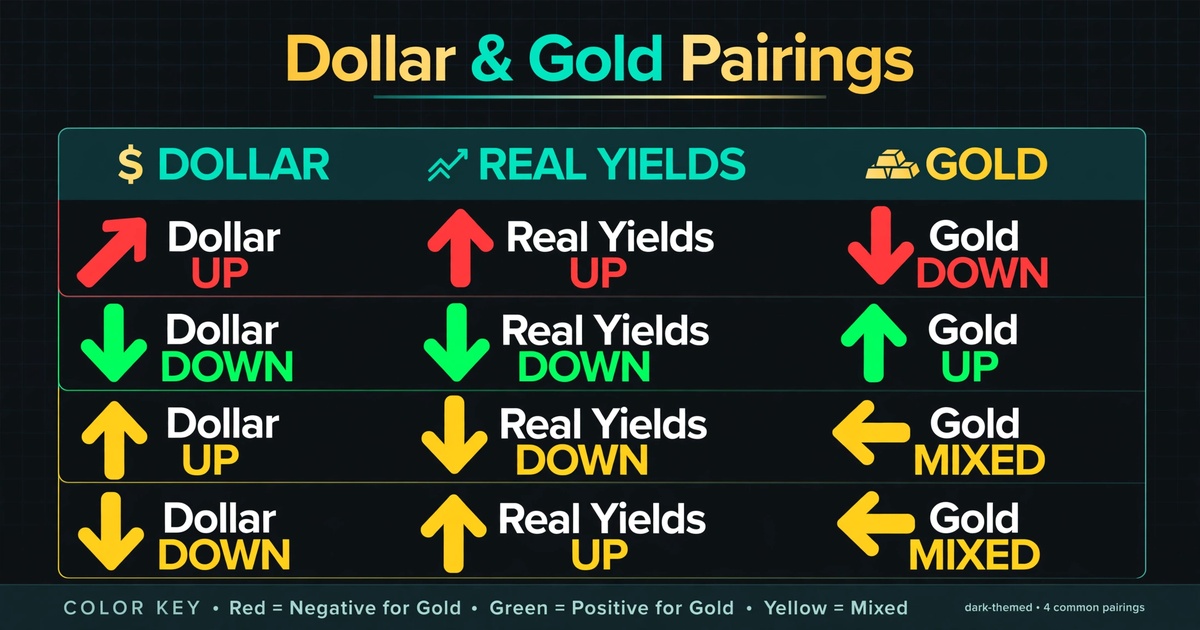
| What’s driving the dollar | Typical dollar move | Typical gold move | Why |
|---|---|---|---|
| Rising US yields vs. peers | Up | Down | Both tilt against gold |
| Falling US yields, softer data | Down | Up | Opportunity cost eases |
| Market panic, rush for dollars | Up | Mixed or up | Fear can lift both |
| Broad risk appetite, capital leaving the dollar | Down | Mixed | Gold may be sold for other risk assets |
The first two rows show the inverse pattern. The last two show where “dollar down, gold up” stops working. Neither is guaranteed, since price reactions depend on what was already expected.
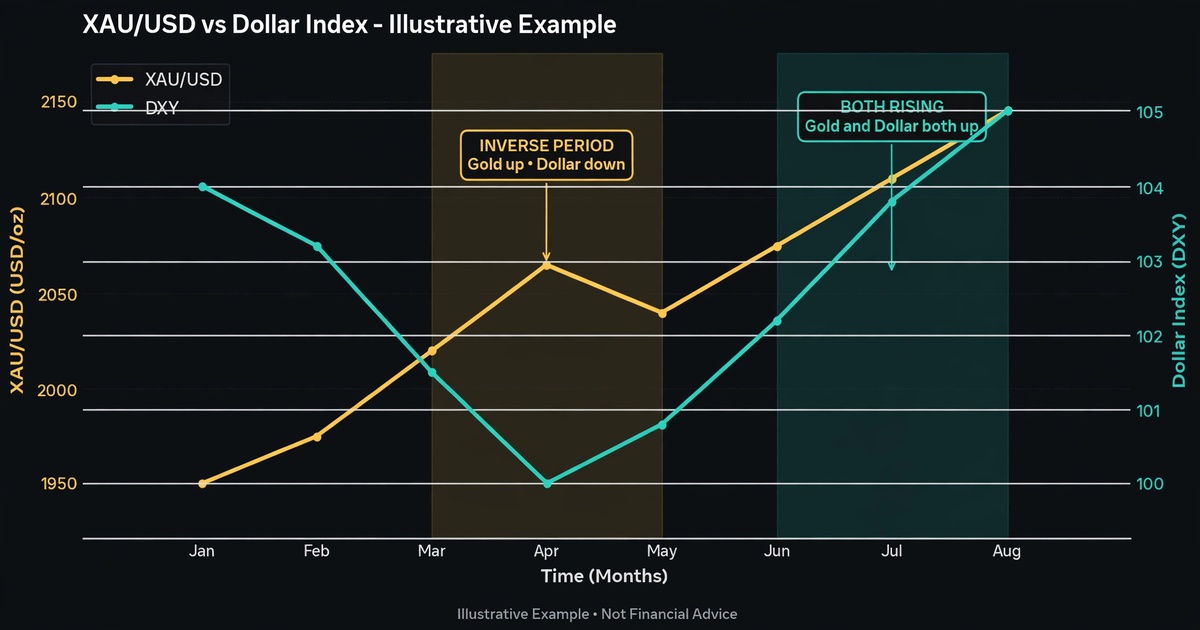
When Both Rise: Fear, Flows, and Official Buying
Gold and the dollar have moved up together in some episodes, usually for two reasons.
Fear. In a sharp market scare, investors may buy dollars for liquidity and gold for protection at the same time. The reasoning behind gold’s haven demand is laid out in why gold is considered a safe-haven asset.
Official and structural buying. In recent years, many central banks have added gold to reserves, partly to diversify. That buying isn’t tied to short-term dollar moves, so it can support gold even when the dollar is firm.
Both rising isn’t a “mistake” in the data. It’s a reminder that more than one force drives each chart.
Measuring the Link With a Rolling Correlation
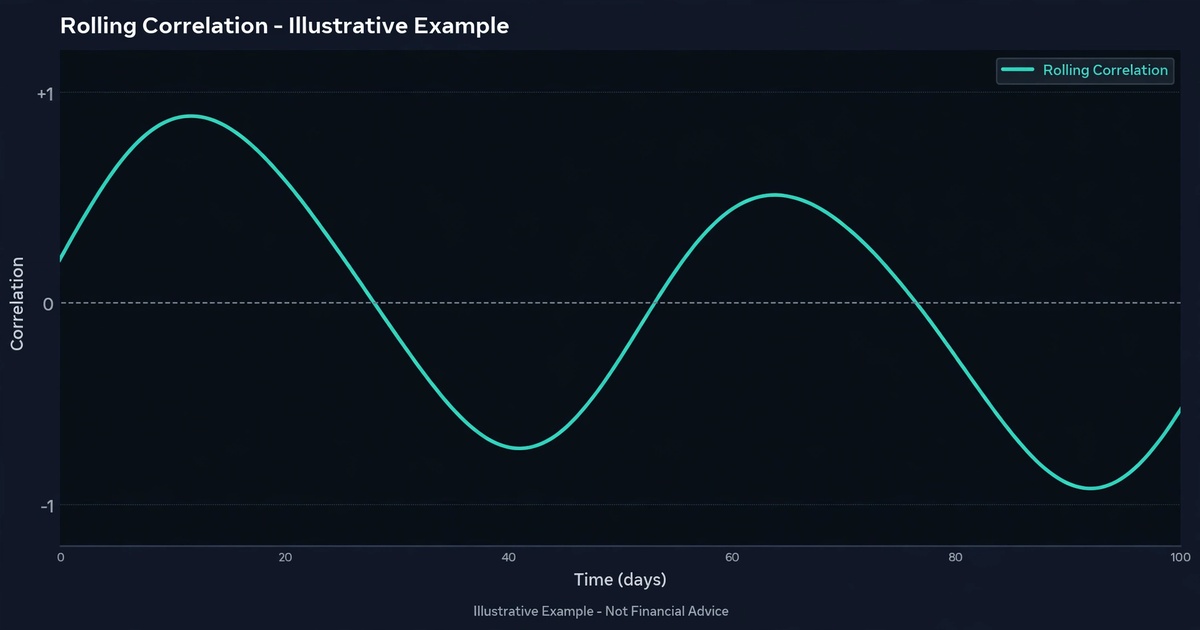
Correlation is a statistic that ranges from −1 to +1. A reading near −1 means two assets tend to move in opposite directions, near 0 means no consistent link, and near +1 means they tend to move together.
For gold and the dollar, the usual reading is negative, but it isn’t stable. If you calculate it over different windows, say 30 days versus a full year, you can get quite different answers. Some platforms offer a rolling correlation indicator that updates as new data arrives, which shows when the relationship is strong and when it has faded.
Many traders track the US Dollar Index (DXY), a basket measure of the dollar against several major currencies. It’s heavily weighted toward the euro, so EUR/USD often serves as a quick stand-in: when the euro rises, the dollar is usually weakening, and gold has tended to follow EUR/USD more often than not. “Tended to” is the operative phrase.
Tracing a Dollar Slide Into an XAU/USD Position
All numbers are invented. A trader with a $6,000 account is watching gold at $1,900. A soft data release pushes the dollar index from 104.00 to 103.00, a drop of about 1%. Gold has started rising. The trader buys 0.05 lot, which is 5 ounces if the contract is 100 ounces per lot (check your broker’s specifications), with a stop $12 below entry.
- Planned risk: $12 × 5 = $60, which is 1% of the account.
- Gold climbs $18 to $1,918, about 0.9%, and the trader exits. Gain: $18 × 5 = $90, or 1.5% of the account. That’s a reward-to-risk ratio of 1.5.
The next day, the dollar index barely moves, but gold slips $12 on unrelated news and hits the stop. Loss: $12 × 5 = $60, plus spread and any slippage.
This is a hypothetical example for illustration only.
The point is that the dollar gave a useful clue on day one, then offered nothing on day two. Treating the dollar as a filter that improves your odds is reasonable. Treating it as a trigger that makes the trade work isn’t.
Reading Divergence: When Gold Ignores the Dollar
If gold rises while the dollar also rises, or falls while the dollar falls, something else is leading. Check these in order:
- Real yields: Did they move sharply?
- Risk sentiment: Is there a fear or panic bid?
- Calendar: Did a gold-specific headline or central bank announcement drop?
- Positioning: Was the move a reversal of an extended trend?
A divergence isn’t a signal to trade against the dollar. It’s a signal that the usual explanation isn’t working and your confidence should drop.
Dollar-Gold Assumptions That Cost Traders Money
- Treating the link as one-to-one. A 1% dollar move doesn’t mean a 1% gold move. Sensitivity varies by period.
- Watching one dollar pair. A single pair like USD/JPY can move for reasons specific to Japan. A broad index gives a cleaner read.
- Entering after the dollar has already moved. Gold often reacts at the same moment, not after.
- Ignoring why the dollar moved. Rate-driven and fear-driven dollar rises can have opposite implications for gold.
- Using old correlation figures. The number from last year may not describe this month.
- Trading both instruments as a “hedge.” Being long gold and short the dollar can double your exposure to the same driver.
The Costs of Leaning on a Correlation That Drifts
- Correlation breaks: The inverse link can weaken for weeks or months, and a strategy built on it can fail without warning.
- Leverage: CFD leverage amplifies gains and losses, and you can lose some or all of your deposit.
- Event slippage: Around data releases, the dollar and gold both move fast, spreads widen, and stops can fill away from your price.
- Double exposure: Trading gold alongside dollar pairs can concentrate your risk in a single driver.
- Look-back bias: A relationship that looks tight on a historical chart may not persist forward.
- Overconfidence from a clean story: The neat explanation for a move is often written afterward.
Straight Answers on the Dollar-Gold Link
Why does gold go down when the dollar goes up?
Gold is priced in dollars, so a stronger dollar makes it costlier for buyers using other currencies, which can reduce demand. Rising US yields often lift the dollar and weigh on gold at the same time. It’s a strong tendency, not a fixed rule.
Can gold and the dollar rise at the same time?
Yes. In market scares, investors may buy dollars for liquidity and gold for protection together. Strong central bank buying can also support gold while the dollar is firm. These periods are less common but well documented.
Which dollar measure should I compare with gold?
Many traders use the US Dollar Index because it covers several major currencies. EUR/USD is a common shortcut, since the euro carries the largest weight in the index. Both are approximations. Pick one measure, keep it consistent, and note how well it tracks over time.
Is the gold-dollar correlation always negative?
No. It’s often negative over long windows, but it shifts over shorter ones and has turned flat or positive at times. Rolling correlation indicators can show how it changes. Don’t assume last year’s figure describes today’s market.
Can I trade gold using only the dollar’s direction?
That’s risky. The dollar is one input, and gold also reacts to real yields, fear, and official buying. Many traders treat the dollar as a filter that adds or removes confidence, then rely on price levels, risk limits, and other signals for the actual trade.
A Lean, Not a Law
Gold and the dollar tend to move opposite ways because of pricing arithmetic, foreign demand, and shared sensitivity to yields, but each of those can be overridden. Over the next month, overlay XAU/USD with a dollar index on a daily chart, then count how many of the last 20 weekly candles moved in opposite directions. The tally will tell you how strong the link is in current conditions, which is more useful than any historical average. Once you’ve done that, gold trading for beginners (XAU/USD) shows how to fold it into a chart routine.
Disclaimer
This article is for educational purposes only and is not financial advice. Forex and CFD trading involves a high level of risk, and you can lose some or all of your capital. Leverage can magnify both gains and losses. Never trade with money you can’t afford to lose.
Any percentages or figures shown are historical averages or hypothetical examples, not guarantees. Past performance does not predict future results.
Join now
Comments (0)
Be the first to comment.