
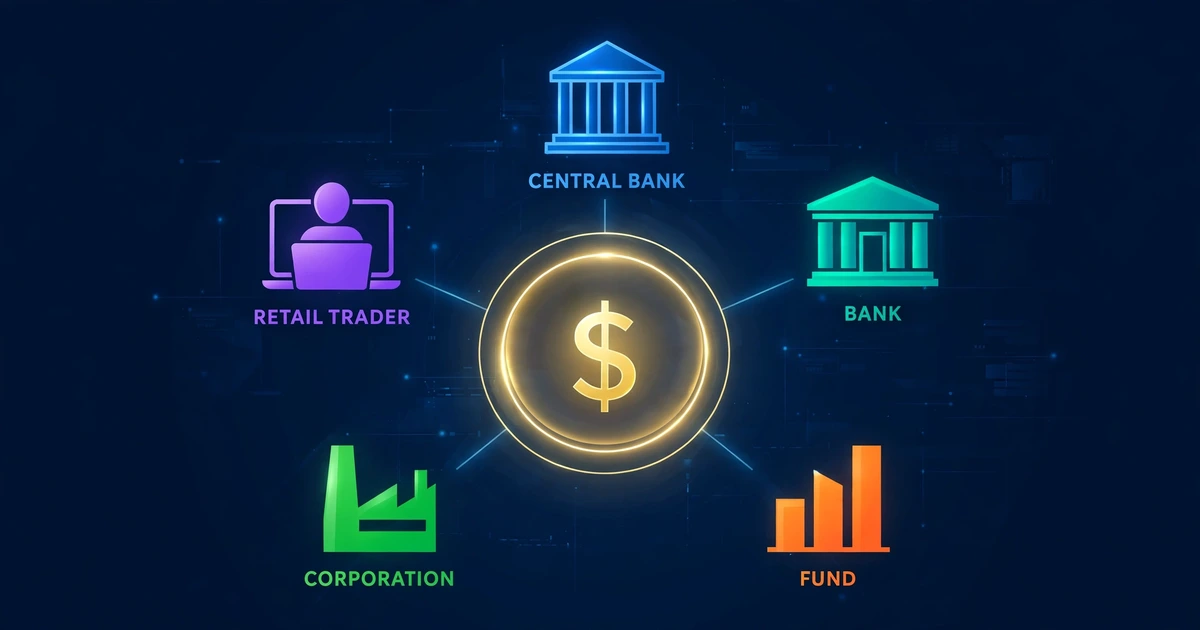
Who Trades Forex? Banks, Funds, and Retail Traders
Forex isn’t traded by one type of person. A central bank adjusting its reserves, a manufacturer paying a foreign supplier, a hedge fund placing a large bet, and a retail trader opening a small demo-sized position are all part of the same market, and they want very different things from it. This guide explains who trades forex, why each group takes part, and how their different goals shape prices and costs. You’ll also see what this means for you as a retail trader, with hypothetical examples that show the difference in scale.
Quick Answer
- Forex is traded by central banks, commercial and investment banks, hedge funds and asset managers, corporations, brokers, and retail traders.
- Most participants trade currency out of necessity, such as paying bills or hedging risk. Speculators trade to profit from price moves.
- Large banks act as dealers and sit at the center of the market. Retail traders make up a small share of total volume.
- Knowing who else is in the market helps you understand why spreads, liquidity, and news reactions look the way they do.
The Main Players at a Glance
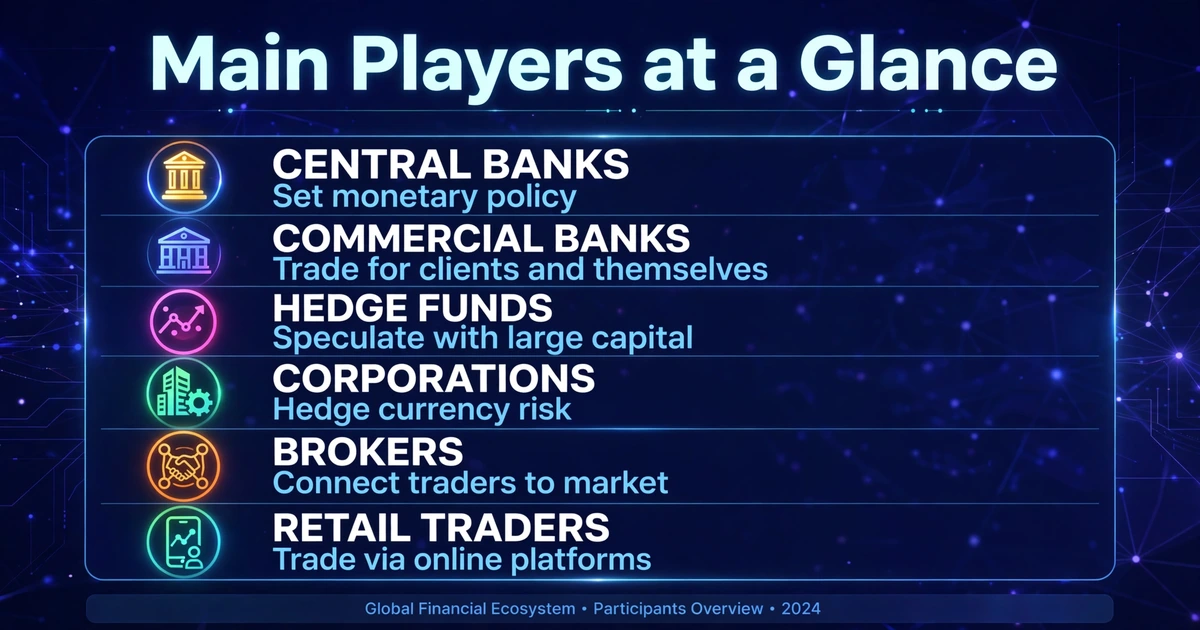
| Participant | Main reason to trade | Typical approach |
|---|---|---|
| Central banks | Manage reserves, influence policy goals | Infrequent, large, policy-driven |
| Commercial and investment banks | Serve clients, trade for their own account | Quote prices, manage large flows |
| Hedge funds and asset managers | Speculate or manage portfolios | Wide range, from short-term to long-term |
| Corporations | Pay for goods, manage currency risk | Practical, often hedging |
| Retail traders | Speculate on price moves | Small positions, usually through a broker |
The sections below take each group in turn. If you want the structure behind this table, how the forex market works covers the layers from interbank to retail.
Central Banks and Governments
Central banks hold foreign currency reserves and manage their own national currency. Their trading is usually driven by policy goals, not by a wish to profit.
- They may buy or sell currencies to manage reserves.
- In some countries, they intervene directly in the market to influence their currency’s value, though how often and how openly varies widely.
- Their interest rate decisions and public statements move currencies even when they don’t trade at all.
Because central banks can act at any time and with large size, many traders watch their announcements closely. That doesn’t mean their moves are predictable.
Commercial and Investment Banks
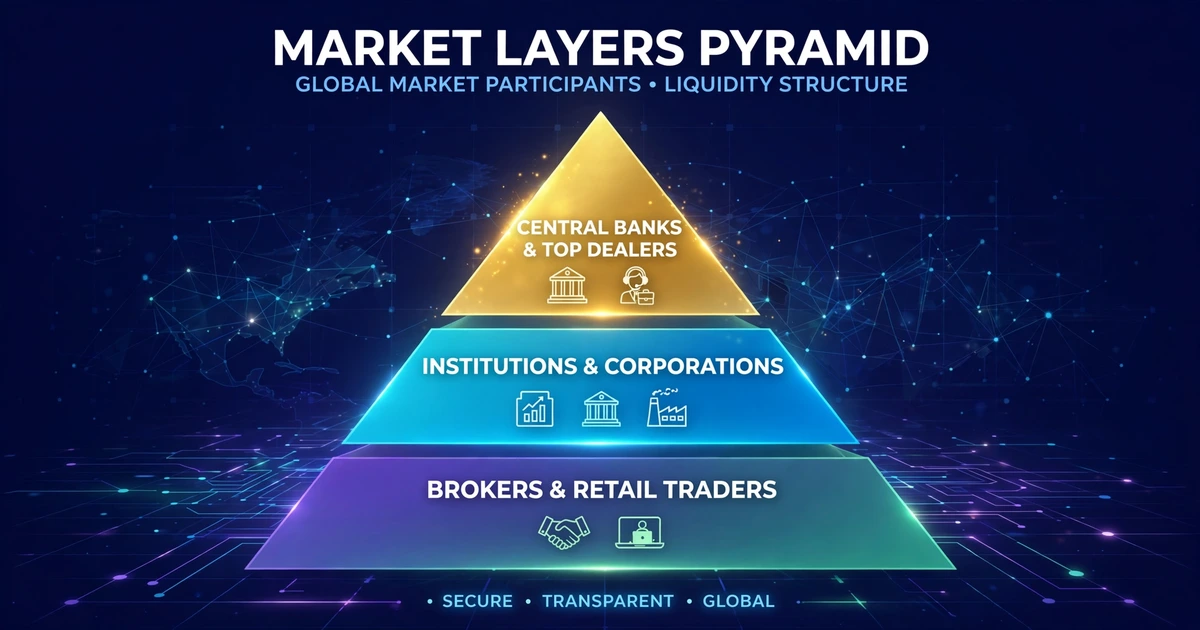
Large banks are the backbone of the market. They act as dealers, meaning they quote buy and sell prices to clients and to each other.
They trade for several reasons:
- Client orders. Companies, funds, and smaller banks come to them to exchange currency.
- Their own books. Banks may take positions themselves, within internal risk limits.
- Liquidity provision. By always quoting prices, dealers keep the market running smoothly.
This network of banks is often called the interbank market. Its prices flow down to brokers and then to you. According to the BIS Triennial Survey, which tracks market activity every three years, large reporting dealers account for a significant part of trading.
Hedge Funds and Asset Managers
These are the main institutional investors in forex.
- Asset managers (pension funds, mutual funds, insurers) may hold foreign stocks and bonds. They buy or sell currency to move money across borders and sometimes to hedge exchange-rate risk.
- Hedge funds often trade currencies more actively, using a range of strategies, including short-term trading, macro views on economies, and automated systems.
Their motives differ, but they share one trait: size and resources. They typically have research teams, direct dealer relationships, and sophisticated risk systems. Results vary widely between funds, and many strategies don’t beat the market.
Corporations
Companies are some of the biggest users of forex that don’t think of themselves as traders. They exchange currency because their business requires it:
- Paying overseas suppliers
- Receiving revenue in foreign currency
- Moving profits between countries
Many also hedge, meaning they lock in an exchange rate in advance to reduce uncertainty. Here’s a hypothetical example for illustration only.
A company expects to receive €1,000,000 in three months. It agrees today to sell those euros forward at 1.1000. Whatever the market rate turns out to be, it knows it will receive 1,000,000 × 1.1000 = $1,100,000. It gives up the chance of a better rate in exchange for certainty.
Companies like this aren’t trying to profit from the currency move. They want predictability, which is a very different goal from speculation.

Retail Traders and Brokers
Retail traders are individuals who trade their own money, usually through an online broker. You’re in this group.
- Brokers provide platforms and quotes, and in many regions offer forex as contracts for difference (CFDs). Some act as the counterparty to your trade, while others route orders to outside liquidity providers.
- Retail traders typically trade small sizes, often with leverage, and mostly speculate on short- to medium-term moves.
Retail trading makes up only a small portion of total volume. That has practical consequences. You can’t move the market, and you trade alongside participants with far more capital and information.
Other Participants
A few other groups are worth knowing:
- Non-bank liquidity providers and market makers. These firms quote prices and trade electronically, often at very high speed.
- Algorithmic and high-frequency traders. They use automated systems and may account for a large share of electronic activity.
- Payment and money transfer companies. They convert currency for customers sending money abroad.
- Travelers and individuals. Everyday currency exchange is part of the market too, though it’s tiny compared with institutional volume.
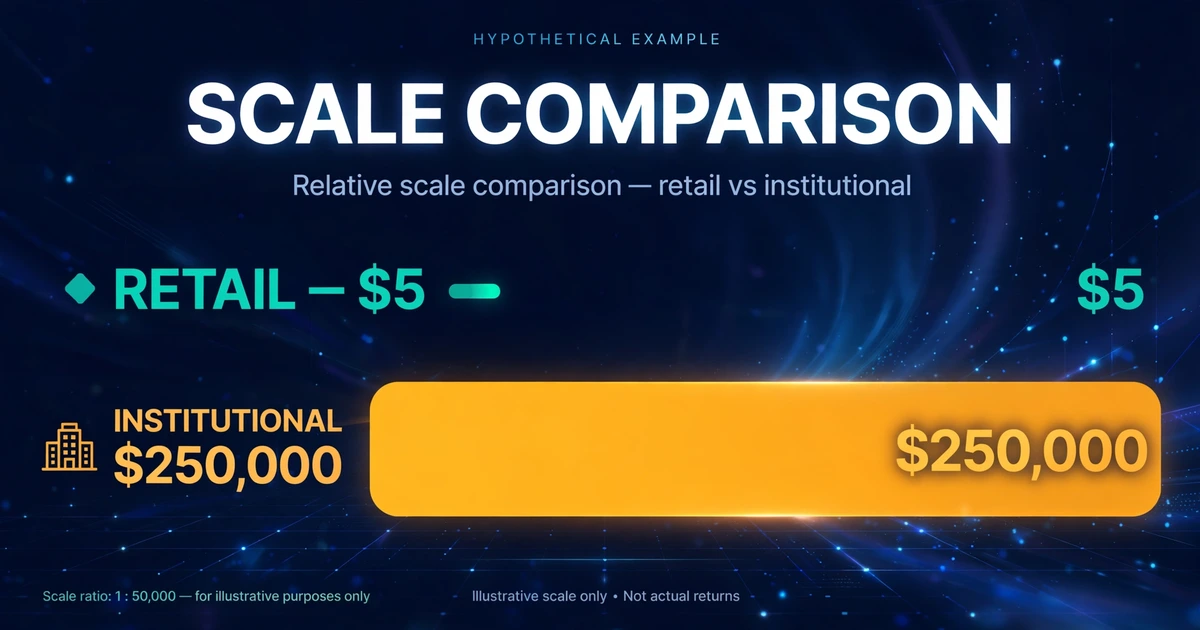
Why Their Goals Matter: A Scale Comparison
The difference in size between participants is hard to picture, so here’s a hypothetical example for illustration only.
Suppose EUR/USD rises 50 pips (0.0050).
- A retail trader holding 1 micro lot (1,000 euros) gains 1,000 × 0.0050 = $5.
- An institution holding a €50,000,000 position gains 50,000,000 × 0.0050 = $250,000.
Same move, very different stakes. The institution also faces very different risk rules, funding, and execution, so you can’t compare results directly. What it shows is that orders of this size can affect liquidity and prices, while yours won’t.
What This Means for Retail Traders
Understanding who trades forex can change how you approach the market.
- Prices are driven by many motives, not just speculation. A large move may come from a company’s payments or a central bank decision, not from a trading signal.
- You don’t have an information edge. Institutions often see data and order flow you can’t. That’s a reason to focus on what you can control: risk per trade, costs, and discipline.
- Liquidity isn’t constant. It’s deepest when major sessions overlap and thinner outside them, which can change spreads. See forex trading sessions for the schedule.
- Pair choice matters. Participants concentrate on the most liquid currencies, which is why major, minor, and exotic currency pairs differ in cost and behavior.
- Psychology matters. Competing against better-resourced participants makes emotional discipline more important, not less. Trading psychology is a good place to start.
Common Misconceptions
- “Big players always know where price is going.” They don’t. Institutions lose money too, and their views often conflict.
- “Retail traders are always on the wrong side.” There’s no reliable rule like this, and claiming one oversimplifies the market.
- “Someone is out to hunt my stop-loss.” Prices can spike through stops, but this usually reflects thin liquidity or news, not a personal target. Treat claims like this with caution, especially from sellers of trading courses.
- “Following the institutions guarantees an edge.” Following large players isn’t a method on its own, and you rarely see their real positions.
Risks and Limitations
- You trade against better-resourced participants. Institutions typically have more capital, data, and speed.
- Leverage magnifies losses. You can lose some or all of your deposit, even when your read on the market is partly right.
- Execution varies by broker. If your broker takes the other side of your trades, there can be conflicts of interest. Check regulation and execution policies.
- Liquidity can vanish. In fast markets, spreads can widen and orders can slip.
- Information is incomplete. You don’t see institutional order flow, and public data arrives with a delay.
- Rules vary by country. Leverage limits and broker regulation depend on your region.
Results vary, and there is no guarantee of profit.
Frequently Asked Questions
Who are the biggest players in the forex market?
Large banks acting as dealers are generally the biggest participants, quoting prices to clients and each other. Hedge funds, asset managers, and corporations also trade in large size. The BIS Triennial Survey is the standard source for how activity is divided among them.
Do retail traders move the forex market?
Not on their own. Retail trading is a small share of total volume, so an individual order has no meaningful effect on price. Prices move because of large flows, economic news, and central bank decisions, which retail traders respond to rather than cause.
Do central banks trade forex?
Yes, mainly to manage foreign currency reserves. Some also intervene directly to influence their own currency’s value, though how often varies by country and policy. Even without trading, their interest rate decisions and statements can move currencies sharply.
Why do companies trade currency?
Mostly out of necessity. Businesses need foreign currency to pay suppliers and convert overseas revenue. Many also hedge, locking in an exchange rate in advance so currency swings don’t disrupt their budgets. Their goal is predictability, not trading profit.
Can retail traders compete with institutions?
Not on size, speed, or information, so it helps to avoid trying. Many retail traders instead focus on controlling risk, understanding costs, and following a consistent plan. Even then, outcomes vary, and there’s no guarantee of profit.
Key Takeaway and Next Step
Who trades forex shapes how the market behaves. Central banks, dealers, funds, and companies trade for practical or strategic reasons, while retail traders speculate in a small corner of a very large market. Your best protection is to respect that difference: size positions carefully, watch your costs, and avoid assuming you can read the minds of larger players. A sensible next step is to open a demo account and observe how prices react around major news. If the basics still feel unclear, revisit what forex trading is.
Disclaimer
This article is for educational purposes only and is not financial advice. Forex and CFD trading involves a high level of risk, and you can lose some or all of your capital. Leverage can magnify both gains and losses. Never trade with money you can’t afford to lose.
Any percentages or figures shown are historical averages or hypothetical examples, not guarantees. Past performance does not predict future results.
Join now
Comments (0)
Be the first to comment.